Yes — and by more than most sellers expect. On the secondary market, moving a garment from a Good grade to an Excellent grade routinely shifts the realized price by 30–50%, and the gap between Excellent and NWT can be even wider on collectible or contemporary luxury pieces. Condition is not a footnote in your listing; it is the price.
That said, the relationship cuts both ways. Under-grading a near-mint item leaves real money on the table. Over-grading invites returns, negative feedback, and eBay's "Item Not as Described" (INAD) pipeline. The goal is accuracy — and accuracy requires a consistent vocabulary and a consistent process.
This post walks through what each condition tier typically does to used clothing resale value by condition, why both grading errors are expensive, and how to stop making them.
Why Condition Outweighs Almost Every Other Variable
Brand name moves the ceiling. Condition determines where in the range you actually land.
Consider a men's Levi's 501 from the early 1990s. The brand and silhouette set a price window — say, $40 on the low end, $180 on the high end for a sought-after fade. What fills that window? Condition. A pair graded Poor (heavy wear, thinning at the seat, broken hardware) sits near the floor. A pair graded Excellent (even fade, no repairs, fully functional) sits near the ceiling. Same label, same era, 4x the price.
Platform matters too, but less than sellers assume. A Good-condition blazer listed on Poshmark won't suddenly perform like an Excellent one on eBay. The buyer pool shifts; the condition delta stays. This is the core mechanic behind how condition affects resale price: brand and category set the window, condition decides the number inside it.
The five factors that drive a GradeThread condition report — Fabric Condition, Structural Integrity, Cosmetic Appearance, Functional Elements, and Odor & Cleanliness — map directly to the questions buyers ask before they commit. Any weakness in one factor suppresses the final grade and, with it, the price you can defend.
The Condition Tier Price Map
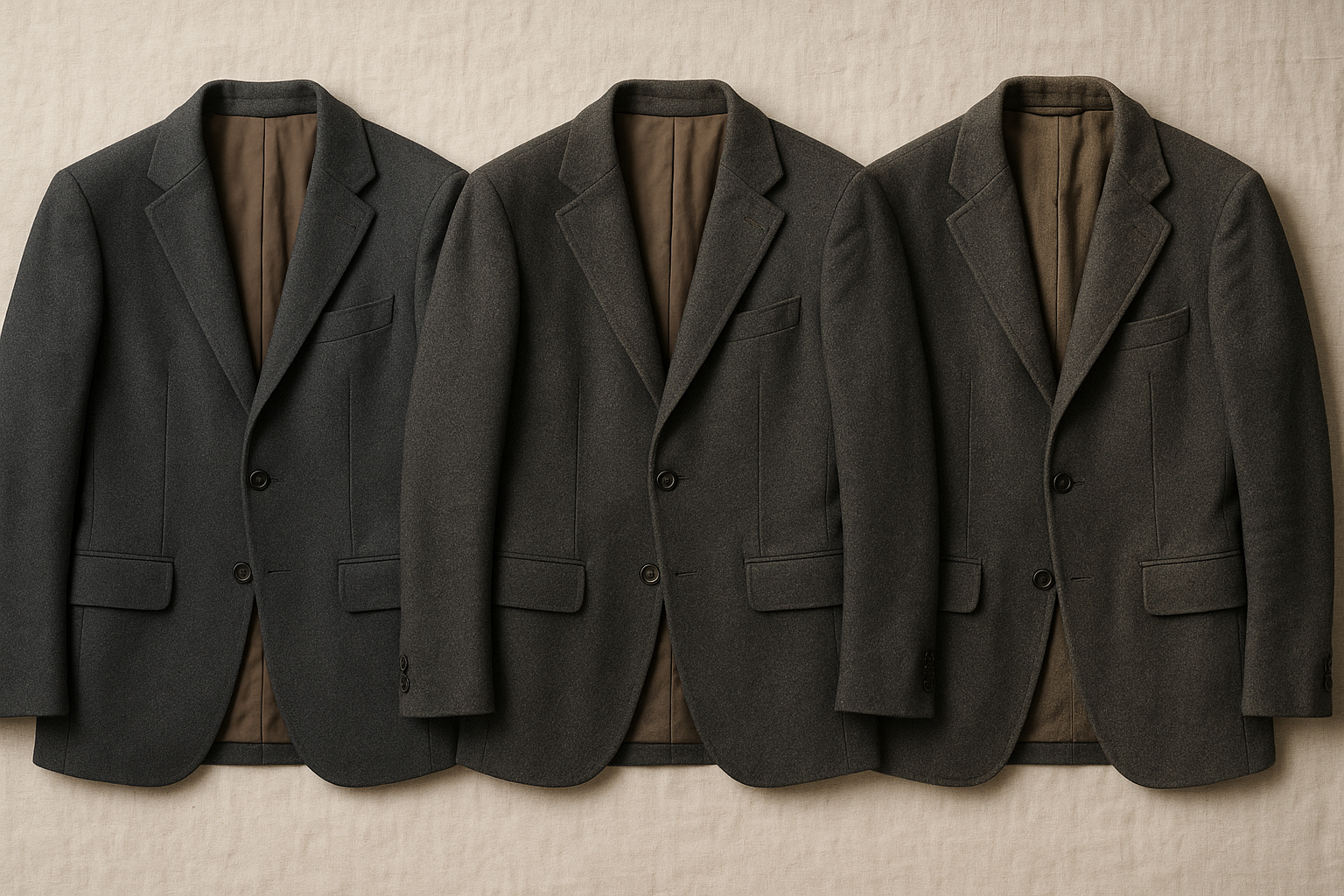
The table below uses a single reference item — a contemporary men's wool-blend sport coat from a recognizable American brand, retail around $300 — to illustrate how each tier typically repositions the resale price. These are illustrative ranges based on observed secondary-market behavior, not guaranteed outcomes. Category, colorway, and timing all shift the numbers.
| Condition Tier | Grade Range | Illustrative Resale Range | Typical Sell-Through Speed |
|---|---|---|---|
| NWT | 10.0 | $120–$160 | Fast — buyers treat it as new |
| NWOT | 9.0 | $95–$130 | Fast — tag-off discount priced in |
| Excellent | 8.0–8.5 | $75–$110 | Moderate-to-fast with strong photos |
| Very Good | 7.0–7.5 | $55–$80 | Moderate — price-sensitive buyers |
| Good | 6.0–6.5 | $35–$55 | Slower — competes on price alone |
| Fair | 5.0–5.5 | $15–$30 | Slow — parts/project buyers only |
| Poor | 3.0–4.5 | $5–$15 or pass | Very slow — often not worth listing |
Two things stand out in that table. First, the dollar gap between NWT and Excellent is roughly $40–$50 on a $300 retail item — meaningful, but not catastrophic. Second, the gap between Excellent and Good is also $40–$55. Good is not a small step down from Excellent; it is a different buyer segment entirely. This is what condition tier pricing resale actually looks like in practice: the tiers are not evenly spaced in dollar terms, and the steepest cliffs sit right where buyer intent changes — NWOT to Excellent, and Very Good to Good.
How Marketplaces Surface Condition — and Why Your Grade Still Decides the Price
Every major platform asks you to declare condition somewhere, but none of them enforce a shared standard, which is exactly why grading and resale value stay tangled for most sellers.
- eBay requires a Condition item specific (New, Pre-owned, etc.) but leaves the actual description of wear entirely up to your listing copy. Two sellers can both check "Pre-owned" on identical jackets — one in Excellent shape, one in Fair — and the buyer has no structured way to tell the difference until they read your write-up.
- Poshmark lets sellers choose "New with Tags," "New without Tags," or "Excellent Used Condition" as a catch-all — there is no built-in Good, Fair, or Poor option, which pushes sellers to either over-describe or bury real flaws in the listing description.
- Mercari uses a five-point condition rating at listing time (New, Like New, Good, Fair, Poor) but the buyer only sees your self-selected rating — there is no third-party verification, so a Mercari "Like New" and a GradeThread NWOT grade are not the same claim.
None of these systems verify the claim. A standardized, five-factor grade with a shareable certificate closes that gap — it gives the buyer something to check against, not just something to trust.
The Under-Grading Trap
Most resellers obsess over over-grading because that is what generates returns. Under-grading is quieter and therefore easier to ignore — but it is just as costly.
Here is a common scenario: you pull a cashmere turtleneck from a lot. It has a few small pills on the cuffs, so you call it Good and price accordingly. A GradeThread report would have scored it 7.5 — Very Good — because the pilling is light-surface only (Fabric Condition: minor), the structure is intact, there are no cosmetic stains, the seams are clean, and it smells fine. You left $25–$40 on the table before you even took a photo.
Multiply that across 20 items a week and under-grading is a real revenue leak — roughly $500–$800 a week in missed price realization if even a quarter of your inventory is off by one tier. The fix is not optimism — it is precision. Grade every factor separately, let the composite score land where it lands, and price to the grade.
What under-grading looks like in practice
- Calling a Very Good item Good because you spotted one minor flaw and stopped evaluating
- Defaulting to Good on anything vintage because "it's old"
- Pricing an Excellent item at a Very Good price because you don't trust your own assessment
- Listing NWOT items as Excellent when they have never been worn — that is a full tier of price realization you are giving away
- Grading an item once at intake and never re-checking it after it sits in inventory for a season, when a fresh look might justify a higher tier
The Over-Grading Cost (It Is Not Just Returns)
Over-grading is more visible. A buyer receives a jacket described as Excellent and finds a faded collar and a broken interior button. They open an INAD case on eBay. You refund, pay return shipping, and lose the item to repackaging time. The financial hit is obvious.
What resellers undercount is the downstream cost. eBay's search algorithm factors seller defect rate — including INAD-driven returns and cases closed without seller resolution — into ranking. A cluster of disputes in a 90-day window can suppress your listings across the board, not just the disputed item. On Poshmark, a public offer history and buyer reviews are visible; a pattern of condition complaints affects your negotiating position on future sales. On Mercari, a rating drop from repeat condition disputes follows your account, not just the listing.
Over-grading also concentrates risk on your best items. The pieces most likely to be over-graded are the ones you paid the most for — vintage leather, premium denim, contemporary designer. Those are exactly the items where a return stings hardest: higher cost basis, higher return shipping cost, and the longest relist delay.
The Five Factors and Their Price Weight
Not all five grading factors pull equal weight on price. Understanding which factors buyers penalize most helps you prioritize your inspection time.
- Fabric Condition — Pilling, thinning, fraying, and fabric integrity issues are often the first thing a buyer notices in photos. Heavy pilling on a knit or thinning at the elbows of a wool coat will suppress bids even when everything else is fine. This factor has outsized cosmetic impact.
- Structural Integrity — Seam separation, lining tears, and collar roll loss are deal-breakers for buyers who plan to wear the item, not display it. A structurally compromised garment cannot be graded above Good regardless of how clean it looks.
- Cosmetic Appearance — Staining, fading, and discoloration are the leading cause of INAD disputes. Cosmetic issues are easy to photograph and easy for buyers to document. Any unresolved cosmetic defect drops the grade at least one full tier.
- Functional Elements — Zippers, buttons, snaps, and closures. A broken zipper on a jacket is a functional failure that caps the grade at Good or below. Buyers will not pay Excellent prices for a garment they cannot actually use.
- Odor & Cleanliness — Smoke, mildew, or heavy fragrance residue is an automatic grade suppressant. You cannot photograph smell, but buyers can smell a return. Any detectable odor beyond neutral clean drops the grade to Fair or below, regardless of visual condition.
In practice, one failed factor rarely tanks the entire grade by more than a tier or two — unless it is a functional or odor failure, which can be disqualifying. The composite score rewards garments that are consistently solid across all five, not just visually clean.
Where the Price Gap Matters Most by Category
The condition premium is not uniform across categories. It is steepest where buyers have strong condition expectations and lowest where buyers are already shopping for project pieces.
Vintage denim: The gap between Very Good and Good is particularly wide here. Collectors paying for a specific fade pattern or selvedge detail will not accept compromised Structural Integrity or unexpected repairs. A hidden repair found after purchase is one of the most common INAD triggers in denim.
Outerwear: Functional Elements carry extra weight. A down jacket with a broken zipper or a wool coat with a compromised lining drops to Good or Fair fast. Buyers expect outerwear to work in weather.
Knits and cashmere: Fabric Condition dominates. Light pilling is tolerated at Very Good; moderate pilling moves the item to Good; heavy pilling to Fair. The price drop per pilling tier is steep because the defect is irreversible without a depilling tool — and even then, results vary.
Vintage graphic tees: Cosmetic Appearance is everything. Print cracking, fading, and staining determine the grade. A tee with a perfect print in Good structural condition still grades higher than a tee with a cracked logo in otherwise Excellent fabric. The print is the product.
Suits and tailored clothing: Structural Integrity and Functional Elements matter most. Buyers paying for a suit expect it to hold its shape and all its buttons. A single missing button or a broken vent seam is enough to drop a sale price by a full tier.
How to Stop Guessing and Start Grading
The practical problem with condition grading is inconsistency. You grade a coat on Monday when you are fresh and grade the same coat on Friday after processing 40 items and you will get different answers. That inconsistency costs you in both directions — sometimes you under-grade, sometimes you over-grade, and the buyer is always the one who decides which error you made.
A structured process fixes this. Here is the one we recommend:
- Lay the garment flat in consistent light before you touch it. First impressions of Cosmetic Appearance are easier to read before handling introduces new creases.
- Inspect Fabric Condition across the full surface — front, back, underarms, cuffs, collar. Use a phone flashlight at a low angle to catch pilling and thinning that flat overhead light misses.
- Check Structural Integrity at every stress point: seams, collar attachment, lining, hem. Tug gently at seam allowances to feel for slippage.
- Test every Functional Element. Every zipper pull, every button, every snap. Do not assume.
- Assess Odor & Cleanliness last, after handling. Bury your nose in the underarm and collar — the two zones where odor concentrates. If you have been handling the item for a few minutes, step away and come back for a fresh read.
- Score each factor independently before you assign a composite grade. Do not let a strong visual impression override a functional failure.
- Price to the composite grade, not to what you paid for the item or what you hope it is worth.
GradeThread runs this process for you — five-factor analysis, a numerical grade on the 1.0–10.0 scale, and a shareable certificate your buyer can verify. The grade does not change based on how you feel about the item on a given day.
Grade One Item and See What It Changes
Pick the item in your current inventory where you are least confident about the condition call — the one you hedged on, the one you called Very Good because it felt right. Run it through GradeThread. See where the five factors actually land and whether the composite grade matches what you listed.
If it matches, you have confirmation. If it does not, you have either a pricing correction or a return risk to address before the buyer does it for you.
Used clothing resale value by condition is not a soft variable. It is the number. Grade it accurately and price it accordingly.