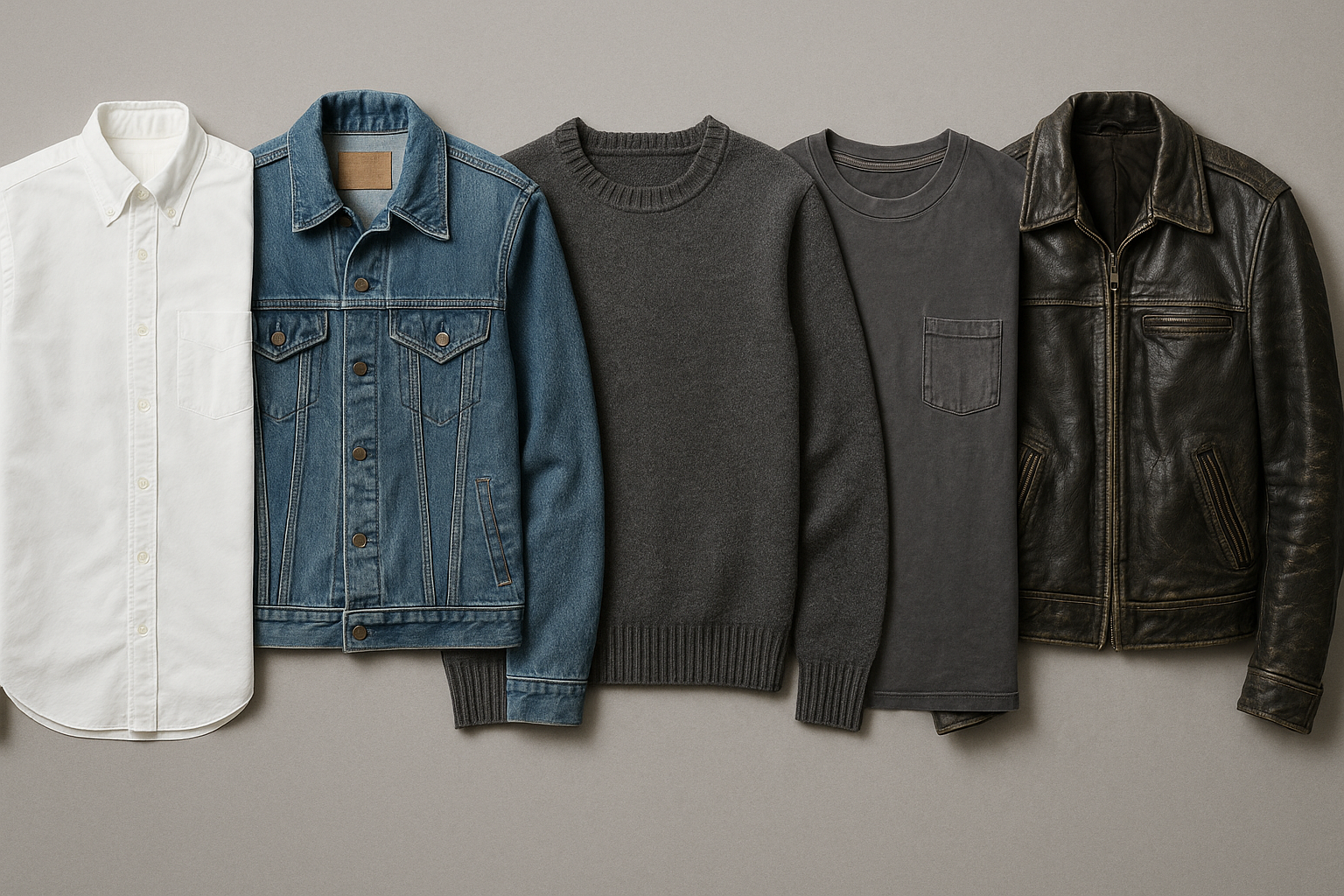
The Clothing Condition Grading Scale Explained: What 1.0–10.0 Actually Means
The clothing condition grading scale runs from 1.0 to 10.0 in half-point increments, with each band tied to a named tier — NWT, NWOT, Excellent, Very Good, Good, Fair, or Poor — and scored across five measurable factors. This is the reference page for every grade decision GradeThread makes.
If you have ever listed a jacket as "Excellent" and had a buyer argue it was "Good," you already know the problem: adjectives mean different things to different people. A numerical grade with defined criteria does not. This page maps the full clothing grade chart, explains what moves a garment up or down the scale, and gives you concrete garment examples at each tier so you can calibrate your own eye.
Why a Numerical Scale Instead of Adjectives Alone
Marketplaces like eBay, Poshmark, and Mercari all use condition labels — New, Pre-owned, Good, Excellent — but none of them define those labels with measurable criteria. That gap is where "not as described" disputes are born.
A garment condition rating on a 1.0–10.0 scale solves two things at once. First, it forces the grader to look at specific evidence rather than forming a general impression. Second, it gives buyers a number they can compare across sellers, categories, and time. A 7.5 Levi's 501 and a 7.5 wool blazer were graded by the same standard, even though denim and wool fail differently.
The scale also captures the nuance that adjective tiers cannot. There is real money between an 8.0 and an 8.5 on a vintage leather jacket. Collapsing both into "Excellent" throws that value away.
The Five Grading Factors
Every grade on the clothing condition grading scale is built from five weighted factors. Understanding them is the prerequisite for reading any grade report accurately.
- Fabric Condition — Pilling, fading, thinning, holes, snags, and fiber integrity. This is the material itself, not what was done to it.
- Structural Integrity — Seams, stitching, lining, shoulder shape, and construction. A garment can look clean and still be structurally compromised.
- Cosmetic Appearance — Stains, marks, discoloration, print wear, and surface-level damage visible to the eye. Distinct from fabric condition because a stain on intact fabric is a cosmetic issue, not a fiber issue.
- Functional Elements — Zippers, buttons, snaps, elastic, drawstrings, and any hardware. A broken zipper on an otherwise 8.0 jacket can pull the final grade below 7.0.
- Odor & Cleanliness — Smoke, mildew, fragrance residue, and general freshness. This factor is binary in its impact: a strong odor can cap a grade at Fair regardless of how the fabric scores.
Each factor is scored individually and then weighted to produce the final 1.0–10.0 number. No single factor automatically overrides the others, but severe failures in any one factor will compress the overall grade significantly.
The Full Clothing Grade Chart: Tier by Tier
The table below maps each condition tier to its grade band, a plain-English definition, and a real garment example. Use this as your primary reference when reading a GradeThread report or calibrating your own grading.
| Tier | Grade Band | Definition | Garment Example |
|---|---|---|---|
| NWT | 10.0 | New with original tags still attached. Unworn, unaltered, no evidence of any use. | A Patagonia fleece pulled from retail packaging with hang tag and price sticker intact. |
| NWOT | 9.0–9.5 | New without tags — unworn but tags removed or never attached. No wash, no wear, no alterations. | A dress shirt with collar creases from folding but no tag; no underarm or collar staining whatsoever. |
| Excellent | 8.0–8.5 | Worn but showing minimal evidence of use. No functional issues. Only the closest inspection reveals any wear. | A Ralph Lauren Oxford worn twice, washed once, with faint wash softening but no visible pilling, staining, or fabric stress. |
| Very Good | 7.0–7.5 | Light wear visible under normal inspection. Minor cosmetic imperfections only — no functional issues, no significant Fabric Condition or Structural Integrity concerns. | Levi's 501s with light seat fade and minor waistband softening, all seams tight, no staining, hardware intact. |
| Good | 6.0–6.5 | Moderate wear clearly visible. May have light pilling, minor fading, or small cosmetic marks. All Functional Elements still work. Structural Integrity sound. | A wool crewneck sweater with Grade 2 pilling on the elbows and forearms, clean otherwise, no holes, buttons intact. |
| Fair | 5.0–5.5 | Heavy wear or a notable defect in one factor. Sellable but requires accurate, detailed disclosure. Buyers should expect imperfection. | A vintage denim jacket with significant seat and thigh fading, a repaired interior lining, and one replaced button that does not match. |
| Poor | 3.0–4.5 | Multiple significant defects across two or more factors. Sellable only as a project, parts item, or heavily discounted. Full disclosure required. | A leather jacket with cracking on both elbows, a broken zipper pull, and a mildew odor that survived one cleaning attempt. |
Grades below 3.0 exist on the scale but represent garments with no meaningful resale path — damaged beyond repair or unusable in any wearable sense. In practice, most resellers will not list below a 3.0.
What Moves a Grade Up or Down
The grade band in the chart above is a starting point. The final number within that band — whether a garment lands at 7.0 or 7.5, for example — depends on the specific evidence across the five factors. Here is how that movement works in practice.
Grade increases within a band
- All five factors score at or above the band minimum with no single factor dragging below.
- Odor & Cleanliness is clean — no detectable odor of any kind.
- Functional Elements are all original and fully operational.
- Fabric Condition shows no thinning or integrity concerns beyond expected surface wear.
Grade decreases within a band
- One factor scores noticeably below the others, pulling the composite down.
- A repair is present — even a clean, invisible repair introduces a Structural Integrity note.
- Any odor is detectable, even faint fragrance residue.
- A Functional Element works but shows stress — a zipper that catches, a button that is loose but attached.
Cross-band drops
A garment that would otherwise grade as Very Good (7.0–7.5) can drop to Good (6.0–6.5) if a single factor scores at Fair level. For example: a blazer with excellent fabric and clean cosmetics but a separated shoulder seam will not hold a 7.0 — Structural Integrity pulls it down regardless of how the other four factors score.
How the Scale Applies Across Categories
The same 1.0–10.0 clothing condition grading scale applies to every garment category, but what constitutes evidence of wear differs by material and construction. A few examples:
- Vintage denim: Fading is expected and often desirable. The grade question is whether the fading is even and consistent (cosmetic only) or whether it indicates fiber thinning (Fabric Condition concern). Honeycombs and whiskers on a pair of raw selvedge jeans are not defects — they are wear patterns that many buyers pay a premium for. Thinning at the seat or inner thigh that risks blowout is a different matter entirely.
- Knits and sweaters: Pilling is the primary Fabric Condition variable. Light surface pilling at friction points (underarms, cuffs) in an otherwise sound garment supports a Very Good grade. Dense pilling across the body pulls the garment to Good or below. The pilling scale runs from Grade 1 (barely visible) to Grade 5 (heavy matting).
- Leather: Creasing is normal and expected — it is not a grade penalty. Cracking through the finish layer is a Fabric Condition issue. Color shift from oxidation or cleaning is a Cosmetic Appearance issue. A leather jacket can carry significant patina and still grade Excellent if the hide is intact and all hardware functions.
- Vintage tees: Print condition is the dominant Cosmetic Appearance variable. A hairline crack in a graphic on a 1987 concert tee is expected and often priced into collector demand. A graphic that is 40% missing or flaking is a material grade penalty. Fabric thinning from age and washing is a Fabric Condition call, not a cosmetic one.
- Outerwear: Functional Elements carry more weight here than in most categories — a down jacket with a broken baffle zipper or a rain shell with delaminating DWR coating has a compromised core function, not just a cosmetic issue.
Reading a GradeThread Condition Report
A GradeThread report gives you a final grade (the number), a tier name, a score for each of the five factors, and a written condition summary. Here is how to use it in a listing:
- Put the grade number and tier in your title or first line. "Graded 7.5 / Very Good — GradeThread certified" is more defensible than "great condition" if a buyer disputes later.
- Copy the factor scores into your item specifics. On eBay, use the Condition Description field. On Poshmark, add it to the description body. Buyers who read it before purchasing have less standing to claim surprise.
- Link or attach the certificate. GradeThread certificates are buyer-verifiable. A buyer who can confirm the grade independently before purchase is far less likely to file a not-as-described claim after.
- Flag any factor that scored below the tier average. If your 7.5 jacket has a 6.0 on Functional Elements because one snap is stiff, say so explicitly. Burying it in the report and hoping the buyer misses it is how returns happen.
- Price to the grade, not to the tier name. A 7.0 and a 7.5 are both Very Good, but the 7.5 supports a higher ask. Use the number, not just the label, when setting your price.
The Grade Bands That Cause the Most Disputes
Two transitions on the clothing condition grading scale generate the majority of buyer-seller disagreements.
Excellent vs. Very Good (8.0 vs. 7.0–7.5). Sellers tend to round up to Excellent because it sounds better. Buyers who receive a Very Good garment expecting Excellent feel deceived even if the difference is minor. The test: can you find any wear evidence at all under normal indoor light? If yes, the garment is not Excellent. It may be a strong Very Good at 7.5, but Excellent requires near-zero visible evidence of use.
Very Good vs. Good (7.0 vs. 6.0–6.5). This is where pilling, fading, and seam stress live. A garment with any moderate-wear evidence visible at arm's length belongs in Good, not Very Good. The distinction matters more in higher price-point categories — a cashmere sweater at Very Good vs. Good is often a $40–60 price difference, and buyers at that level inspect carefully.
The NWT vs. NWOT gap is a separate problem covered in detail in our NWOT vs. NWT article, but the short version: a removed tag moves a garment from 10.0 to the 9.0–9.5 band regardless of how pristine the garment otherwise is.
Grade Your First Garment
The clothing condition grading scale is only useful when it is applied consistently. Reading the chart is the first step — using it on a real garment is where calibration happens.
Pick one item from your current inventory: something you would normally call "Excellent" or "Very Good" without much thought. Run it through the five factors. Check Fabric Condition for any thinning or pilling. Check Structural Integrity at every seam and stress point. Look at Cosmetic Appearance under a direct light source, not ambient room light. Test every Functional Element. And smell it — actually smell it, not a quick pass.
Then see what grade the evidence supports. You might confirm your instinct. You might find a 7.0 where you expected an 8.0. Either way, you will list with more confidence and fewer surprises in your feedback.
GradeThread will do the scoring, generate the factor breakdown, and produce a verifiable certificate — grade a single garment and see the full report. No commitment beyond one item.