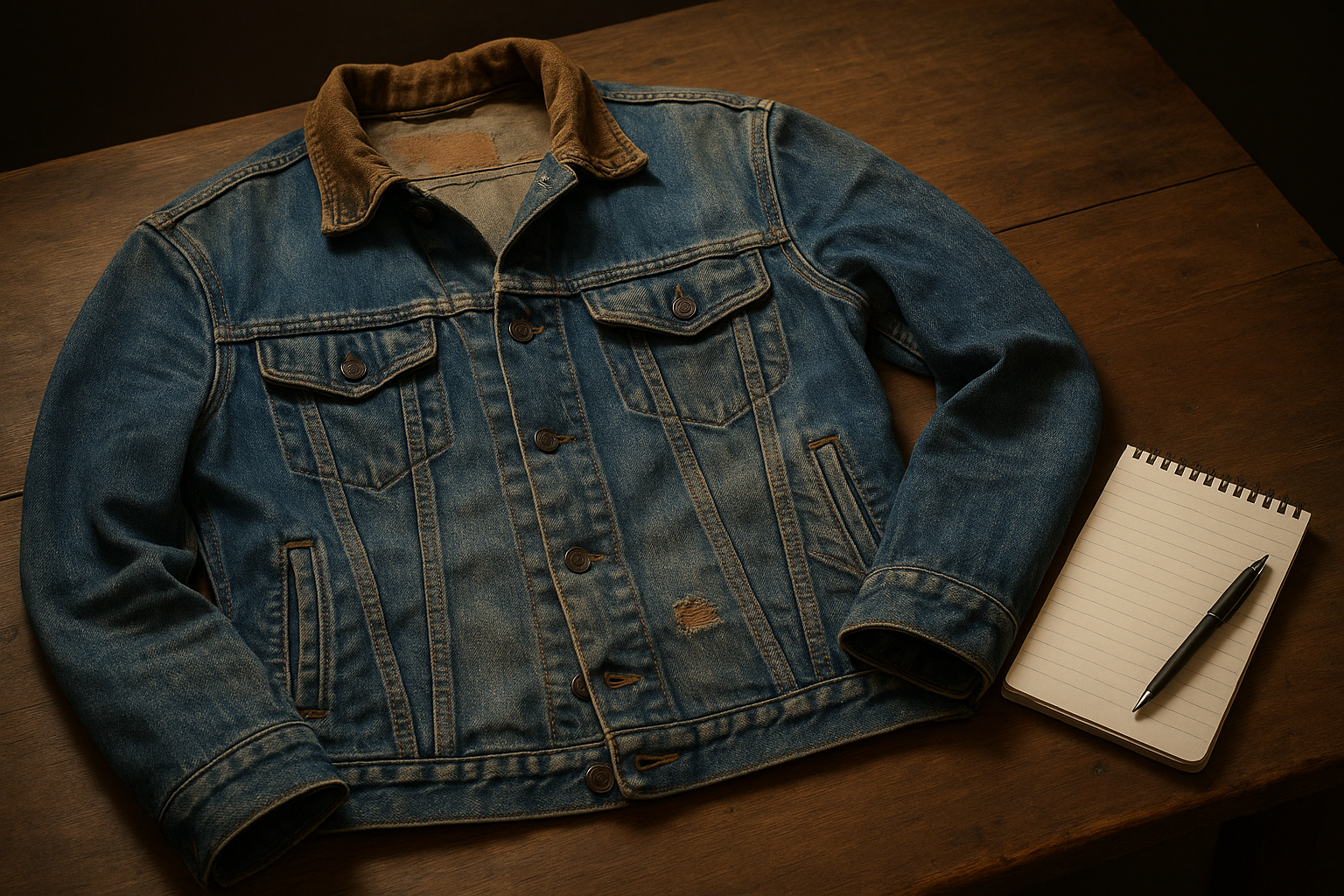
Understanding "As-Is" Clothing Listings: What Grade Threshold Requires Disclosure
"As-is" means the seller is not guaranteeing the garment's condition and will not accept a return for flaws typical of that condition — it does not mean the seller can withhold known defects. On eBay, Poshmark, and Mercari alike, as-is is a return-policy term, not a grading term. A seller can list a Fair-grade jacket as-is and still owe the buyer a disclosure of every hole, stain, and structural failure they can see. Skip that step and "as-is" stops being a legitimate listing choice and starts being the reason you eat a not-as-described claim anyway.
We've seen this trip up experienced resellers more than beginners, because experienced sellers use as-is as a speed shortcut — a way to move damaged inventory fast without writing a full condition report. That shortcut only holds up if the disclosure underneath it is solid.
What "As-Is" Actually Means in Vintage Clothing Listings
"As-is" is a return-eligibility flag, not a condition description. It tells the buyer: what you see in the photos and read in the description is what you get, and there's no post-sale recourse for condition issues that were visible or stated at the time of purchase. It does not mean:
- The garment is undescribed or unphotographed.
- Defects can be omitted because the price is already low.
- The seller is exempt from marketplace item-condition policies.
eBay's own policy language is instructive here: sellers can mark an item "as-is" or note no returns accepted, but they're still required to accurately describe the item's condition in the listing. Not-as-described claims can still succeed against an as-is listing if the flaw wasn't disclosed. As-is limits your return obligation for known, disclosed condition — it does not limit your disclosure obligation.
As-Is vs. Condition Grading: Not the Same Thing
Grading and as-is answer two different questions. A grade — NWT, NWOT, Excellent, Very Good, Good, Fair, Poor — answers "what condition is this garment in, on a standardized scale, across five factors." As-is answers "what happens if the buyer is unhappy after purchase." You can combine them (a Fair-grade sweater listed as-is) or separate them (a Very Good blazer with a no-returns policy for buyer's-remorse reasons only). They are not substitutes.
| Question | Condition Grade | As-Is Flag |
|---|---|---|
| What does it describe? | Actual physical condition across five weighted factors | Return eligibility and seller liability after sale |
| Is it a marketplace policy or a description? | A description (can be self-graded or third-party verified) | A policy (set in listing settings, not a condition claim) |
| Does it require itemizing defects? | Yes — grade is built from documented flaws | Yes — as-is doesn't waive the duty to disclose known flaws |
| Does it protect against INR/NAD claims? | Reduces disputes by setting accurate expectations | Reduces return risk only if disclosure was accurate and complete |
| Typical use case | Every listing, healthy or damaged | Heavily worn, structurally compromised, or defect-dense garments |
The mistake we see most often: a seller treats "as-is" as permission to write a thin description — "vintage tee, as-is, no returns" — on a shirt with a moth hole, a cracked print, and a stretched neckline. That's not an as-is listing. That's an undisclosed-defect listing that happens to say "as-is" at the bottom.
The Grade Threshold: When As-Is Becomes the Right Call, Not a Loophole
As-is starts making practical sense once a garment's condition falls below the Good tier. Here's why: at Excellent, Very Good, and Good, defects are usually few enough and mild enough that you can itemize them individually in a description without the listing becoming unreadable. At Fair and Poor, you're often dealing with multiple defects across multiple factors — a Fair-grade pair of jeans might have crotch thinning, a repaired knee, and waistband fraying all at once. That's the point where "as-is, see photos for full condition, sold as pictured with no additional description guaranteed beyond what's shown" becomes a legitimate framing, because the defect density itself is the disclosure.
The threshold isn't a hard rule enforced by any marketplace — it's a practical judgment call based on defect count and severity:
- Grade the garment first across all five factors: Fabric Condition, Structural Integrity, Cosmetic Appearance, Functional Elements, Odor & Cleanliness.
- Count the defects that would need individual callouts if you were writing a full condition report.
- If the grade lands at Excellent, Very Good, or Good with one to three disclosed flaws, write them out — don't default to as-is.
- If the grade lands at Fair or Poor with defects across three or more factors, use as-is language, but photograph every defect clearly and state the grade and major issues in the title or first line.
- Regardless of tier, disclose anything a reasonable buyer would consider a dealbreaker — holes, odor, missing functional elements, repairs — even in an as-is listing.
- Set the marketplace's return policy to match: no-returns or as-is on the platform's own settings, so the policy is enforceable, not just stated in the description.
The Five Factors That Must Be Disclosed Even in As-Is Listings
As-is doesn't waive disclosure of anything material. In practice, buyers file not-as-described claims most often around these five areas, so they deserve a callout regardless of return policy:
- Fabric Condition — thinning, fiber breakdown, felting, pilling severity, sun fading. A worn-through elbow needs a photo and a mention even on a $12 as-is listing.
- Structural Integrity — seam slippage, blowouts, stretched or bagged shape, shoulder seam failure. If the garment's shape has changed, say so.
- Cosmetic Appearance — stains, discoloration, print cracking, color bleed. "Some wear" is not a disclosure; "faint yellow stain on left cuff, quarter-size" is.
- Functional Elements — broken zippers, missing buttons, snapped drawstrings, non-working snaps. These affect wearability, not just looks, and buyers treat them as the most dispute-worthy category.
- Odor & Cleanliness — musty, smoke, or pet odor. Odor is invisible in photos and the single most common cause of a return on an otherwise well-described as-is item.
A garment can be Poor across the board and still be a clean, fair sale — as long as every one of these categories gets an honest mention. What buyers punish isn't bad condition. It's condition they weren't warned about.
How to Write an As-Is Listing That Doesn't Get You an INR or NAD Claim
The listings that survive as-is scrutiny share a pattern: they lead with the grade-equivalent condition, they show the defect in a dedicated photo, and they use plain language instead of euphemism. "Distressed" and "lived-in" are marketing words; they don't stand in for "12 small moth holes across the front panel." If you wouldn't want to read the description as a buyer and still feel surprised on arrival, it's not disclosed enough yet.
A workable as-is description template looks like this: state the closest grade tier equivalent ("condition consistent with Fair"), list the two or three defects that drove that grade, note any repairs and whether they're professional or home-done, and close with the as-is/no-returns statement set in the platform's own policy fields — not just typed into the body text, since that's the version marketplaces actually enforce.
As-Is Misuse: Common Mistakes That Trigger Disputes
Three patterns account for most as-is disputes we've seen resellers run into:
- Using as-is to avoid grading altogether. Skipping the condition assessment doesn't remove the obligation to describe the item accurately — it just means you're guessing at what needs disclosure instead of working from a checklist.
- Photographing the good side only. A defect that exists but isn't visible in any photo and isn't mentioned in text is undisclosed, full stop, as-is or not.
- Treating as-is as a blanket shield for buyer's remorse and condition claims alike. Marketplace policies distinguish between the two. As-is generally protects you from condition-based returns when the flaw was disclosed; it does not protect you from claims that the item wasn't as described, because that's a different policy category entirely.
The fix for all three is the same: grade before you list, even informally, and let the grade tell you what belongs in the description. As-is is a policy setting you apply after the disclosure work is done — not a replacement for doing it.
If you're not sure where a defect-heavy garment lands, run it through GradeThread before you decide whether it needs a full condition write-up or an as-is flag. You'll get a grade, a factor-by-factor report across Fabric Condition, Structural Integrity, Cosmetic Appearance, Functional Elements, and Odor & Cleanliness, and a certificate you can point to if a buyer ever questions what "as-is" was covering. Try it on one garment sitting in your as-is pile and see what the report actually says.