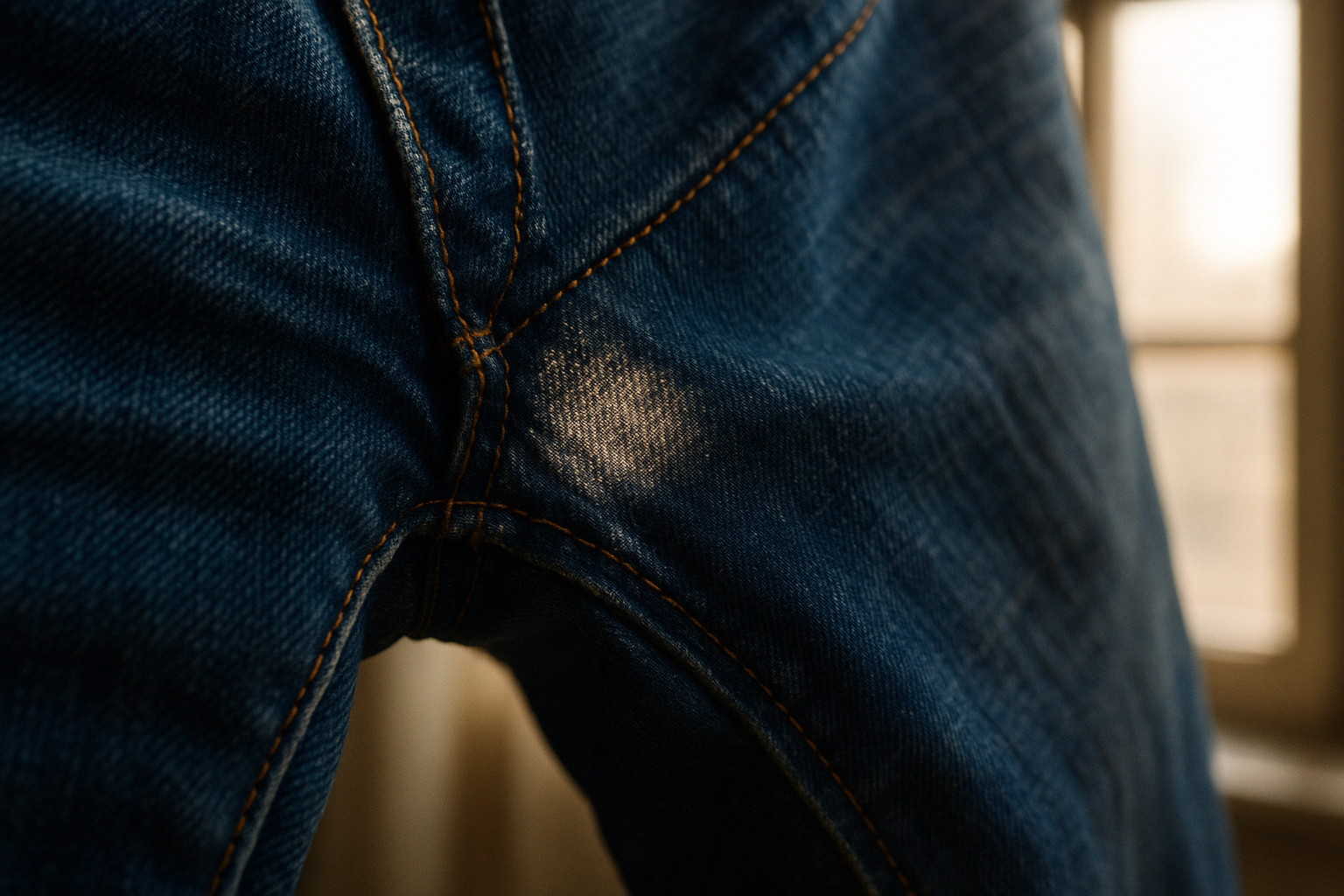
Fabric Transparency and Thinness: How to Grade Worn-Through Areas That Aren't Holes
Thin spots and fabric transparency get graded on a sliding scale between Fabric Condition and Structural Integrity, not as a pass/fail defect — the tier depends on whether the area is merely visible under strong backlighting (Very Good territory) or translucent in normal light and failing a gentle stretch test (Fair or lower). A hole is binary. Thinness is not, and grading it like a hole is the single most common overcall we see in denim inseams, sweater elbows, and silk linings.
Resellers tend to swing one of two ways on this defect. Either they miss it entirely because there's no visible gap in the fabric, and a buyer opens the package to a garment they can see their hand through — instant not-as-described claim. Or they see any sheen change and slap a Poor grade on a garment that's actually sound, cutting the price in half for a flaw that was never going to become a hole in the buyer's lifetime of wearing it. Neither call is right. Here's the standard that splits the difference correctly.
Why Thin Spots Aren't Holes (But Aren't Nothing Either)
A hole is a confirmed loss of fabric — you can put a finger through it. A thin spot is fiber attrition: the weave or knit is still intact, but repeated friction has worn down the yarn count, the nap, or the coating until light passes through where it didn't before. This happens predictably at friction points — inner thighs on jeans, elbows on sweaters, the underside of a shirt collar, the seat of khakis, the wale tops of corduroy.
The reason this matters for grading is that thinness is a leading indicator, not a confirmed failure. A garment with early-stage thinning at the inner thigh might last another two years of normal wear. The same garment with pronounced, papery thinning in that spot might develop a blowout on the first wear. Both are currently "not a hole," but they don't belong in the same grade.
The Light Test: How to Detect Transparency in Clothing Fabric
Backlighting is the single most reliable way to catch thinning before it's obvious in flat, even light — which is exactly the lighting most listing photos use, and exactly why buyers get surprised. Use this procedure every time you inspect a garment with a known friction zone (inseam, elbow, seat, collar, underarm):
- Inspect the garment under bright, directional light first and note any change in sheen, color, or nap at expected wear zones.
- Hold the suspect area up to a window or backlight it with a phone flashlight from behind the fabric.
- Compare the suspect area to a control panel of the same fabric elsewhere on the garment — same weight, same weave, unworn.
- Run the gentle two-finger stretch test: pinch the area between thumb and forefinger and stretch it slightly. Sound fabric resists. Compromised fabric feels papery, gives with little resistance, or shows fiber separation.
- Photograph the defect with the backlight source visible behind the fabric so the report shows exactly what a buyer will see if they check the same way.
- Log the finding against Fabric Condition (fiber loss, weave degradation) and, if the stretch test shows give, against Structural Integrity (risk of imminent failure).
- Assign the tier using the thresholds below and write the disclosure before you photograph the rest of the garment, while it's still in front of you.
Grading Thresholds: Thin Spots and Transparency by Tier
The tier hinges on three things: whether the area is visible in normal light, whether it's visible under backlighting only, and whether it passes the stretch test. Use this table as your working standard.
| Tier | Visibility | Stretch Test Result | Grading Impact |
|---|---|---|---|
| Excellent (8) | Not visible in normal light or backlight; only a marginal sheen change at the expected friction point | Passes fully, no give | No deduction — note in report as "monitor zone," not a defect |
| Very Good (7) | Invisible in normal light; visible only under strong backlighting | Passes, minimal give | Minor Fabric Condition note; disclose location, no price impact beyond standard Very Good range |
| Good (6) | Faintly visible in normal light at the friction point; obvious under backlight | Passes but with noticeable give | Fabric Condition deduction; disclose as "thin spot at [location], not yet a hole" |
| Fair (5) | Clearly visible/translucent in normal light | Fails — fibers separate or area feels papery under light pressure | Structural Integrity flag added; disclose as pre-hole wear, imminent failure risk |
| Poor (3–4) | Translucent in all lighting, or fabric has already given way to a hole at the thinned area | Fails outright | Structural Integrity failure; grade as hole/tear per your existing damage standard |
Note the split at Fair: this is where thinness stops being purely cosmetic and starts being a functional risk. A Fair-graded thin spot isn't a hole yet, but you're telling the buyer it's likely to become one under normal wear — that's a materially different disclosure than "minor wear consistent with age," and buyers deserve the distinction.
Where Thinning Shows Up First
Certain garment zones fail this way more than others, and knowing the usual suspects speeds up inspection:
- Denim inner thighs: the classic pre-blowout zone. Constant friction between the legs wears the indigo layer and then the weave itself. This is the number one thin-spot call we make on vintage denim.
- Sweater elbows: desk and counter friction thins knit fabric from the inside out, especially on merino and cotton blends. Often paired with pilling — check both.
- Shirt collar undersides: repeated turning and friction against the neck thins the fabric at the fold line, sometimes before the visible collar edge shows fraying.
- Silk and rayon linings: lightweight linings in blazers and coats thin fast at the underarm and shoulder seam from body oil and movement. Backlighting catches this before it's visible on a hanger.
- Corduroy wale tops: the raised ribs wear down first, flattening and thinning ahead of the recessed fabric between them — check the tops of the wales specifically, not the whole panel.
- Khaki and chino seats: sustained sitting friction thins the fabric at the seat well before it thins elsewhere on the garment.
Structural Weakness vs. Cosmetic Thinness — Which Factor Does It Hit?
This defect can land on either Fabric Condition or Structural Integrity depending on severity, and grading it accurately means picking the right factor rather than defaulting to one.
Fabric Condition is the right call when the thinning is a fiber-density issue with no functional risk yet — the garment will hold up to normal handling and wear, the thin spot is a cosmetic and durability note, not a failure point. Structural Integrity is the right call once the stretch test shows give, because at that point you're not describing appearance — you're describing a garment that is at meaningful risk of tearing during normal use, which is a functional claim, not just a cosmetic one. Grading a Fair-level thin spot as pure Fabric Condition understates the risk; grading a Very Good-level sheen change as Structural Integrity overstates it. Match the factor to what the stretch test actually showed, not to how the defect looks in a photo.
Disclosure Language That Doesn't Kill the Sale
Buyers don't need alarmist language, they need accurate location and severity. "Thin spot at inner left thigh, visible under backlight only, no current tear" tells a buyer exactly what they're getting and reads as competence, not a red flag. Compare that to vague language like "some wear" — which either hides the defect (return risk) or, when a buyer over-imagines it, kills the sale before it starts. Specificity protects you both ways. Name the location, name what test you ran, name what you found. That's what a condition report is for.
If you're grading a garment with a known friction-zone thin spot and you're not confident where it lands on this table, that's exactly the kind of call GradeThread's report is built to make consistent — five weighted factors, a documented threshold for each tier, and a certificate the buyer can check themselves. Try grading one garment with a suspect thin spot and see where the report lands it.