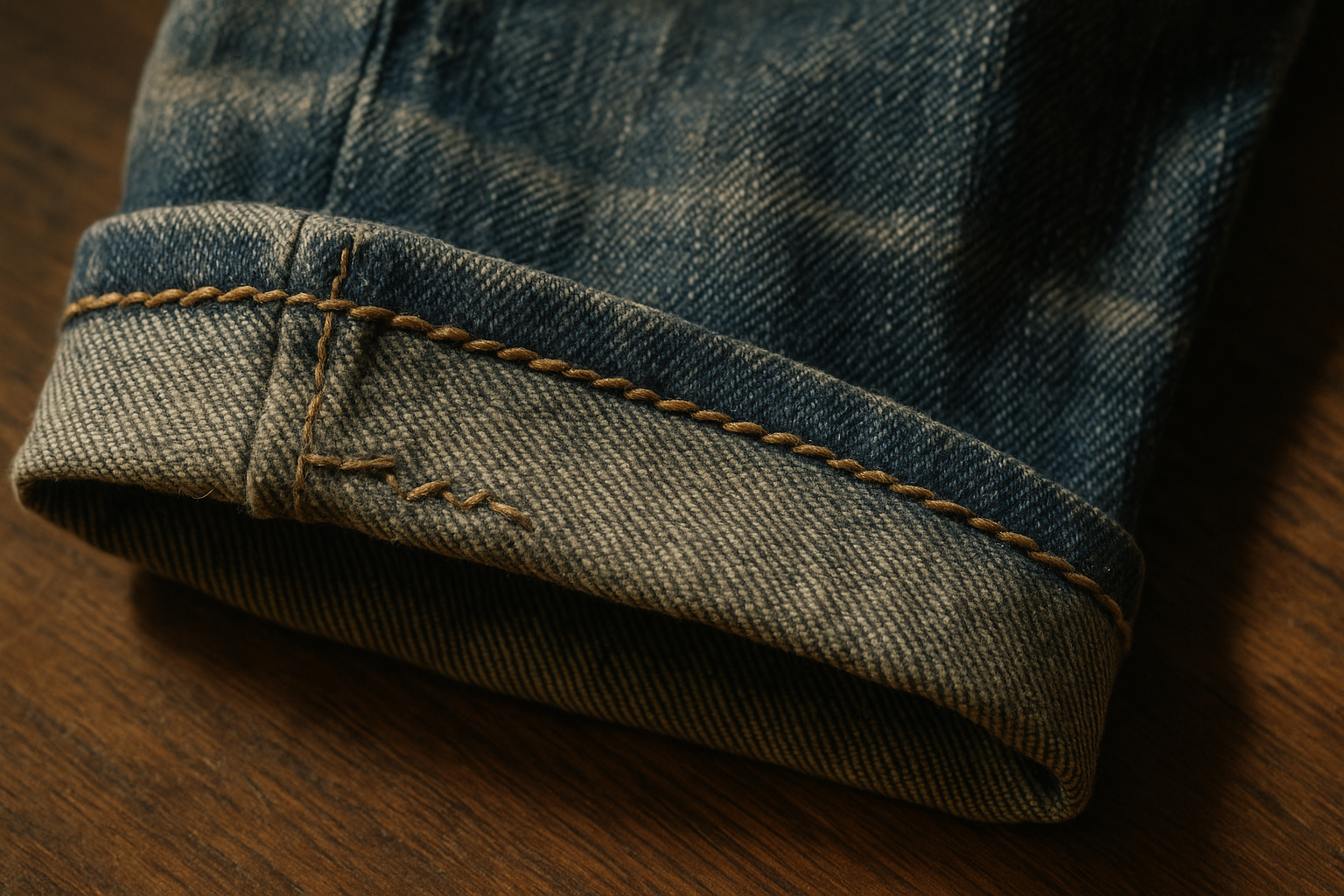
A hemmed or let-out pair of vintage jeans is not an automatic downgrade. What actually caps the grade is whether the alteration is disclosed, whether it's structurally sound, and whether the original hem details survived intact. A clean, factory-quality cuff on jeans with an untouched original hemline can still grade Excellent. A let-out inseam with an exposed fold-line and loose repair stitching caps out at Good or Fair, regardless of how tidy it looks in a flat lay photo.
Resellers who move vintage denim volume see three alteration types on repeat: cuffed hems (folded, not cut), let-out inseams (original hem released to add length), and patched repairs (fabric or thread added to reinforce or cover damage). Each one interacts with the five grading factors — Fabric Condition, Structural Integrity, Cosmetic Appearance, Functional Elements, and Odor & Cleanliness — differently. Treating all three as one generic "altered" flag is how sellers either over-penalize a mint pair or under-disclose a real defect and eat a return.
Cuffed Hems: The Alteration That Usually Doesn't Cost You Anything
A cuff is a fold, not a cut. The original hem stitching, chainstitch roping, and fabric length are all still there — the wearer just turned it up. This is the most forgiving alteration in the denim hem repair assessment grading standards because nothing about the garment's fiber or seam allowance has changed.
What we're checking:
- Is the original factory hem intact underneath the cuff, with its chainstitch roping (the slight wave pattern factory chainstitch machines leave) still visible?
- Does the cuff fold sit flat without creasing or fraying at the fold line from repeated wear?
- Is there any fade discoloration at the fold that would show if the cuff were released for a taller buyer?
If the original hem is untouched and the fold shows only light creasing, cuffing has no impact on Structural Integrity or Fabric Condition. It's a styling choice, not damage. Note it in the listing as "cuffed, original hem intact" so a buyer who wants full length knows they can let it down. This single line of disclosure is the difference between a neutral mention and a surprised buyer filing a not-as-described claim because they assumed the jeans were already at full length.
Let-Out Inseams: Where the Grade Actually Gets Capped
Let-out inseams are the opposite situation — someone has already released the original hem to add length, and that action leaves permanent evidence. This is the alteration most likely to affect let-out inseam integrity condition evaluation, because letting out fabric doesn't just change length. It exposes fabric that was folded and protected from washing and UV for years, and it often thins the seam allowance right at the stress point of the hem.
Three tells give away a let-out inseam every time:
- A visible fade halo or crease line above the current hem — the fabric that used to be folded inside is a different shade than the exposed leg, because it wasn't sun- or wash-faded at the same rate.
- A straight lockstitch instead of a factory chainstitch at the hem. Original Levi's, Wrangler, and most vintage five-pocket denim used chainstitching on the original hem; a home or tailor rehem almost always uses a straight lockstitch, sometimes in a slightly mismatched thread color.
- A thinner seam allowance below the new stitch line. Original hems leave roughly 3/4 to 1 inch of fabric folded inside; a let-out hem uses up most of that allowance, leaving less fabric to work with and less reinforcement against fraying.
Here's the grading logic: if the let-out hem is cleanly restitched, the seam allowance is still substantial, and the fade halo is minor, this caps the garment around Very Good — it's a disclosed alteration with no functional risk. If the seam allowance is thin, the stitching shows puckering or skipped stitches, or the fade halo is severe enough to be visible at arm's length, that's a Structural Integrity and Cosmetic Appearance hit that pushes the grade to Good or Fair. A let-out inseam is never disqualifying on its own — but a poorly executed one is a real defect, not a cosmetic quirk.
Patched Repairs: Visible Mending vs. Undisclosed Damage Coverage
Patches are the alteration category most likely to get mishandled in a listing, because sellers either hide them (thinking disclosure will kill the sale) or over-penalize them (grading a beautifully done boro-style patch the same as a peeling iron-on). Neither is right.
Run every patch through the same three checks:
- Fabric match. Does the patch use denim of similar weight and wash, or does it introduce a visually jarring mismatch? A patch cut from matching selvedge scrap reads very differently than a random contrast fabric.
- Attachment method and durability. Hand-sewn or machine-sewn patches with even tension hold up in wash and wear. Iron-on patches with adhesive backing lift at the edges over time — check the corners specifically, since that's where peeling starts.
- What the patch is covering. A patch over a small moth hole or a worn-through knee is disclosed damage with a repair. A patch that's clearly there to hide a larger tear or a repaired split seam needs to be called out as a repair, specifically, not just described as "has a patch."
A well-executed, fabric-matched, securely stitched patch on a garment that's otherwise clean is a Very Good or even Excellent candidate if the repair reads as intentional style rather than damage control — this matters a lot for Japanese repro and boro-influenced denim, where visible mending is part of the aesthetic and buyers pay a premium for it. A peeling, mismatched, or poorly secured patch covering real structural damage caps the grade at Fair, because the underlying defect is still there and the repair adds its own failure point.
Comparison: How Each Hem Type Grades
| Alteration | What to inspect | Best-case grade impact | Worst-case grade impact |
|---|---|---|---|
| Cuffed (folded, original hem intact) | Fold crease, original chainstitch beneath | No impact — Excellent still achievable | Very Good, if fold fraying has set in |
| Let-out inseam | Fade halo, stitch type, remaining seam allowance | Very Good, clean restitch and minor halo | Fair, thin allowance or visible puckering |
| Patched hem/inseam | Fabric match, attachment security, what's being covered | Excellent, intentional matched repair | Fair, peeling patch over structural damage |
| Taken up (cut and rehemmed shorter) | New stitch line, discarded fabric permanence | Very Good, clean professional rehem | Good, visible contrast stitching or uneven hem |
The Inspection Procedure We Use Before Grading Any Hemmed Denim
- Turn the jeans inside out and examine the inseam allowance at the hem for original stitch holes and fabric that shows no sun exposure.
- Identify the stitch type at the hem — a wavy chainstitch pattern indicates an original factory hem; a straight lockstitch indicates an alteration.
- Check for a fade halo or crease line above the current hem, which confirms a let-out inseam even if the new stitching is clean.
- Measure the remaining seam allowance below the stitch line to assess both current durability and whether a future buyer could let it out further.
- Inspect any patches for fabric match, edge lift, and stitch tension, and identify what defect the patch is covering.
- Photograph the hem and any patches under raking light (light angled across the fabric) to capture crease lines and stitch contrast that flat lighting hides.
- Record the alteration type, its condition, and any visible repair in the condition report before assigning a final grade.
Disclosure: Where Grades Actually Get Lost
Most disputes on hemmed vintage denim aren't about the alteration itself — they're about a buyer discovering it wasn't mentioned. A cuffed hem you didn't disclose reads as a minor surprise. A let-out inseam or a covering patch you didn't disclose reads as a hidden defect, and that's what triggers not-as-described claims and forces a refund on an item that graded fine on paper.
Cuffed denim condition impact resale comes down to this: alterations are not inherently negative. They're information. eBay's item specifics let you flag "Altered" directly; Poshmark and Mercari listings should state the alteration type in the first two lines of the description, not buried at the bottom. Visible repair disclosure and grade impact go hand in hand — a Very Good grade with a disclosed, well-executed patch outsells an unlabeled Excellent that turns into a return once the buyer finds the patch themselves.
Try It on One Pair
If you've got a hemmed or let-out pair sitting in inventory that you've been unsure how to price, run it through GradeThread. You'll get a numbered grade, a full condition report across all five factors, and a certificate that spells out the alteration for the buyer before they ask. Grade one garment and see exactly how the report reads — it's the fastest way to know if your call on that hem was right.