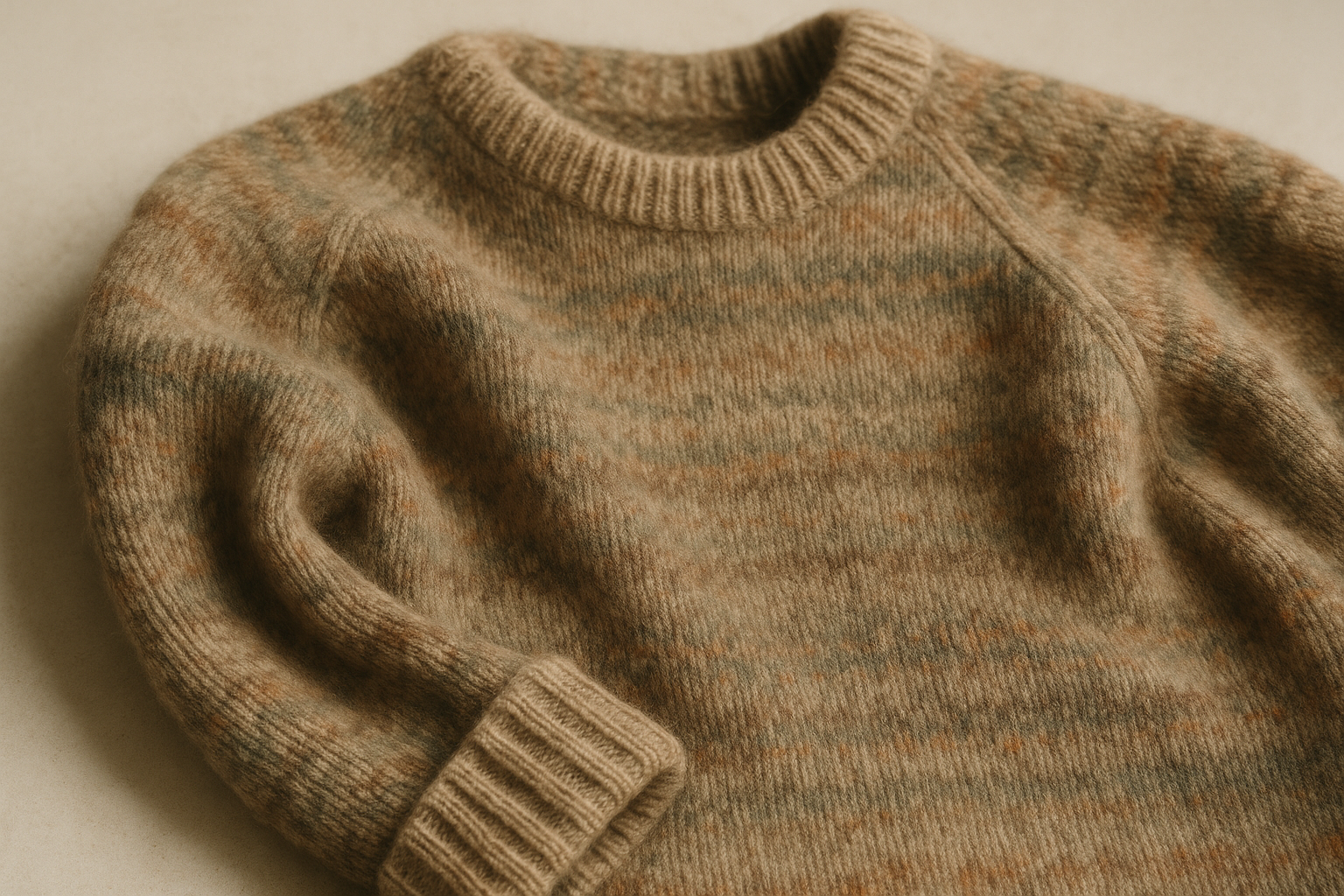
To grade vintage sweater stretch and bagging condition, check whether the garment returns to its original silhouette after light stretching (recoverable, minor deduction) or hangs permanently distorted at the shoulders, elbows, or hem (structural failure, capped at Good or lower regardless of how clean the fabric looks). Shape retention, not surface cleanliness, is the deciding factor for knitwear grading.
Most resellers grade sweaters the way they grade tees: check for stains, check for holes, done. Knitwear doesn't work that way. A cashmere crewneck can be spotless, odor-free, and pill-free and still be a return waiting to happen because the shoulders have dropped two inches and the hem bags out like a paper bag. We've seen this exact scenario tank a listing photographed on a hanger: it looks fine flat, and looks wrong the second a buyer tries it on. On eBay that becomes an "item not as described" claim, and the return window and shipping costs land on you. That's a Structural Integrity failure, and it's the one defect category sellers most consistently underweight.
What Bagging and Shoulder Stretch Actually Mean
Bagging is permanent, non-recoverable distortion in a knit's shape, usually at the elbows, seat, or lower body, caused by repeated stress without elastic recovery. Shoulder stretch is the same failure mode localized to the shoulder seam and yoke, usually from years on a hanger instead of folded storage. Both are different from simple wear-softening, which is cosmetic and doesn't change fit.
The test that separates the two: lay the garment flat, smooth it into its intended shape, and let go. Recoverable stretch springs back within a few seconds. Bagging and shoulder stretch don't move, because the yarn has lost its elastic memory. This is the single most useful five-second test in vintage knitwear grading, and it's the one most listing photos never show.
One caveat: a gentle wash and reshape-dry can restore some recovery in wool, so a sweater that fails the test unwashed may pass after cleaning. Always run the test on the garment as it will ship, and grade what the buyer will receive.
The Shape-Hold Standard: Grading Procedure
Use this sequence every time you grade a sweater, cardigan, or knit dress. It takes under two minutes and catches what a quick glance misses.
- Lay the garment flat on a hard surface and smooth the shoulders, sleeves, and hem into their intended shape.
- Check the shoulder seams: do they sit at the natural shoulder point, or have they dropped toward the upper arm? A drop of half an inch or more from the original seam placement is a shoulder stretch defect.
- Pinch and gently stretch the ribbed cuffs and hem 2-3 inches, then release. Time the recovery: under 3 seconds is healthy elastic recovery; slow or no recovery signals degraded elastic memory.
- Hold the sweater up by the shoulders and let it hang. Look for bagging at the elbows (a stretched-out pocket of fabric with no arm inside it) and at the lower back or seat area.
- Measure chest, shoulder-to-shoulder, and sleeve length, then compare them against the size tag's expected measurements or a comp from the same style. A gap of more than 1 inch in shoulder width usually confirms visible stretch, not just perception.
- Photograph the garment both flat and on a hanger or form, so the buyer can see the silhouette, not just the fabric surface.
- Assign the grade using the shape-hold standard below, then note the specific stretch location in the condition report. "Shoulder seam dropped ~1in" is a disclosure buyers trust; "some wear" is not.
Where Stretch Shows First: Five High-Risk Zones
Not every part of a sweater stretches equally. In order of how often we see failures during grading:
- Shoulder seams / yoke: the most common failure, almost always caused by years on a wire or wooden hanger instead of folded storage.
- Elbows: repetitive bending stresses the yarn locally; bagging here is common on cardigans and pullovers worn for work.
- Ribbed cuffs and hem: the elastic ribbing loses recovery before the body fabric does, so cuffs go slack while the sweater otherwise looks fine.
- Neckline / collar rib: stretched crew and V-necks that no longer sit close to the collarbone are a shape-hold failure, not just a cosmetic one.
- Lower body / seat: common on longer cardigans and sweater dresses that were sat in for extended periods without recovery time between wears.
Grading by Stretch Severity
Here's how stretch and bagging severity map to the standard condition tiers. This assumes the rest of the garment (Fabric Condition, Cosmetic Appearance, Odor & Cleanliness) is otherwise in good shape; stack additional defects and the grade drops further.
| Tier | Shoulder / Shape Condition | Bagging Present? | Typical Grade |
|---|---|---|---|
| Excellent | Shoulder seams sit at natural point; full recovery on stretch test | None visible | 8.0-8.5 |
| Very Good | Slight softening at shoulder, recovers within a few seconds | None or barely perceptible | 7.0-7.5 |
| Good | Shoulder seam dropped <1in, partial recovery on stretch test | Minor bagging at elbows only | 6.0-6.5 |
| Fair | Shoulder seam dropped 1in+, minimal recovery | Visible bagging at elbow and/or hem | 5.0-5.5 |
| Poor | Shoulders permanently dropped, garment hangs out of shape on form | Bagging throughout body | 3.0-4.0 |
Shape retention issues cap the ceiling grade regardless of how clean the fabric is. A sweater with zero pilling, no stains, and perfect color can still only reach Good if the shoulder seam has dropped an inch. This is a Structural Integrity call, and Structural Integrity is weighted independently of Cosmetic Appearance in the five-factor model.
Fiber Matters: Recovery Isn't Universal
Shape-hold behavior differs by fiber, and grading the same stretch severity the same way across fibers under- or over-calls the defect.
- Merino and lambswool: good natural elastic recovery; moderate stretch often bounces back after a gentle wash and reshape-dry. Grade generously if recovery is confirmed.
- Cashmere: lower elastic memory than wool; once stretched, cashmere rarely fully recovers even after washing. Treat visible shoulder stretch in cashmere as a firmer grade cap than the same stretch in merino.
- Cotton knits: poor recovery once stretched; cotton has little natural elasticity, so bagging in cotton sweaters is close to permanent. Grade cotton knit stretch more strictly than wool.
- Acrylic and synthetic blends: variable; some hold shape well over decades, others (especially older acrylic) lose recovery entirely and bag out fast. Test rather than assume.
- Wool/synthetic blends: often the best shape-holders in vintage knitwear because the synthetic fiber adds elastic recovery the wool lacks alone.
Photographing Stretch So Buyers Believe the Grade
A disclosed flaw that buyers can see costs far less than one they discover at home. Shoot three frames for every knit: a flat lay with the shoulders squared, a hanging shot showing where the shoulder seam lands, and a close-up of the worst elbow or hem. Add a tape measure across the shoulders in one frame. Then put the same numbers in the listing text and the eBay item specifics so the photos and the words agree.
How Stretch Interacts With the Five Grading Factors
Shoulder stretch and bagging sit primarily under Structural Integrity, but they touch other factors too. A dropped shoulder seam is a structural call. A visibly bagged elbow that's also thinned or gone sheer is both a Structural Integrity and a Fabric Condition issue. A stretched neckline that no longer sits flat is a Functional Elements concern if it affects how the garment wears, not just how it looks on a hanger. Keep these separated in your condition report rather than lumping everything into one vague "some stretching" note. Buyers verifying a certificate want to know which factor drove the grade down, and sellers who separate the calls make fewer wrong assumptions about repairability.
Try It on Your Next Knit
Grab the next vintage sweater or cardigan in your intake pile and run the shape-hold test before you photograph it. Lay it flat, smooth it, check the shoulder seams, pinch the cuffs. If you want a second opinion that's consistent across your whole inventory, not just your own eye on a Tuesday afternoon, run it through GradeThread. You'll get a numerical grade, a condition report broken out across Fabric Condition, Structural Integrity, Cosmetic Appearance, Functional Elements, and Odor & Cleanliness, and a certificate your buyer can verify before they ever open the package. Grade one sweater and see what the report catches that a glance doesn't.