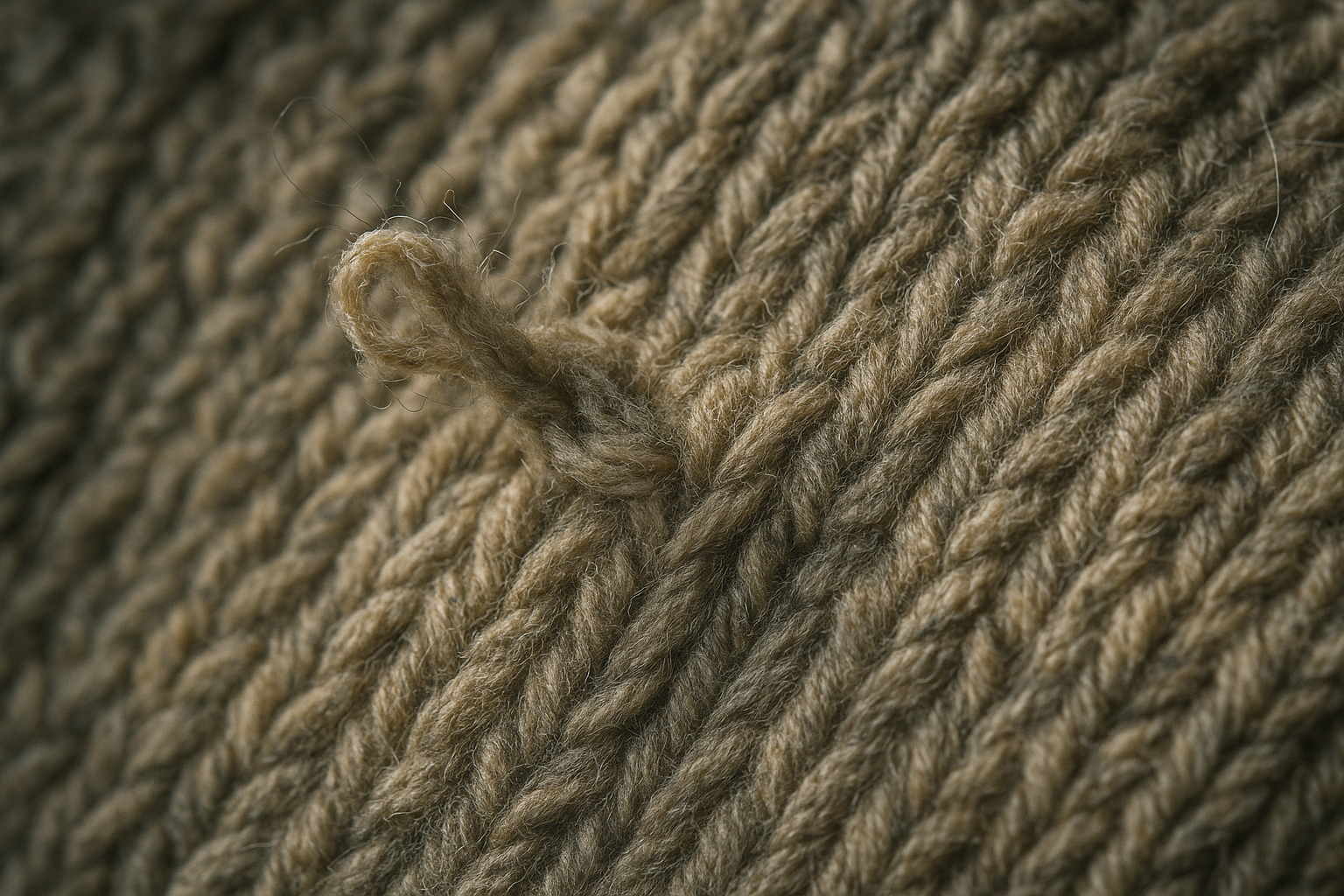
A single small snag on a vintage sweater doesn't automatically knock it out of Excellent — a pulled loop that lies flat and hasn't distorted the surrounding stitches is a minor cosmetic call. But a pull that's drawn yarn through the knit structure, created a visible gap, or started a run caps the grade at Fair, and a cashmere or fine-gauge wool piece with three or more structural pulls is often not worth listing at all. The difference isn't how many snags you can count from three feet away. It's whether the yarn is intact, whether the knit is running, and how visible the damage is when the garment is worn.
We see this call get botched constantly, in both directions. Sellers who list a snagged cardigan as Excellent because "it's just a little pull" eat a not-as-described return. Sellers who grade a lightly snagged cotton knit down to Poor because they're spooked by the word "pull" leave money on the table on a garment that's genuinely wearable. Here's how to grade snags and pulls on vintage sweaters correctly, using the same five-factor standard we apply to every other knit defect.
Snag vs. Pull vs. Hole: Three Different Failure Modes
These terms get used interchangeably by casual sellers, but they describe three distinct stages of yarn damage, and each one grades differently.
- Snag: A loop of yarn has been caught and pulled slightly proud of the fabric surface, but the yarn itself is unbroken and the stitch structure underneath is intact. Most snags can be worked back into the knit with a blunt needle.
- Pull: The yarn has been drawn through multiple stitches, creating a visible gap or ladder in the knit. The fiber is still continuous — nothing has broken — but the stitch geometry is now distorted and won't fully reset.
- Hole/run: The yarn has broken or a dropped stitch has propagated, and the knit is actively unraveling or has an open gap. This is a structural failure, not a cosmetic one.
A snag is a Cosmetic Appearance issue. A pull that's distorted the stitch geometry touches both Cosmetic Appearance and Fabric Condition. A hole or active run is a Structural Integrity failure, full stop — and Structural Integrity issues cap the grade regardless of how the rest of the garment looks.
The Five-Factor Breakdown for Knit Snags and Pulls
Under GradeThread's standard, a snag or pull can touch up to three of the five weighted factors depending on severity:
- Fabric Condition: Is the yarn itself compromised — thinned, frayed, or broken — or just displaced?
- Structural Integrity: Has the pull created a run risk, a gap that will widen with wear, or an actual hole?
- Cosmetic Appearance: How visible is the defect at normal viewing distance, and does its placement matter (chest vs. underarm)?
- Functional Elements: Rarely affected unless the pull is at a cuff, buttonhole, or seam junction where it compromises fit or fastening.
- Odor & Cleanliness: Not directly related, but worth noting separately — don't let a clean-smelling sweater with heavy pulling read as higher grade than it is.
A single isolated snag that resets cleanly touches only Cosmetic Appearance, and barely. A cluster of pulls in a visible zone with any run risk touches Cosmetic Appearance, Fabric Condition, and Structural Integrity simultaneously — and that combination is what pushes a knit from Good into Fair or lower.
Snag Severity Grading Standards: The Tier Breakdown
| Grade Tier | What You'll See | Snag/Pull Count | Run Risk | Factors Affected |
|---|---|---|---|---|
| Excellent (8) | One or two barely visible snags, resettable with a needle, no stitch distortion | 1–2, isolated | None | Cosmetic Appearance (minor) |
| Very Good (7) | A few small pulls, slight stitch distortion, visible on close inspection only | 2–4, scattered | None to minimal | Cosmetic Appearance, minor Fabric Condition |
| Good (6) | Multiple visible pulls, some distortion, may be noticeable at arm's length in one zone | 4–8, may cluster | Low | Cosmetic Appearance, Fabric Condition |
| Fair (5) | Dense pulling or one confirmed short run, distortion visible without close inspection | 8+ or 1 active run | Moderate | Cosmetic Appearance, Fabric Condition, Structural Integrity |
| Poor (3–4) | Multiple runs, holes, or unraveling that will progress with normal wear | Multiple runs/holes | High, active | Structural Integrity (caps grade), Fabric Condition |
Notice that count alone doesn't determine the tier — a sweater with fifteen tiny, resettable snags scattered under the arms can still land in Very Good, while a single confirmed run on a chest panel can drop a garment straight to Fair. Placement and run risk carry more weight than raw number.
The Pull Test: How to Grade Snags and Pulls Step by Step
Use this procedure on every knit before you assign a grade. It takes under three minutes per garment once you've done it a few times.
- Lay the garment flat and check it under raking (side-angle) light first — snags and pulls that are invisible under direct overhead light show up as shadows under raking light.
- Identify each defect and classify it as a snag, pull, or hole/run using the definitions above — don't skip this step, since the classification determines which factors are affected.
- For each snag, gently work the pulled loop back into the surrounding stitches with a blunt needle or your fingernail. If it resets flush and the stitch geometry looks normal, log it as a minor Cosmetic Appearance item. If it won't reset, reclassify it as a pull.
- For each pull, gently tug the yarn ends on either side to check for continued movement. If the row shifts or a gap widens, you have active run risk — this moves the defect into Structural Integrity territory.
- Count total defects and note their location. A snag hidden at the side seam grades differently than the same snag centered on the chest, even though the physical damage is identical.
- Cross-reference your count, severity, and run-risk findings against the tier table to land on Good, Fair, or Poor.
- Document each defect with a close-up photo before listing — this is your evidence if a buyer disputes the grade later, and it's exactly the kind of defect shot that belongs in a condition report.
When It's Not Worth Listing
Not every damaged knit deserves a listing, and this is the call resellers avoid making because they don't want to write off sourcing cost. Three signals mean you should cut your losses:
- Active, unstoppable runs. If a run continues to propagate every time you handle the garment, it will keep unraveling in shipping and after sale. No amount of careful photography changes that outcome.
- Pulls concentrated at stress points. Snags at the elbow, underarm, or cuff — areas that see repeated flex — are more likely to progress into holes with normal wear, even if they look stable today.
- High pull density on fine-gauge fiber. A lambswool or cashmere knit with eight or more pulls has usually already lost enough yarn continuity that the garment won't hold its shape through another wash cycle. On a $15 acrylic cardigan, that's a Fair listing. On a $200 cashmere sweater, it's often better sourced for parts, repair-and-resell (if you disclose the repair honestly), or donated.
The math is simple: if the repair time and photography effort exceed what the garment will realistically sell for at an honest Fair or Poor grade, it's not worth listing. That's not a failure — it's inventory discipline.
Category Quirks Worth Knowing
Fiber content changes how forgiving a snag is. Tightly plied merino resists pulling better than loosely spun lambswool. Cotton knits snag less easily but show pull distortion more visibly because the stitches don't have wool's natural memory to spring back. Synthetic blends (acrylic, nylon-wool) tend to snag on rough surfaces like Velcro or zippers more than natural fiber does, but the pulled loop is less likely to run because the fiber has less continuous twist to unravel. Cable-knit and ribbed structures hide small snags well in the texture, but a pull in a cable column is more visible and more likely to distort the whole cable pattern than the same pull in stockinette.
When you're grading, factor content into your severity call — the same two-inch pull reads as a bigger defect on a fine merino crewneck than on a chunky acrylic cardigan, because the fiber recovery and visual impact differ.
Grading snags and pulls consistently is exactly the kind of judgment call that varies wildly seller to seller — which is the whole reason standardized grades exist. If you want to see how this looks applied to an actual garment, grade one knit through GradeThread and get the full condition report, five-factor breakdown, and a certificate you can drop straight into your listing.