Moth Damage and Fiber Loss: How to Grade Insect Damage Without Overstating the Flaw
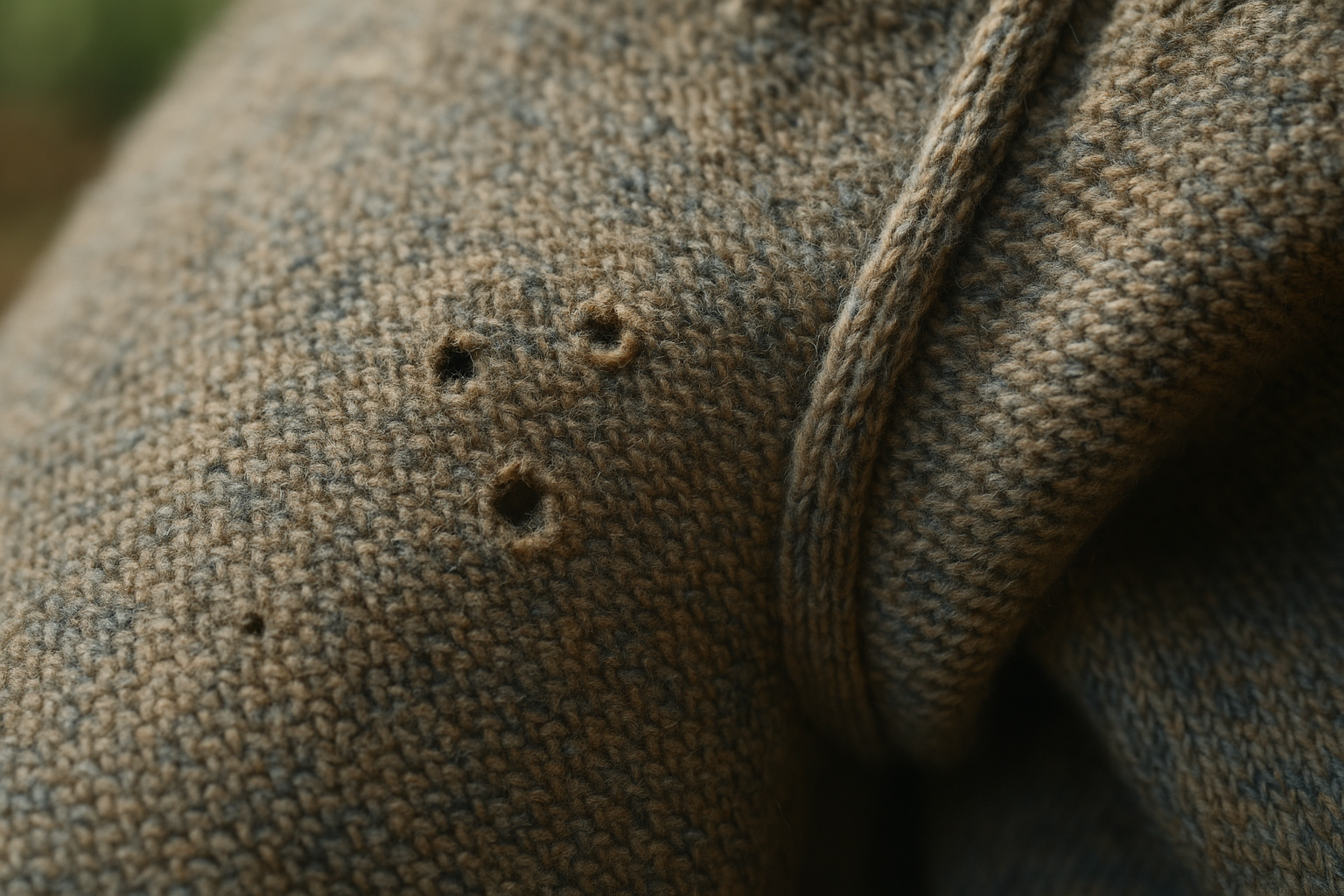
Moth damage grades on fiber loss density and location, not on whether you found evidence of moths at all. A single 2mm pinhole tucked in a wool sweater's underarm seam can still grade Excellent if it's isolated and the surrounding fiber is stable. A scattering of ten pinholes across the front panel caps that same sweater at Fair regardless of how small each individual hole is. The mistake most resellers make is treating every moth hole as one defect — when the count, location, and fiber condition around it determine three different grade outcomes.
How to Identify and Grade Moth Damage on Vintage Clothing
Clothes moth larvae feed on keratin — the protein in wool, cashmere, angora, silk, and fur. They don't touch cotton, linen, or pure synthetics, which is why a 100% acrylic cardigan showing "moth holes" is almost always something else: a burn, an acid splash, or friction wear. Confirming the fiber content is step one, not an afterthought.
- Check the high-risk zones first: underarms, the inside of collars, cuffs, and anywhere the garment folded in storage. Larvae prefer dark, undisturbed fabric layers, so folded hems and stacked storage creases take the worst damage.
- Backlight the garment. Hold the fabric up to a window or lightbox — pinholes that are invisible in flat-lay photography show up immediately as light spots.
- Count the holes and measure diameter with a ruler or coin for scale. One hole under 2mm reads differently than six holes averaging 4mm.
- Run a gentle tug test at the edge of each hole. Stable moth damage stays put; fiber that continues to give way or run under light tension signals active weakening, not a contained flaw.
- Look for casings, frass (small dark droppings), or larval silk webbing in seams and pocket bags. Any of these present in the current listing photos signals possible active infestation, not historical damage — this is a Odor & Cleanliness issue on top of the fiber loss.
- Cross-reference hole location against seams and stress points. A hole sitting on a seam line or at the elbow crease behaves differently under wear than the same hole mid-panel on flat fabric.
- Assign the grade using hole count, size, and location against the table below, then photograph each hole individually with a coin or ruler for scale before listing.
The Five Factors Moth Damage Touches
Moth damage doesn't live in one column of a condition report. It typically shows up across three or four of GradeThread's five weighted factors at once, which is why a quick "there's a hole, dock a point" approach undergrades the report:
- Fabric Condition — the core hit. This factor scores fiber integrity, and moth feeding directly removes fiber. The tug test at each hole edge determines whether this is a contained loss or an active weak zone.
- Structural Integrity — only affected when holes intersect a seam, dart, or high-stress fold line (elbow, underarm, crotch). A hole mid-panel on flat fabric doesn't touch this factor; the same size hole on a seam line does.
- Cosmetic Appearance — driven by visibility. A hole hidden in an underarm seam allowance scores far better here than the identical hole on a front chest panel, even though Fabric Condition scores them the same.
- Functional Elements — rarely involved unless damage sits at a buttonhole, cuff closure, or waistband, where fiber loss can compromise how the garment actually functions.
- Odor & Cleanliness — flagged separately if you find frass, casings, or a musty storage smell. This is the tell for active or recent infestation and should always be disclosed apart from the hole count itself.
Grading Table: Moth Damage Severity by Tier
| Damage Description | Max Grade Tier |
|---|---|
| No visible holes; garment shows preventative cedar/lavender storage evidence only | Excellent (8.0) — eligible if otherwise flawless |
| 1–2 pinholes under 3mm, hidden in seam allowance or underarm, fiber stable at edges | Excellent (8.0) |
| 1–3 small holes (2–5mm) in a non-stress, low-visibility area, edges stable under tug test | Very Good (7.0) |
| 4–8 holes, or any hole sitting on a seam or elbow/underarm stress point | Good (6.0) |
| Dense clustering (8+ holes), visible fiber thinning around multiple holes, frayed rather than clean edges | Fair (5.0) |
| Structural failure — holes causing seam separation, active larvae, casings, or frass present | Poor (3.0–4.0) |
Wool Moth Holes Assessment: Fiber Type Changes the Math
Fiber loss grading standards aren't identical across wool weights. A lambswool crewneck and a fine cashmere cardigan take moth damage differently, and grading them the same way undercalls one and overcalls the other.
- Coarse wool (Shetland, lambswool, tweed): denser fiber structure resists larval feeding somewhat and tends to show discrete, countable holes. Grade primarily on count and location.
- Fine wool and cashmere: looser weave and finer fiber means damage spreads faster and holes often come with a visible thinning halo around the entry point — not just a clean hole. Weight the tug test result more heavily here; a stable-edge cashmere hole still deserves a fair grade, but any give under tension should drop the tier further than the same result would on coarse wool.
- Blends (wool/nylon, wool/acrylic): moths feed selectively on the protein content, which can leave a hole with synthetic fiber "bridging" across it — a partial hole that hasn't fully opened. This is still active fiber loss and should be graded as a hole, not dismissed as intact.
Insect Damage vs. the Defects Buyers Confuse It With
Overstating or understating moth damage usually comes from misidentifying the defect entirely. Here's what separates it from lookalikes:
- Cigarette burns: crisp, roughly circular edges, often with a slight browning halo from heat. Moth holes have irregular, soft edges with no discoloration ring.
- Acid or bleach holes: geometric or streak-shaped, frequently paired with color loss around the hole rather than clean fiber removal. Moth damage removes fiber without touching dye.
- Friction snags: single points of damage near pockets, zippers, or bag straps — one hole, one location, tied to a wear pattern. Moth damage clusters in folded storage areas and rarely correlates with contact points.
- Natural slub or weave irregularity: some vintage wools have intentional texture variation. If you can't find an actual hole under backlighting, it's not moth damage — don't disclose a defect that isn't there.
Disclosure Language That Doesn't Kill the Sale
Moth damage disclosure transparency is what keeps a Very Good grade from turning into a return. Vague language ("some wear, as-is") reads as hiding something. Specific language reads as an honest seller who inspected the garment. A usable condition report line looks like: "Two stable pinholes (3mm each) in left underarm seam allowance, not visible when worn. No active infestation signs. Graded Very Good, Fabric Condition 7.0." That single sentence gives the buyer the count, the size, the location, and confirms you checked for active larvae — the exact information that prevents an "item not as described" claim on eBay or a Poshmark return request.
If you find any sign of active infestation — casings, frass, or webbing — treat and quarantine the garment before it goes anywhere near other stock. Cedar, freezing, or a dry-cleaner's insect treatment kills larvae, but none of it undoes the fiber loss already done. Grade what's actually there after treatment, not what you hope the treatment fixed.
Try It on One Garment
Moth damage is one of the easiest defects to over- or under-call by eye, because hole count and location matter more than hole size alone. Upload a photo set of that wool sweater you've been unsure about and let GradeThread run it across all five factors — Fabric Condition, Structural Integrity, Cosmetic Appearance, Functional Elements, and Odor & Cleanliness — with a certificate you can drop straight into the listing.