Color Fastness and Bleeding Risk: How to Grade Dyed Vintage Garments That Might Stain Other Clothes
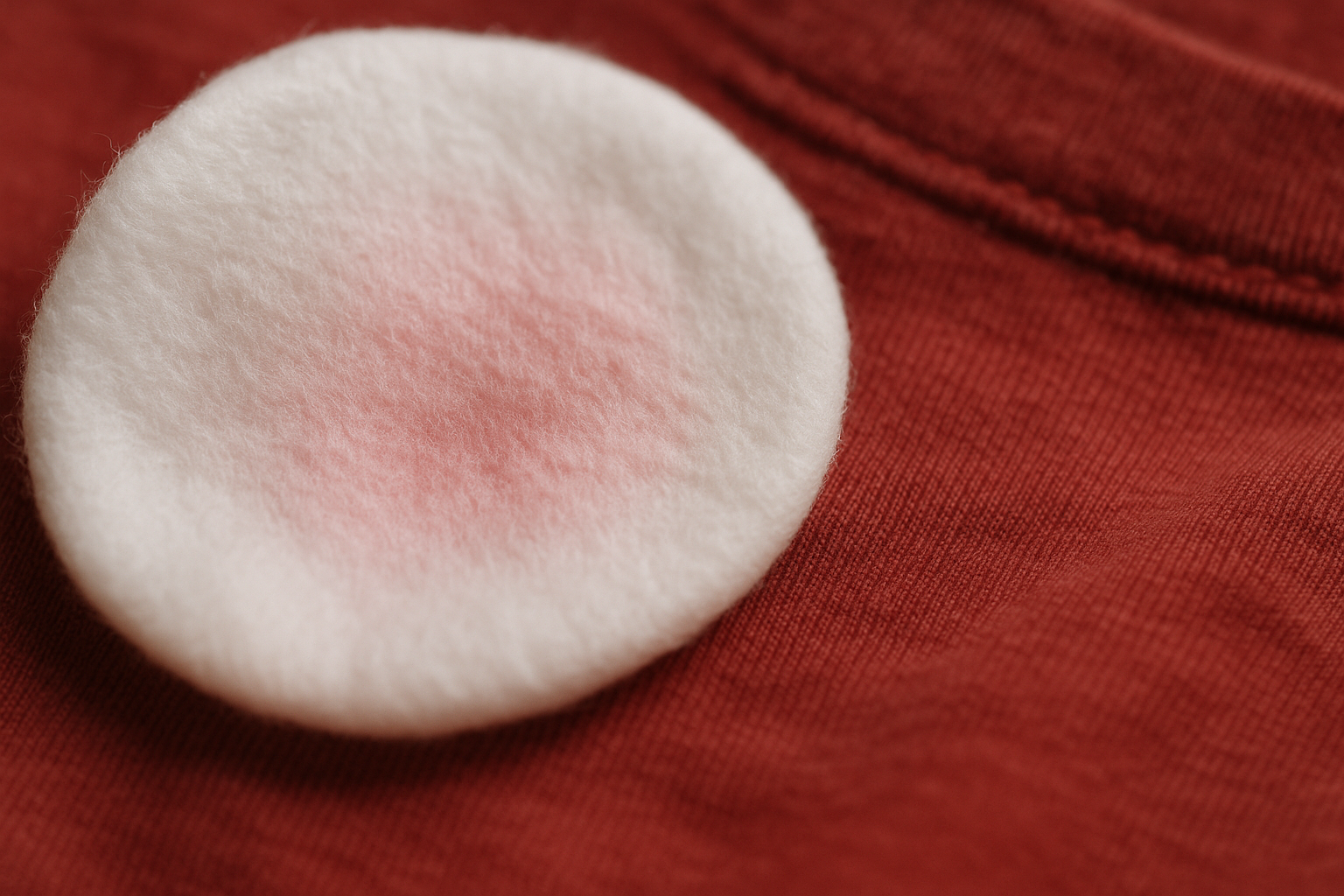
Test dye bleeding by pressing a damp white cotton swatch against the garment's most saturated color area for 30 seconds, then rubbing gently for 10 more. Any color transfer to the swatch means the garment carries bleeding risk and needs disclosure under Fabric Condition and Cosmetic Appearance — no matter how clean or crisp the item looks otherwise.
We've seen the complaint before: a cherry-red 1990s tee, graded Excellent by eye, ships folded against a white hoodie in the same poly mailer. Humidity does the rest. The buyer opens the package to a faint pink ghost print on the hoodie and a return request that says "not as described — stained my other item." The tee itself was flawless. The dye wasn't. That's the gap in condition grading that most resellers never test for, because bleeding risk isn't visible until it's already happened.
Why Fugitive Dye Is a Grading Problem, Not Just a Care Label Warning
"Wash separately" on a care tag is a manufacturing-stage warning aimed at first owners doing laundry. It says nothing about what happens fifteen, twenty, thirty years later when that same dye sits against synthetic packaging in a warm delivery truck, or gets balled up next to another garment in a poly mailer for four days. Fugitive dye — pigment that was never fully fixed to the fiber — doesn't become more stable with age. In a lot of cases it becomes less stable, as fiber-dye bonds degrade alongside the fabric itself.
This matters for grading because bleeding risk is a fabric-level defect, not a cosmetic one you can photograph away. A garment can score high on Cosmetic Appearance — no visible fading, no stains, rich color saturation — and still fail a dye-transfer test. Buyers don't experience this as a garment flaw. They experience it as damage to something else they own, which is a faster route to an escalated dispute than almost any other defect category.
How to Test Dye Bleeding on Vintage Clothes: The Wet-Rub Procedure
This is the same crocking-adjacent method textile labs use, scaled down for a reseller's workbench. It takes under two minutes per garment and it's the single highest-value test you can add to your pre-listing routine for saturated colors — reds, purples, black-dyed cotton, indigo denim, and any rayon or silk with deep tonal dye.
- Cut or fold a clean piece of plain white cotton — an old pillowcase scrap or a white cotton ball works fine. Do not use a colored or synthetic swatch; it can mask transfer or react with the dye.
- Identify the garment's most saturated color zone. This is usually a seam, collar interior, or high-dye-concentration panel rather than a spot that's already sun-faded.
- Dampen the white swatch with distilled water until it's wet but not dripping. Tap water can carry minerals that skew results on some dyes.
- Press the damp swatch firmly against the saturated area and hold for 30 seconds without moving it. This simulates moisture exposure during shipping or storage, not active laundering.
- Rub the swatch gently against the fabric for 10 seconds to simulate friction — the kind that happens when garments shift against each other in a bag or box.
- Lift the swatch and inspect it under bright, neutral-white light. Any pink, red, blue, or black tint on the white cotton counts as transfer, even faint.
- Repeat the same rub with a dry white swatch on dry fabric. This checks for surface pigment (crocking) that transfers without moisture — common on unwashed indigo denim and some over-dyed cotton.
- Photograph both swatches next to the tested area for your condition report, whether the result is clean or not.
- Assign the grade tier based on the severity table below and write the disclosure language before you list.
Reading the Results: Bleeding Severity and Grade Impact
Not all transfer is equal. A faint pink tint on a wet swatch is a different risk profile than dye that comes off dry, at rest, with no water involved. Here's how we sort it under the standard tiers.
| Test Result | Grade Impact | Disclosure Requirement |
|---|---|---|
| No transfer on wet or dry test | No cap — grade on other factors normally (up to Excellent or NWOT) | None required, though noting "color fastness tested" builds buyer trust |
| Faint transfer on wet test only | Caps at Very Good | Disclose "may bleed if exposed to moisture — wash and store separately" |
| Moderate transfer on wet test, none dry | Caps at Good | Disclose bleeding risk explicitly; recommend buyer avoid pairing with light fabrics |
| Transfer on both wet and dry (crocking) | Caps at Fair | Disclose active dye instability; recommend dry storage away from other textiles |
| Visible dye migration already present on garment (bled onto own lining, trim, or tags) | Caps at Poor | Disclose as a defect, not just a risk — this has already happened once |
Note the last row: if you find dye that has already migrated onto the garment's own lining, waistband facing, or care tag, that's not a hypothetical risk anymore. It's evidence the dye is actively unstable, and the Fabric Condition score has to reflect a defect that already occurred, not a possibility you're flagging for the buyer's benefit.
Red Garment Bleeding Detection and Other High-Risk Dye Categories
Some colors and construction methods are bleeding risks by default, and you should test them every time regardless of apparent condition:
- Reds and maroons on cotton. Older cotton reds, especially on tees and workwear from before the 2000s, are among the most commonly fugitive dyes we test. Turkey red and similar early formulations were never fully colorfast even when new.
- Black-dyed cotton and rayon. Black is often the deepest, most saturated dye bath a garment goes through, and deep saturation correlates with higher bleeding risk across almost every fiber type.
- Unwashed or lightly-washed raw indigo denim. Crocking — dry pigment transfer — is expected and often disclosed as a feature on raw denim, but resale grading still requires the disclosure. A crocking pair of jeans can stain a car seat or a white sneaker on first wear.
- Hand-dyed and tie-dye vintage. Batch dyeing outside factory-controlled fixing processes has inconsistent fastness even within the same garment.
- Rayon and silk with deep jewel tones. These fibers take dye differently than cotton and are more prone to bleeding when damp, even if they look stable dry.
If a garment falls into any of these categories, run the test before you photograph it. It changes nothing about how the garment looks, but it changes what tier it's eligible for and what you have to say in the listing.
Color Fastness Grading Standards for Resale: Where This Hits the Five Factors
Dye bleeding risk is graded primarily under two of the five weighted factors:
Fabric Condition — dye stability is treated as a fabric-level characteristic, the same way we'd treat fiber integrity or elasticity. A garment with confirmed bleeding risk cannot score at the top of this factor even if the weave and hand-feel are otherwise pristine.
Cosmetic Appearance — if dye has already migrated onto the garment itself (lining, facing, adjacent panels), that's a visible cosmetic defect scored on its own merits, separate from the risk assessment.
Structural Integrity, Functional Elements, and Odor & Cleanliness are typically unaffected unless the over-dyeing process itself weakened the fiber (some resist-dyed or discharge-printed vintage pieces show brittleness at the dye line) or a previous bleeding incident left a set-in odor from repeated wetting and drying.
Disclosure Language That Protects You From Dye-Transfer Disputes
Vague warnings don't hold up in a dispute. "Vibrant color, some wear" tells a buyer nothing about bleeding risk and gives you no cover when they file an INR or not-as-described claim over a stained cardigan. Specific, tested language does both jobs:
- Weak: "Beautiful red color, vintage condition."
- Strong: "Tested for color fastness — shows light dye transfer when damp. Recommend washing and storing separately from light-colored fabrics."
That single sentence moves the liability conversation from "you didn't tell me" to "you told me and I proceeded anyway," which is the entire point of standardized disclosure. It also signals you actually tested the item rather than guessing from a photo, which is the kind of specificity buyers increasingly expect from serious sellers.
Run the wet-rub test on your next saturated-color vintage piece before you write the listing. If you want a standardized way to document the result alongside the other four grading factors — with a certificate a buyer can verify instead of taking your word for it — grade the garment on GradeThread and see the full condition report it generates.