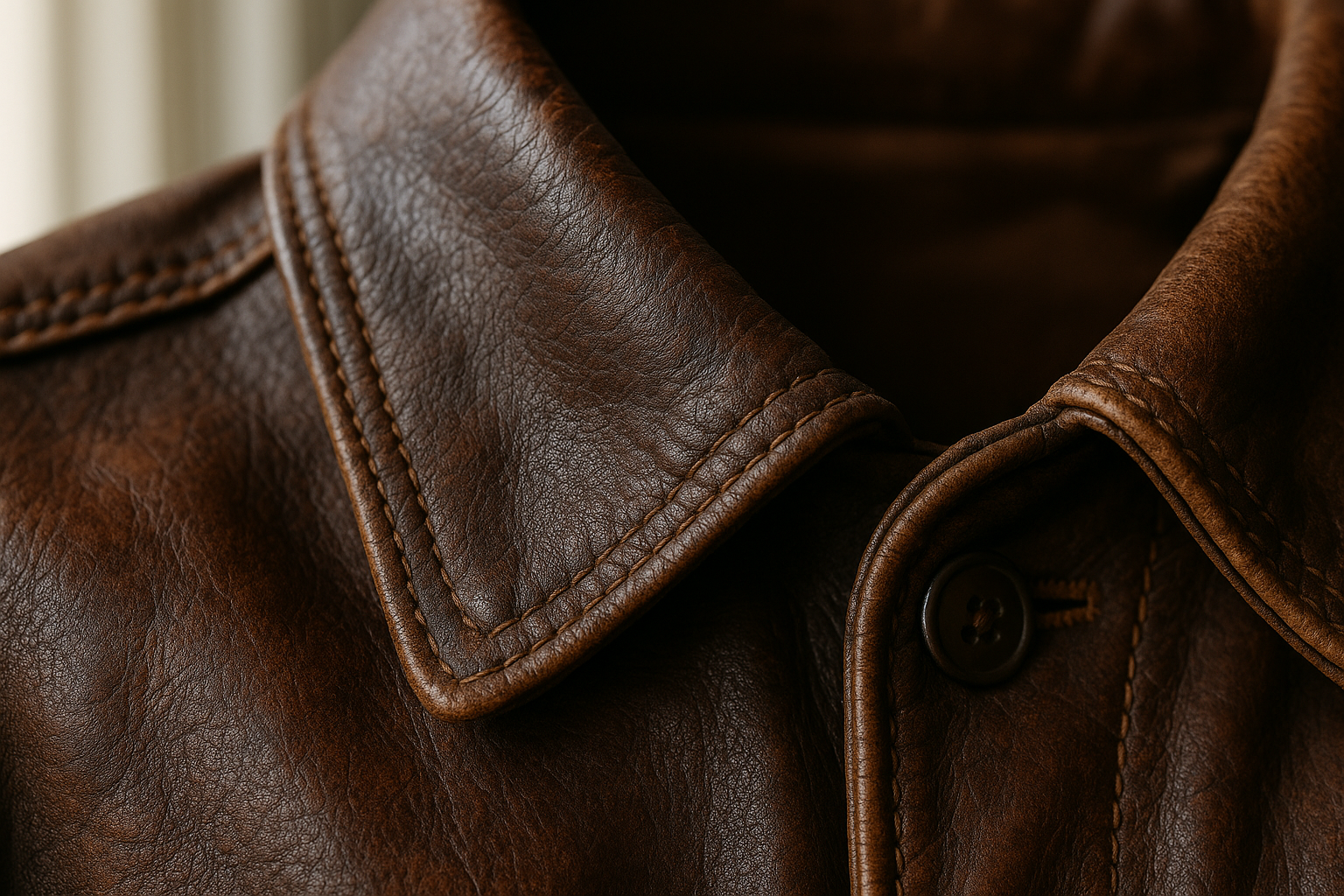
How to Grade Vintage Leather Patina: When Darkening Is Character and When It's Damage
Patina is even, gradual darkening from oil absorption, oxidation, and light exposure that leaves the hide flexible and intact — grade it as a minor or non-deducting Cosmetic Appearance trait. Damage is uneven discoloration, dryness, cracking through the grain, or oxidation that has stiffened the leather — grade that under Fabric Condition or Structural Integrity, and it will pull the grade down further than color alone ever would.
We've watched this cost sellers money in both directions. A buttery, honey-toned bomber jacket gets graded Good because a seller saw dark color and assumed wear. Meanwhile a jacket with genuinely dried, cracking leather gets listed as Excellent because the darkening looked "rich" in photos. Both are wrong calls, and both generate disputes — one from an underpriced sale, the other from a buyer who flexes the sleeve and hears the grain crack.
What Patina Actually Is
Patina is a chemical and physical process, not a stain. Vegetable-tanned and aniline leathers are porous. Over years of wear they absorb skin oils, handling oils, and airborne moisture. Combined with UV exposure, the surface tannins oxidize and darken — usually starting at contact points like the collar, cuffs, underarms, and the leading edge of a bag's handle. This is the same mechanism that darkens a baseball glove or a saddle. It's expected, it's often desirable, and in leather goods circles it can add value rather than subtract it.
The key diagnostic question is whether the leather underneath the color change is still doing its job: flexible, intact grain, no powdering, no stiffness. If yes, you're looking at patina. If the color change is accompanied by texture change — stiff spots, a chalky surface, fine white cracking when bent — you're looking at oxidative damage, sometimes called dry rot in the trade, and that's a different grading category entirely.
The Diagnostic Procedure
Run this sequence before you assign a grade. It takes under five minutes per garment and it's the same check we recommend for any vintage leather jacket, bag, or boot.
- Inspect the darkened area in indirect natural light and note whether the color change is even across contact zones (collar, cuffs, fold lines) or patchy and isolated in one random spot.
- Flex the leather at a 90-degree angle at the darkest point. Watch for fine white or lighter-colored cracking lines forming across the surface — this indicates the fibers are breaking, not just discoloring.
- Press a fingertip firmly into the darkened area and release. Patina stays smooth and supple. Damaged leather may feel stiff, papery, or leave a faint chalky residue on your finger.
- Check the reverse side (the suede or flesh side, if accessible through a lining gap or seam) for a matching darkening pattern. Oxidation and oil absorption usually show through; a stain sitting only on the surface usually doesn't.
- Smell the area. Genuine oil-based patina has little to no odor beyond the leather itself. A sour, musty, or chemical smell points to moisture damage or a spill, not natural aging.
- Compare the darkened zone to an unexposed reference area — under a strap, inside a fold, beneath a collar — to confirm the garment's original color and gauge how far the change has progressed.
- Record the result under the correct factor: Cosmetic Appearance for confirmed patina with no structural change, Fabric Condition for dryness or fiber breakdown, and Structural Integrity if flexing produces visible cracking through the grain layer.
Patina vs. Damage: A Grading Comparison
Not every dark patch grades the same, and lumping them together is how sellers under- or over-call condition. Here's how we separate the common presentations.
| Presentation | What's happening | Grading factor | Typical grade impact |
|---|---|---|---|
| Even honey/brown darkening at collar, cuffs, fold lines | Oil absorption + UV oxidation, leather stays flexible | Cosmetic Appearance | Minimal to none — often reads as Excellent or Very Good |
| Isolated dark blotch, single spot, no wear-pattern logic | Liquid stain, spill, or dye transfer, sitting on the surface | Cosmetic Appearance (or Fabric Condition if it penetrated) | Very Good to Good depending on size and visibility |
| Dark, stiff patches with a chalky feel | Oxidative dry-out, oils have left the hide, fibers are drying | Fabric Condition | Good to Fair — leather is aging poorly, not just aesthetically changing |
| Fine white cracking lines appear when flexed | Grain layer breaking under the dried leather | Structural Integrity | Fair to Poor — this progresses and can split further with wear |
| Even, overall darkening across the whole garment, no dryness | Long-term natural aging of vegetable-tanned or aniline leather | Cosmetic Appearance | No deduction — often described positively as a patina finish |
The pattern to notice: color alone never determines the grade. It's color plus flexibility plus location logic. Dark leather that still bends like new leather is patina. Dark leather that resists bending or cracks under it is damage, regardless of how attractive the color looks in a photo.
Grading Patina by Leather Category
Not all leather ages the same way, and buyers expect different things from different categories.
- Motorcycle and bomber jackets (aniline, oil-tanned cowhide): Heavy patina at the collar, cuffs, and shoulders is expected and often marketed as a selling point. Grade it under Cosmetic Appearance with no deduction unless it's accompanied by dryness. A jacket with rich, even patina and full flexibility can still hit Excellent.
- Structured handbags (vegetable-tanned or coated leather): Darkening concentrated on the handle and base corners is a normal wear pattern from hand oils and setting the bag down. Uneven darkening across a smooth panel where the hand never touches, though, usually signals a spill or humidity exposure — treat that as a stain, not patina.
- Boots and shoes (full-grain, often oil-tanned): Patina at the toe box and vamp from flexing during walking is normal and can look almost intentional. But if the leather at the flex points has gone stiff or is starting to crack open at the crease, that's Structural Integrity territory — it will keep splitting with every wear.
- Leather trim on suede or fabric garments: Small leather accents (collars, elbow patches) age faster and dry out sooner because they're thinner. Check these separately — a garment can grade well on its main fabric and still take a Fabric Condition hit from a dried leather trim panel.
Where This Sits in the Five-Factor Standard
Leather patina is one of the few defect categories that can move between factors depending on severity, so be precise about which one you're citing in a condition report.
- Cosmetic Appearance covers confirmed patina, oil darkening, and surface stains that don't affect handling or durability.
- Fabric Condition covers dryness, chalkiness, and early-stage fiber breakdown where the leather itself is degrading, not just changing color.
- Structural Integrity covers actual cracking through the grain, splitting at flex points, or any damage that will worsen with continued wear.
A garment with confirmed patina and no dryness can still land NWOT or Excellent if everything else checks out. A garment with dry, cracking leather caps out well below that, typically Fair or Poor, no matter how clean the lining or how intact the hardware — the leather itself has a durability problem, and durability problems set the ceiling.
Pricing the Difference
This distinction has real dollar consequences. Buyers actively search for and pay a premium on well-aged leather with even patina — it's part of the appeal on vintage motorcycle jackets and full-grain bags. Sellers who mislabel that patina as damage and grade down to Good are leaving margin on the table. Sellers who mislabel dry, cracking leather as "rich patina" to justify an Excellent price are setting up a return the moment a buyer flexes the sleeve. Run the flex test, the finger-press test, and the reference-area comparison before you commit to either story — the grade should follow what the leather is actually doing, not what the color looks like in a listing photo.
Grade one leather piece with GradeThread and you'll get a factor-by-factor breakdown — Fabric Condition, Structural Integrity, Cosmetic Appearance, Functional Elements, and Odor & Cleanliness — plus a shareable certificate that shows buyers exactly why a dark patina jacket earned Excellent instead of getting talked down to Good.