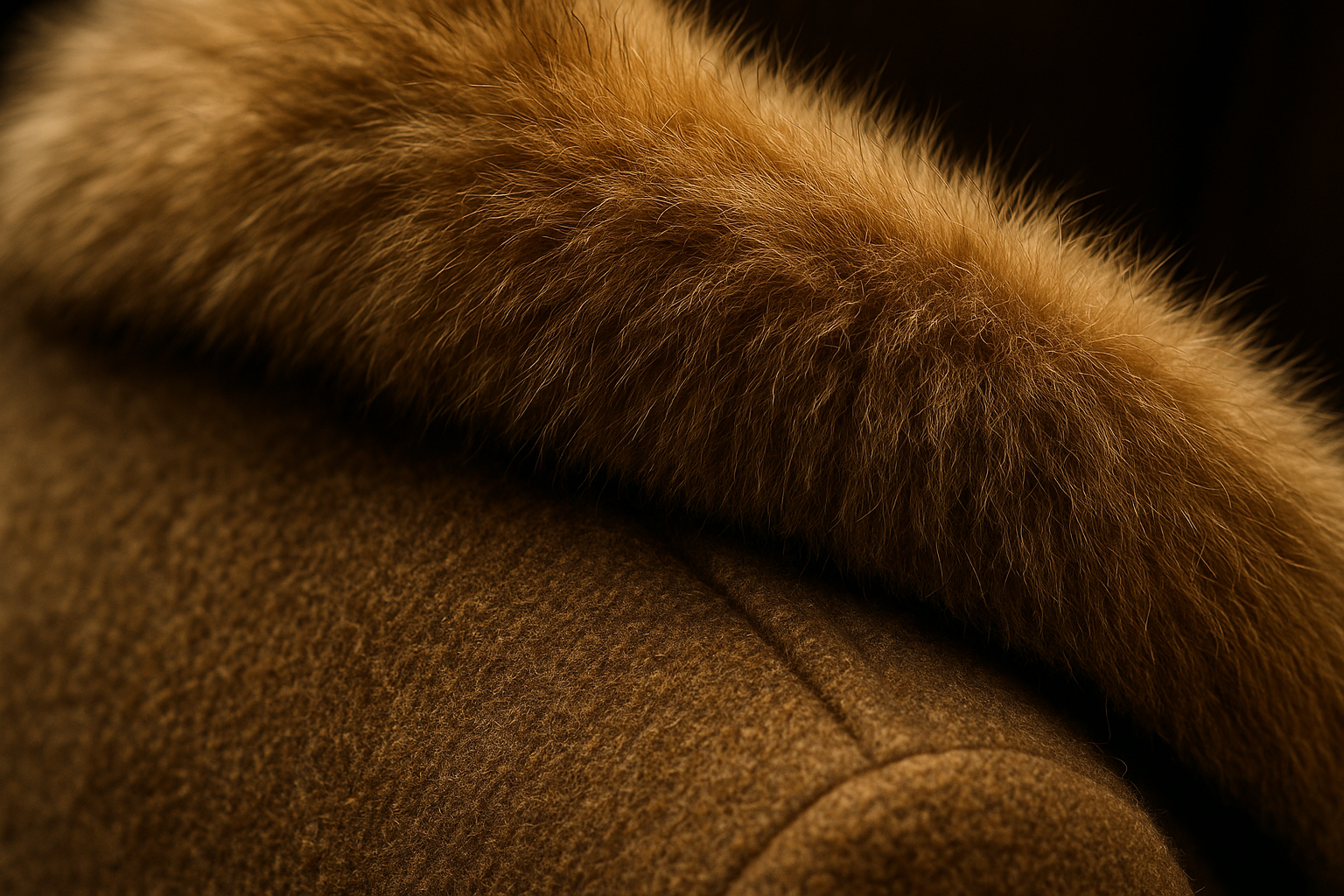
Grade fur trim and feather condition on vintage coats by testing three separate failure modes — shedding, matting, and attachment separation — because each one caps the grade differently and none of them can be folded into a single "trim shows wear" note. A coat with heavy shedding but a rock-solid attachment grades differently than one with intact fur but a stitch line pulling away from the collar, and a buyer who gets either surprise will file the same not-as-described claim.
The Return That Started With "Some Shedding, Otherwise Excellent"
A seller we talked to listed a 1960s wool coat with a fox fur collar as Excellent, noting only "minor shedding, normal for vintage fur." The buyer opened the box to find loose fur clumped on the tissue paper and a stitch line at the left shoulder starting to separate from the wool shell. The dispute wasn't really about the shedding — some fiber loss on 60-year-old fur is expected and most buyers know it. It was about the attachment point nobody mentioned, because the listing treated the entire trim as one decorative accent instead of a separate condition surface with its own defects.
That's the mistake we see constantly. Fur and feather trim get graded as an afterthought to the base garment, when they're actually a distinct inspection zone that touches three of the five grading factors: Structural Integrity, Cosmetic Appearance, and often Functional Elements if the trim detaches, snaps on, or ties off. Odor & Cleanliness matters too — vintage fur holds mothball and storage odor longer than most fabrics, and it's a common source of surprise returns even when the pelt itself looks fine.
Fur and Feather Trim Aren't One Defect — They're Three
Before you assign a grade, identify which failure mode you're looking at. Shedding, matting, and attachment separation have different causes, different tests, and different grade ceilings.
| Failure mode | What it is | Grading factor affected | Test | Typical grade ceiling |
|---|---|---|---|---|
| Shedding | Loose fur fibers releasing from the pelt during normal handling | Cosmetic Appearance, Structural Integrity | Dry hand pass + fiber count | Very Good to Fair, volume-dependent |
| Matting | Feather barbs or fur fibers clumping together, losing loft | Cosmetic Appearance | Fluff test with steam | Good to Fair, recoverable cases score higher |
| Attachment separation | Stitching, snaps, or adhesive holding trim to the garment pulling loose | Structural Integrity, Functional Elements | Pull test at seam and hardware | Fair to Poor if trim is at risk of full detachment |
How to Grade Fur Trim Shedding
Shedding is the most common defect on vintage fur collars, cuffs, and hoods, and it's also the most over- or under-called. A little fiber release during handling is normal aging. Heavy shedding that leaves visible bald patches or coats every surface it touches is a different grade entirely. Use this sequence every time:
- Lay the coat flat under bright, even light and isolate the trim panel from the rest of the garment.
- Run one dry hand pass across the fur, from root to tip, using light pressure — the same pressure a buyer would use trying it on.
- Count the loose fibers that release onto your hand or a dark cloth placed underneath.
- Check the backing or pelt where the fibers came from for thinning, dry cracking, or visible skin showing through the fur.
- Repeat the pass on a second area of the same trim panel to confirm the result isn't isolated to one spot.
- Compare fiber release against a control: fewer than 5 fibers per pass with no visible thinning is light shedding; 5–15 fibers with slight thinning is moderate; more than 15 fibers or any bald patches is heavy.
- Record the shedding level in the condition report and note whether the pelt backing itself shows dryness or cracking, since that predicts whether shedding will worsen in shipping.
Light shedding on 40+ year old fur is consistent with Very Good — it's expected age-related fiber release, not damage. Moderate shedding with visible thinning caps at Good, because the buyer needs to know the trim will keep releasing fiber onto clothing. Heavy shedding with bald patches or a dry, cracking pelt backing is Fair at best, and if the pelt is splitting, it's a Poor call regardless of how the rest of the coat looks.
Feather Matting and Degradation: Separating Fluff Loss From Fiber Damage
Feather trim — marabou collars, ostrich feather cuffs, boas used as coat trim — fails differently than fur. The defect isn't shedding, it's matting: barbs clumping together from moisture, body oil, or compression during storage, which flattens the loft that makes feather trim look full instead of stringy.
The test here is a fluff test, not a hand pass. Hold the feather section over low steam for 10–15 seconds, then gently separate the barbs with your fingers. Feathers that fluff back to something close to their original loft are matted but structurally sound — this is a Good to Very Good defect, cosmetic and often reversible with proper steaming before the buyer even receives it. Feathers that stay clumped, or where individual quills snap when you try to separate them, have actual fiber damage, not just matting. That's a different call: broken quills don't recover, and a trim panel with multiple snapped barbs reads as sparse and damaged no matter how you steam it. Grade that Fair, and disclose that the feather density has visibly thinned.
One more check specific to feather trim: hold it up to light and look for bare quill sections where barbs have broken off entirely. A few bare quills scattered through a full boa or collar is a Good-range cosmetic defect. Bare quills concentrated in one visible zone — the front of a collar, for example, where it gets the most handling — pulls the grade down further because it's a defect a buyer will see immediately on the body, not just under inspection.
Trim Attachment Integrity: The Pull Test
This is the defect that generates the most disputes, because it's invisible in most listing photos and it's the one that can cause total failure in shipping or wear. Fur and feather trim attaches to a coat one of three ways: hand-stitched along a seam, snapped or hooked on as a removable collar, or glued to a backing tape. Each attachment method needs its own check.
For stitched trim, grip the trim panel near the seam and apply gentle outward tension — not a yank, just the pressure of someone adjusting a collar. Watch the stitch line for any gapping, visible thread pulling through the backing fabric, or the trim lifting away from the shell even slightly. Any movement at the seam under light tension is a Structural Integrity defect and caps the grade at Fair, because that seam is one rough handling away from full separation.
For snap-on or hook-on trim, test every snap and hook individually. A snap that doesn't seat fully, or a hook that's bent open, is a Functional Elements defect — the trim's core job is to attach securely, and if it doesn't, that's a functional failure even if the fur or feather itself is flawless. Note the specific hardware that's failing; buyers researching vintage coats often know these collars are meant to be removable and will ask.
For glued or taped attachment — common on lower-end vintage trim and some faux combinations — check the edges for lifting or curling, which signals adhesive breakdown. This is harder to repair than a loose stitch and should be graded accordingly; visible lifting along more than a quarter of the attachment edge is a Fair-range call.
Grading Table: Vintage Collar and Cuff Trim Condition Standards by Tier
| Grade tier | Fur trim condition | Feather trim condition | Attachment condition |
|---|---|---|---|
| NWOT | No shedding, full loft, no discoloration | Full loft, no matting, no bare quills | Fully secure, no movement under tension |
| Excellent | Trace shedding only, no thinning visible | Minimal matting, fluffs fully with steam | Secure, no gapping at seam or hardware |
| Very Good | Light shedding, slight thinning in one zone | Light matting, fluffs mostly back | Secure with minor slack, no fiber loss risk |
| Good | Moderate shedding, visible thinning | Moderate matting, partial recovery | Slight movement under tension, stitching intact |
| Fair | Heavy shedding, bald patches, or pelt drying | Permanent matting or scattered broken quills | Visible gapping, seam or hardware failing |
| Poor | Pelt cracking or splitting, active fiber loss | Widespread quill damage, sparse coverage | Trim detached or detaching, unsafe to wear as-is |
Disclose the Trim, Not Just the Coat
List fur and feather trim as its own line in the condition report, separate from the fabric grade of the coat body. State the shedding level, the matting condition if it's feather, and the attachment status, using the vocabulary above rather than a general note like "vintage wear present." If you're listing on eBay, use the material and trim item specifics fields to flag the trim type explicitly — buyers searching for fox, rabbit, or marabou trim filter on those terms, and a missing field reads as an incomplete listing even when the coat itself is accurately graded. Also check the trim for musty or mothball odor separately from the coat lining; vintage fur holds storage smell longer than wool or cotton, and it's worth a specific Odor & Cleanliness note even when the coat body tests clean.
A coat with light fur shedding, a secure attachment, and no odor can still be an honest Very Good. A coat with pristine fur and a stitch line that gaps under light tension is a Fair, full stop, because that's the defect a buyer will actually experience. Grade the trim like you'd grade any other structural feature — on what the test shows, not on how good it looks in a flatlay photo.
If you've got a fur- or feather-trimmed piece sitting in inventory that you're not sure how to call, run it through GradeThread. You'll get a grade, a full condition report across all five factors, and a certificate you can drop straight into the listing — trim condition included, not glossed over.