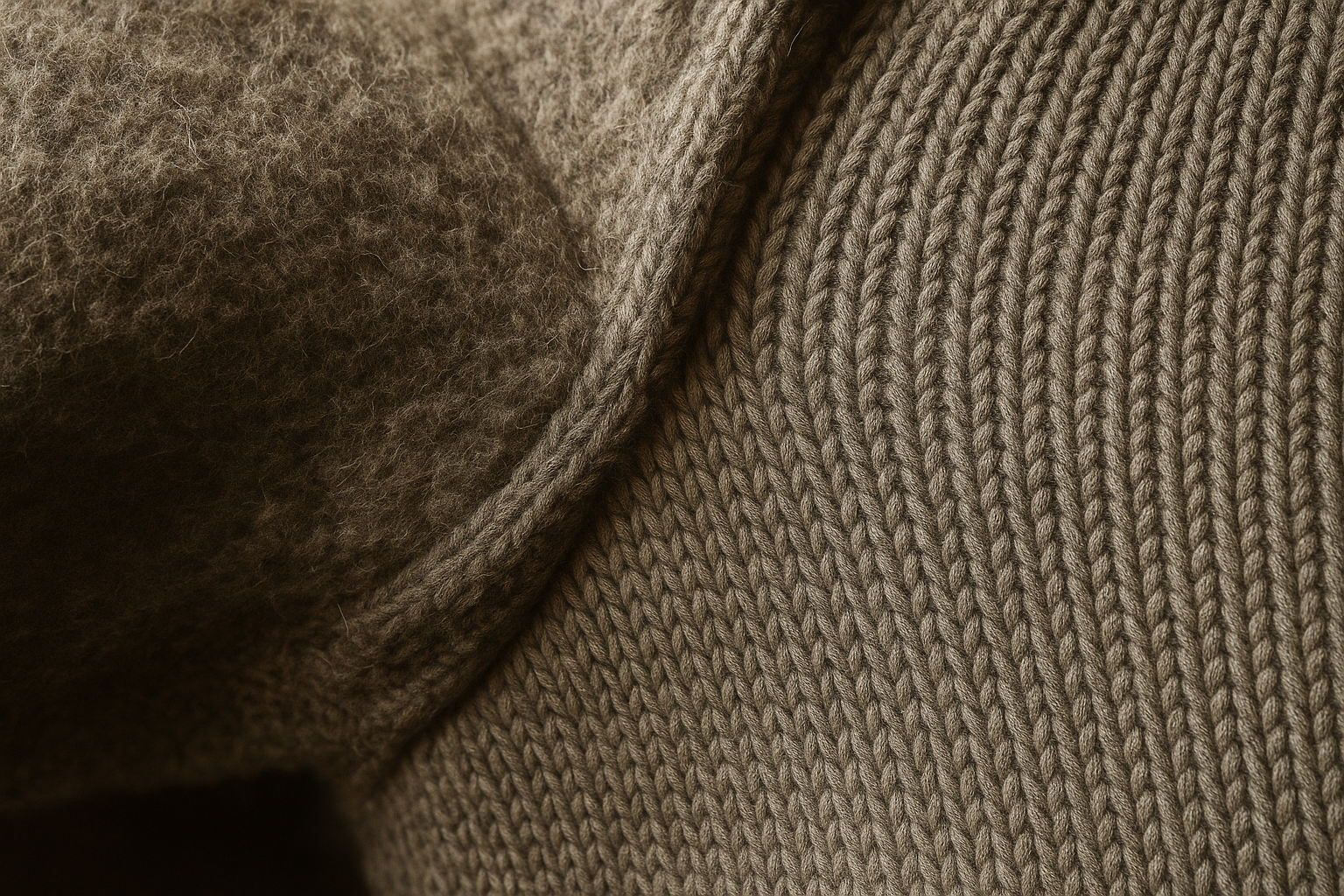
Pocketing and Felting: How to Grade Vintage Knits That Have Consolidated and Changed Shape
Felting and pocketing on a vintage sweater grade as a Fabric Condition and Structural Integrity defect, not a cosmetic one — because the fibers themselves have physically matted together and the garment's shape has changed at that spot. A sweater with light felting confined to one friction zone can still land Very Good. A sweater that's felted across the body, with pocketing that's pulled the knit out of shape, caps out at Fair or Poor. The difference is degree of consolidation, not just visibility.
We see this call missed constantly, usually in the direction of over-grading. A seller runs a hand over a sweater, feels it's soft and dense at the underarm, calls it "broken in," and lists it Excellent. A buyer opens the package, stretches the arm, and finds a stiff, matted patch that doesn't spring back like the rest of the knit. That's a not-as-described dispute waiting to happen, and it's avoidable if you know what you're feeling for.
Felting vs. Pocketing vs. Pilling: Three Different Defects
These get lumped together because they all show up as texture changes on knitwear, but they're mechanically different defects and grade differently.
- Pilling is surface fiber breakage — short, broken fibers migrate to the surface and tangle into small balls. It's shallow. The base knit structure underneath is intact. This is a Cosmetic Appearance call and it's well covered in our pilling-by-fiber-type guide.
- Felting is fiber-level consolidation. Scaled fibers (wool, especially) interlock permanently under heat, moisture, and friction. The individual yarns lose their separateness and fuse into a denser, harder mat. This changes the fabric's hand, drape, and often its dimensions. It's a Fabric Condition defect and, once it's significant enough to alter shape, a Structural Integrity defect too.
- Pocketing is localized felting — consolidation concentrated at a specific friction zone (underarm, inner elbow, the inside of a crossbody strap contact point) rather than spread evenly. The name comes from the way the fabric can bunch or cup slightly at that spot, like a shallow pocket forming in the knit.
Pilling brushes or shaves off. Felting and pocketing do not. That's the fastest field test: try to lift the texture with a fabric shaver or a light brushing motion. If it comes up in little balls, you're looking at pilling. If the texture stays exactly as dense and matted as before, you're looking at felting.
The Fiber-Consolidation Grading Standard
Use this table as your baseline. It maps degree of felting/pocketing to grade tier, consistent with GradeThread's five weighted factors: Fabric Condition, Structural Integrity, Cosmetic Appearance, Functional Elements, and Odor & Cleanliness.
| Tier | Felting / Pocketing Criteria | Factors Affected |
|---|---|---|
| Excellent | No detectable fiber consolidation anywhere. Yarns remain distinct under a loupe or close inspection at all seams and friction zones. | None |
| Very Good | Minor, localized felting at a single friction zone (typically underarm), not visible from a normal viewing distance, no change to garment shape or drape. | Fabric Condition (minor) |
| Good | Visible felting or pocketing at one to two zones. Texture is noticeably denser than the surrounding knit when touched. No shape distortion, garment still drapes and stretches normally elsewhere. | Fabric Condition, Cosmetic Appearance |
| Fair | Felting present at multiple zones or has spread beyond a single point. Fabric is measurably thicker/harder in affected areas. Some shape change — cupping, tightness, or slight pulling at the consolidated zone. | Fabric Condition, Structural Integrity |
| Poor | Felting is widespread or whole-garment. Knit has lost stretch and recovery broadly, fabric feels boardy, shape is permanently altered — sleeves may sit differently, hem may pull, silhouette no longer matches the original cut. | Fabric Condition, Structural Integrity, Cosmetic Appearance |
Notice that Fabric Condition is the anchor factor at every tier, but Structural Integrity only enters once consolidation is heavy enough to change how the garment actually hangs or fits. That's the line resellers most often miss: a dense patch by itself doesn't drop you into Fair. A dense patch that has pulled the knit's shape does.
How to Detect Felting and Pocketing Before You Grade
- Locate the known friction zones first — underarms, inner elbows, the inside of turtleneck folds, waistband interior on cropped sweaters, and any spot that contacted a bag strap or seatbelt repeatedly.
- Run the pinch-and-roll test: pinch a small section of knit between thumb and forefinger and try to roll individual yarns apart. In healthy wool, you'll feel distinct plies. In felted wool, the fibers won't separate — it feels like a solid mat, not a woven structure.
- Compare thickness by feel between the suspect zone and an unaffected area of the same garment (a side seam or lower back panel works well as a control). Felted zones are measurably thicker and firmer.
- Check for shape distortion: hold the garment up by the shoulders and look at the affected zone. Does it cup, pucker, or pull tighter than the surrounding fabric? That's Structural Integrity involvement, not just Fabric Condition.
- Do a stretch-and-release test at the felted zone versus a healthy zone. Stretch each gently and watch recovery. Felted wool recovers slower or not at all — this is the shrinkage/rigidity signature of consolidated fiber.
- Photograph the zone straight-on and at a raking angle (light source low and to the side) — raking light shows fiber-level texture change far better than direct overhead lighting.
- Assign the tier using the table above, weighting Structural Integrity only if you confirmed actual shape change in step 4.
Grading by Zone: Where Felting Shows Up First
Felting isn't random. It follows friction and moisture exposure, so the same zones fail across brands and decades. Knowing where to look first speeds up inspection and keeps you from missing a defect that's easy to overlook under a folded sleeve.
- Underarms — the single most common felting site, driven by a mix of body heat, moisture, and repeated arm-to-torso friction. Check this zone on every wool or wool-blend sweater before grading, even if the rest of the garment looks Excellent.
- Inner elbows — second most common, from repeated flexing and desk/table contact. Often paired with light pilling on the outer elbow from surface abrasion — these are two different defects on two sides of the same joint.
- Waistband interior on cropped or fitted knits — friction against belts, bag straps, or repeated tucking.
- Cuff interiors — contact with watches, bracelets, or desk surfaces causes consolidation distinct from the cuff's outer ribbing wear.
- Collar/turtleneck folds — moisture from breath and skin contact accelerates felting at the fold line specifically, not evenly around the collar.
Common Grading Mistakes
The most frequent error is treating felting as a positive — calling it "hand-felted texture" or "vintage character" when it's unintentional fiber breakdown from washing or wear, not a design feature. Intentional felted-knit garments (boiled wool, fulled knits) have uniform consolidation by design across the entire piece. Unintentional felting is localized and uneven — that unevenness is your tell that you're grading a defect, not a fabric type.
The second common error is grading felting purely as cosmetic. A patch that's only visually different gets Cosmetic Appearance treatment. But if the pinch test shows the fibers won't separate and the stretch test shows lost recovery, you're dealing with Fabric Condition degradation regardless of how it looks. Grade what the fiber is doing, not just what the eye sees from three feet away.
The third is skipping the shape check entirely and defaulting every felted garment to Good. Run step 4 above every time. A pocketed underarm with zero shape change is genuinely Very Good territory. The same pocketing plus a pulled sleeve seam is Fair. Same defect, different severity, different tier — and buyers notice the difference the moment they try the garment on.
Disclosure That Keeps the Sale
Felting and pocketing are disclosable, not disqualifying, in most cases. Name the zone, name the severity, and let the grade do the rest of the work: "Light felting at underarms, does not affect fit or drape" reads very differently to a buyer than an unlisted defect they discover after paying Excellent-tier money for a garment that's actually Good. The disclosure is what prevents the return — the grade is what prevents the price argument.
GradeThread's condition reports document felting and pocketing by location and severity as part of the Fabric Condition and Structural Integrity assessment, with photos at the exact zones we've outlined here. That gives your buyer the same information you'd get from handling the garment in person, which is the whole point of grading vintage knits instead of guessing.
If you've got a sweater sitting in your inventory that you're not sure how to call — soft from wear, or felted from breakdown — run it through GradeThread and see where the fiber consolidation actually lands on the scale.