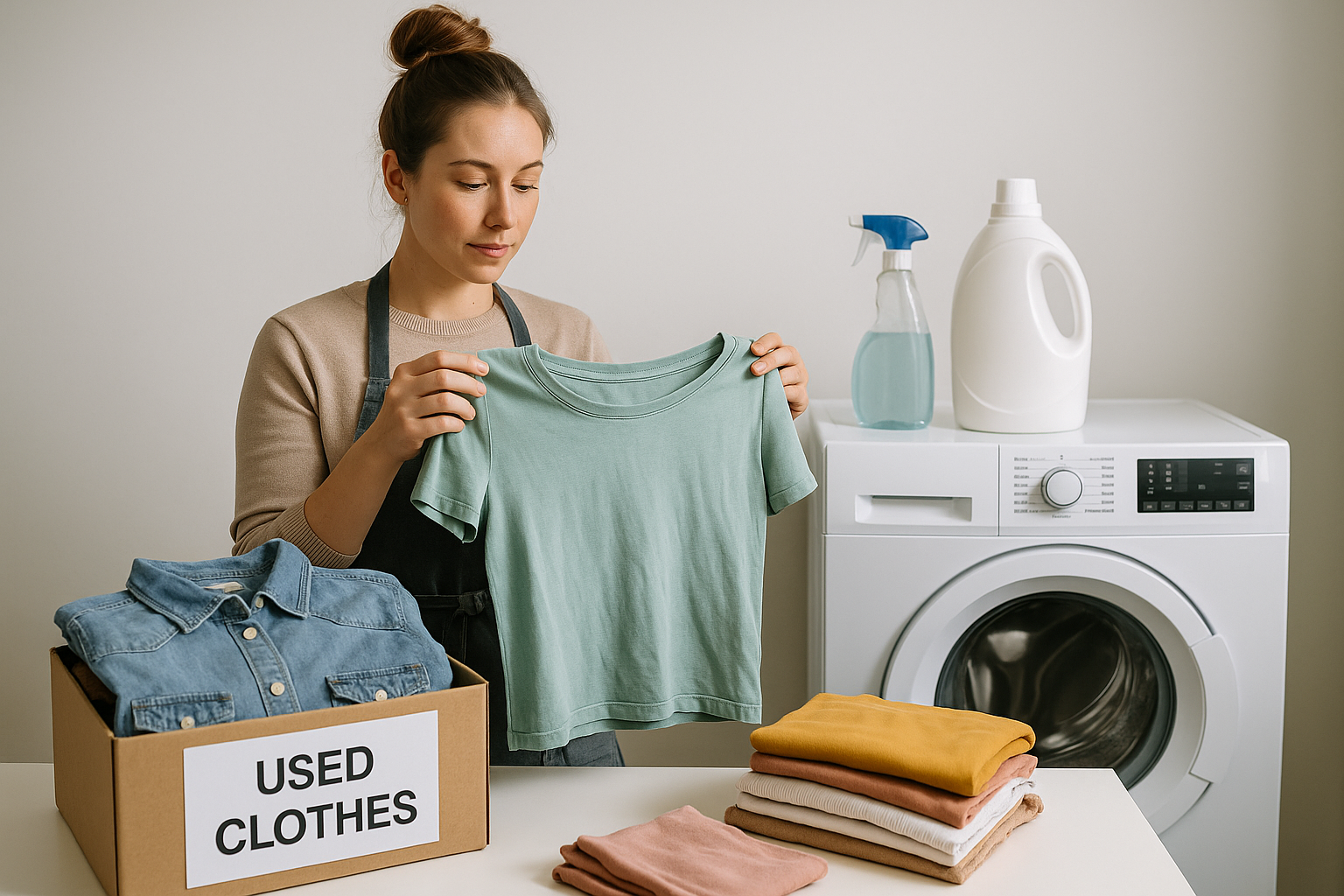
A buyer opens a return on a shirt you listed as Excellent because it "smells like a basement." The fabric was fine. The photos were fine. The odor was the whole dispute. A clean, well-presented garment photographs better, sells for more, and comes back less often, and odor and dirt are among the most common reasons for a not-as-described claim. They are also almost entirely preventable. Here is how to clean clothes for resale so the item arrives the way your listing promised.
Clean according to the fabric
Read the care tag first, then respect it. Most cottons and synthetics are safe to machine wash cold and hang or lay flat to dry. Wool, silk, and structured pieces often need hand-washing or dry cleaning. When a tag is missing or illegible, err on the gentle side. You cannot un-shrink a sweater.
A few category quirks we see often:
- Denim: wash cold, inside out, and skip the dryer. Heat shrinks it and can change the fit you measured. Raw or heavily faded vintage denim is better left alone or spot-cleaned.
- Knits and wool: cool water, minimal agitation, dry flat on a towel. Hanging a wet sweater stretches the shoulders.
- Leather and suede: do not machine wash. Wipe with a barely damp cloth and use a product made for the material.
- Activewear: skip fabric softener. It coats technical fibers and traps odor.
Kill odors, do not just mask them
Smoke, must, and the general "thrift smell" need neutralizing, not perfume over the top. An airing-out in fresh air, a wash with an odor-eliminating additive, or a stint with baking soda in a sealed bag all work better than fabric spray. For stubborn mustiness, a soak in cool water with white vinegar or an oxygen-based laundry booster before the regular wash often does what a normal cycle cannot. Smoke usually needs repeated washes plus extended airing.
Do the sniff test the right way: let the garment dry fully, seal it in a bag for an hour, then open it and smell. Odor often hides while fabric is damp or freshly steamed. If it is still there, repeat or consider whether the piece belongs at a lower tier. Odor & Cleanliness is one of the five grading factors for a reason: buyers cannot see it in your listing but absolutely notice it on arrival.
How to clean clothes for resale: the step-by-step routine
This is the order we use on every batch. Skipping ahead, especially photographing before the sniff test, is where most returns start.
- Inspect the garment dry, before any water touches it. Note stains, holes, loose seams, and odors.
- Check the care tag and pick the gentlest method that fits the fabric.
- Test any spot treatment on a hidden area, such as an inside seam allowance.
- Pre-treat stains and, if needed, soak musty or smoky pieces in cool water with an odor remover.
- Wash cold on the appropriate cycle, or hand-wash or dry clean per the tag.
- Dry fully by hanging or laying flat. Avoid high heat on anything you have not confirmed is safe.
- De-pill with a fabric shaver and clear lint and pet hair with a lint roller.
- Steam to release wrinkles. Do not press vintage or delicate fabrics.
- Run the sniff test: bag it for an hour, then smell. Repeat the wash if odor remains.
- Do a final inspection against the five grading factors, then photograph.
De-pill, de-lint, and steam
A fabric shaver removes the pilling that makes a good garment look tired, and a lint roller clears the fuzz and pet hair that cameras love to highlight. Go gently on loosely knit sweaters so you do not snag or thin the fabric. A quick steam relaxes wrinkles and makes a piece look cared-for in photos, a small step that noticeably lifts perceived value.
Spot-treat stains carefully
Address minor marks with an appropriate spot treatment for the fabric, and test on a hidden area first. Do not put a stained item in the dryer: heat sets many stains permanently. If a stain will not come out, do not hide it. Photograph it up close, disclose it in the description, and price accordingly. A disclosed flaw is a fair sale; a concealed one is a return waiting to happen, and on eBay or Poshmark a not-as-described claim usually lands on you, including return shipping.
Know when not to alter
Vintage is the exception. Aggressive cleaning, pressing, or repairs can strip value from a genuinely old garment, and some distressing is a feature buyers want, not damage to fix. A faded band tee or a worn-in selvedge fade is part of the appeal. When in doubt on a vintage piece, clean minimally and let the condition speak for itself.
Do a final inspection, then grade
Cleaning is also your best chance to catch flaws you missed at sourcing: a small hole, a stressed seam, a faded panel. Give every prepared garment one last look against the five condition factors: Fabric Condition, Structural Integrity, Cosmetic Appearance, Functional Elements, and Odor & Cleanliness. Check zippers, buttons, and elastic along with the fabric. A garment that was Very Good before washing may reveal itself as Good once pilling or a weak seam shows up, and it is better you find that than your buyer.
That is precisely the inspection GradeThread turns into an objective 1.0 to 10.0 grade, so the condition you worked to achieve is the condition your buyer reads. Cleaning does not move a piece up a tier on its own, but it lets the item be graded at its true best.
Photograph while it is fresh
Shoot immediately after prep, while the garment is clean, steamed, and lint-free. A well-prepared item in honest light is the single cheapest upgrade you can make to your sell-through, and it starts the buyer's experience on the same note it will end on. Want to see how your best prepared piece scores? Grade one garment with GradeThread and read the condition report.