The Seasonal Sourcing Calendar: Which Months to Hit Which Categories for Maximum ROI
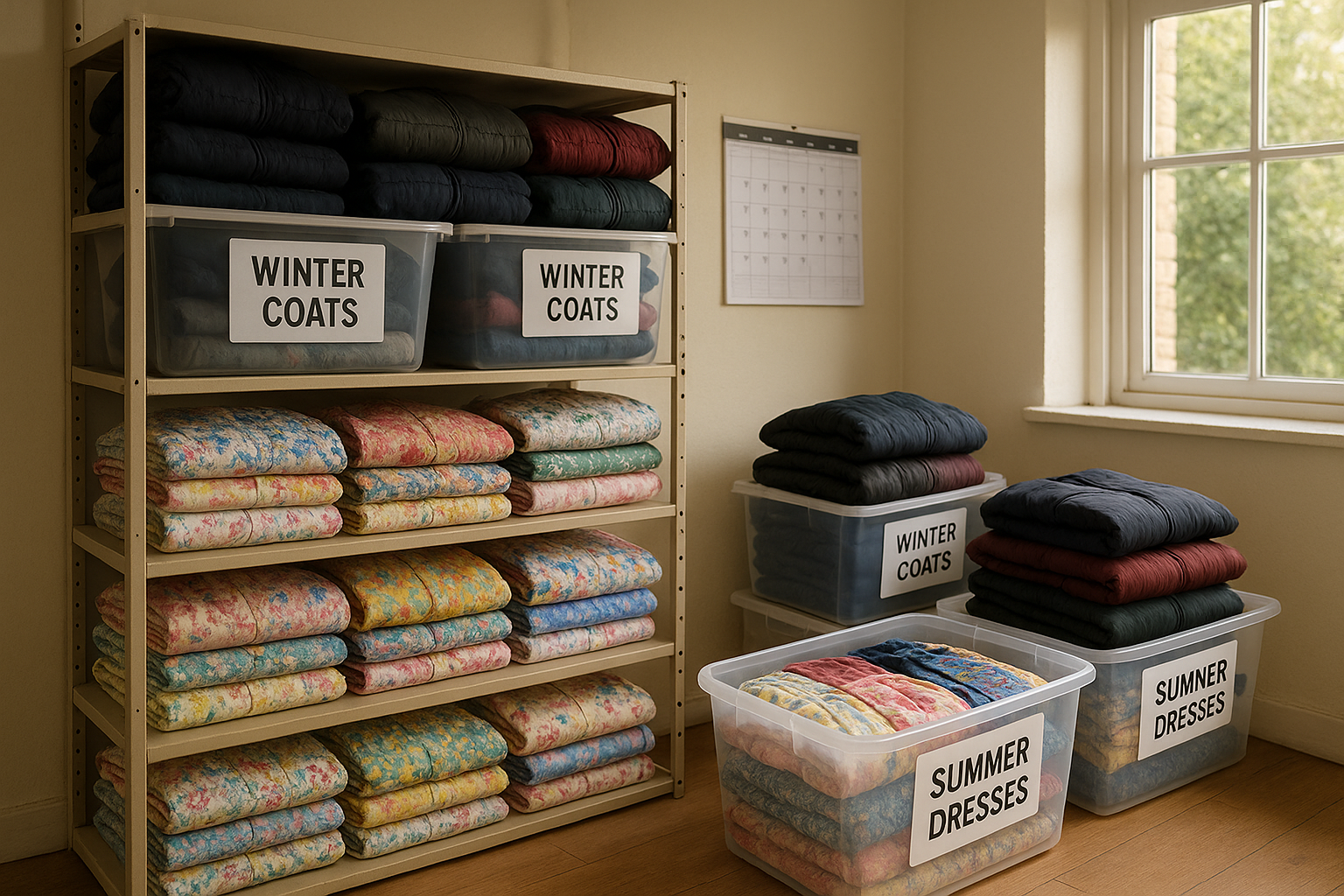
The best seasonal clothing sourcing strategy is counter-seasonal: buy winter coats in February and March when donation bins overflow post-holidays and thrift racks are marked down for clearance, then hold them for October-December resale. Buy summer dresses in August and September as stores clear warm-weather stock, then list them in April when search volume spikes. The gap between your buy month and your sell month is where the margin lives.
Most new resellers source reactively — they hit a thrift store, see what's on the rack, and buy whatever looks flippable. That works, but it leaves money on the table twice: you pay retail-adjusted thrift prices during peak-demand months when donation bins are thin, and you compete with every other reseller listing the same category at the same time. A seasonal calendar flips both problems. You buy when nobody wants the category (cheap, plentiful) and sell when everybody wants it (higher prices, faster turns).
Why Timing Beats Category Guessing
Thrift stores restock on predictable cycles tied to two things: donation volume and their own clearance calendar. Donation volume spikes after major closet-cleaning moments — post-holiday (January), spring cleaning (March-April), back-to-school purge (August-September), and year-end tax-deduction giving (November-December). Clearance markdowns follow retail logic: stores discount out-of-season stock to make floor space for what's coming in, usually 60-90 days ahead of the next season.
Combine those two cycles and you get windows where a category is both abundant and cheap. Winter coats donated in January get marked down by late February because the store wants that rack space for spring. That's your buy window — six to eight months before the next cold snap, when you have zero competition from buyers who want to wear the coat that week.
The counter-seasonal approach also solves a comping problem. If you buy a coat in November, you're pricing against every other reseller who bought that same week and is listing immediately — a flooded, competitive market. If you buy in March and list in October, you're one of the few sellers with fresh inventory when buyer search volume actually returns.
The Month-by-Month Sourcing Calendar
Use this as a baseline. Adjust by two to four weeks for your region — coats move earlier in cold climates, dresses move earlier in warm ones.
| Months to Source | Category | Why This Window | Target List Month |
|---|---|---|---|
| Jan-Feb | Holiday/party wear, sequins, velvet | Post-holiday returns and closet purges flood bins; low resale demand keeps thrift prices low | Nov-Dec (same year) |
| Feb-Mar | Winter coats, wool, down outerwear | Clearance racks marked down 50-70%; stores need floor space for spring | Oct-Dec |
| Mar-Apr | Kids' clothing, spring cleaning donations | Highest donation volume of the year; broad category glut means low prices across the board | Year-round, rotate |
| Apr-May | Denim, transitional jackets | Off-peak for denim demand; still findable before summer swap-outs | Aug-Oct |
| May-Jun | Wedding guest dresses, linen, formalwear | Pre-summer donation bump as closets get lightened for warm weather | Apr-Jun (next year) or same-season flip |
| Jul-Aug | Swimwear, activewear, graphic tees | Summer clearance sales feed bins fast; low competition since most resellers are chasing fall | May-Jul (next year) |
| Aug-Sep | Summer dresses, sandals, lightweight fabrics | Back-to-school donation surge plus end-of-summer store clearance | Mar-Jun (next year) |
| Sep-Oct | Denim, flannel, boots | Fall closet turnover; buyers already searching but supply still catching up | Sep-Nov (same year, fast flip) |
| Oct-Nov | Halloween costumes, novelty pieces | Single-use category dumped immediately post-holiday; near-zero cost basis | Sep-Oct (next year) |
| Nov-Dec | Sweaters, holiday-adjacent knitwear | Gift returns and re-gifted items hit racks; buyers still shopping through December | Same-season fast flip |
Best Time to Buy Winter Coats as a Reseller
Coats are the clearest example of counter-seasonal math because the price swing is dramatic. A wool overcoat that sits on a thrift rack for $8 in March can carry a $45-65 resale price by November if the brand and condition support it. Wait until October to source the same coat and you'll pay $18-25 at the same store, because everyone else is sourcing coats that month too and the store knows demand has returned.
The catch: coats need storage space for six to eight months, and storage isn't free — it's a real cost line even if you never write a check for it. Bin space, humidity control to prevent mildew, and the opportunity cost of capital tied up in inventory that isn't selling all count against the margin you banked by buying cheap. Build that holding cost into your math before you fill a bin with 40 coats you won't touch until Halloween.
One more mechanic worth knowing: coat condition degrades in storage if you skip prep. Brush off surface dust, check pockets for stains left by whoever donated it, and store on a hanger, not folded, to avoid crease lines that read as Structural Integrity issues later. A coat that graded Excellent at intake shouldn't slide to Very Good just because it sat in a bin for seven months.
When to Source Summer Dresses at Thrift Stores
Summer dresses follow the inverse calendar. August and September are the buy window — stores are clearing warm-weather stock to make room for fall, and back-to-school donation drops add volume. Prices on dresses in this window run 40-60% below what you'll pay if you wait until March or April, when every reseller is scrambling to restock ahead of spring buyer demand.
Dresses are lower-risk to hold than coats because they take less bin space and don't develop the same structural issues in storage. The main threat is fabric — light cottons and linens can yellow or develop odor if stored damp, so a quick wash-and-dry cycle before bagging matters more here than for heavier winter pieces.
Building Your Seasonal Inventory Plan
A calendar only helps if you turn it into a repeatable buying rhythm instead of a one-time chart you forget by March. Here's the process:
- Pull your last 12 months of sales data by category and month sold — not month listed — to see when each category actually converts for your specific buyer base.
- Match each category's peak sell month to the sourcing calendar above, then work backward 4-8 months to find your buy window.
- Set a target unit count per category per buy window based on your storage capacity and historical sell-through rate — don't buy 60 coats if you only sold 22 last winter.
- Block calendar time for off-season sourcing trips specifically. If you only source when you're already at the store for something else, you'll miss the counter-seasonal window entirely.
- Tag each intake item with its target list date so it surfaces in your queue automatically instead of getting buried under same-week purchases.
- Review your holdover bins monthly and flag anything past its intended list window — a coat still sitting in June missed its March-buy, October-list plan and needs a pricing decision, not another season of storage.
- Adjust the calendar each year using your own sell-through data instead of the generic baseline, since regional climate and your buyer mix will shift the exact windows by a few weeks.
Grading Tie-In: Why Off-Season Buys Need Sharper Condition Checks
Counter-seasonal sourcing means longer storage windows, and longer storage windows are exactly where condition creep sneaks in unnoticed. A coat graded Very Good at intake in March can pick up a musty smell, a moth hole, or shoulder-seam stress from a bad hanger by the time you're ready to shoot photos in October. Run the same five-factor check at re-listing that you'd run at intake: Fabric Condition, Structural Integrity, Cosmetic Appearance, Functional Elements, and Odor & Cleanliness. If any factor has shifted, adjust the grade before you list — not after a buyer opens a return claiming Not As Described.
This matters more for off-season inventory than same-week flips because you're the only checkpoint between a six-month-old storage bin and a buyer's mailbox. An item that was NWOT or Excellent when it went into storage isn't guaranteed to still be Excellent when it comes out. Building a five-minute re-check into your listing workflow for anything held more than 60 days catches the slide before it costs you a return.
Try It on Your Next Sourcing Run
You don't need to overhaul your whole buying pattern in one week. Pick one category — coats or dresses are the clearest test case — and source it on the counter-seasonal window this month instead of waiting for peak demand. Track what you pay per unit and compare it against what you paid for the same category last time you bought in-season. Log the intake and target list date in FlipDesk so the item surfaces automatically when its window opens, instead of getting lost in a bin until you stumble on it in July.