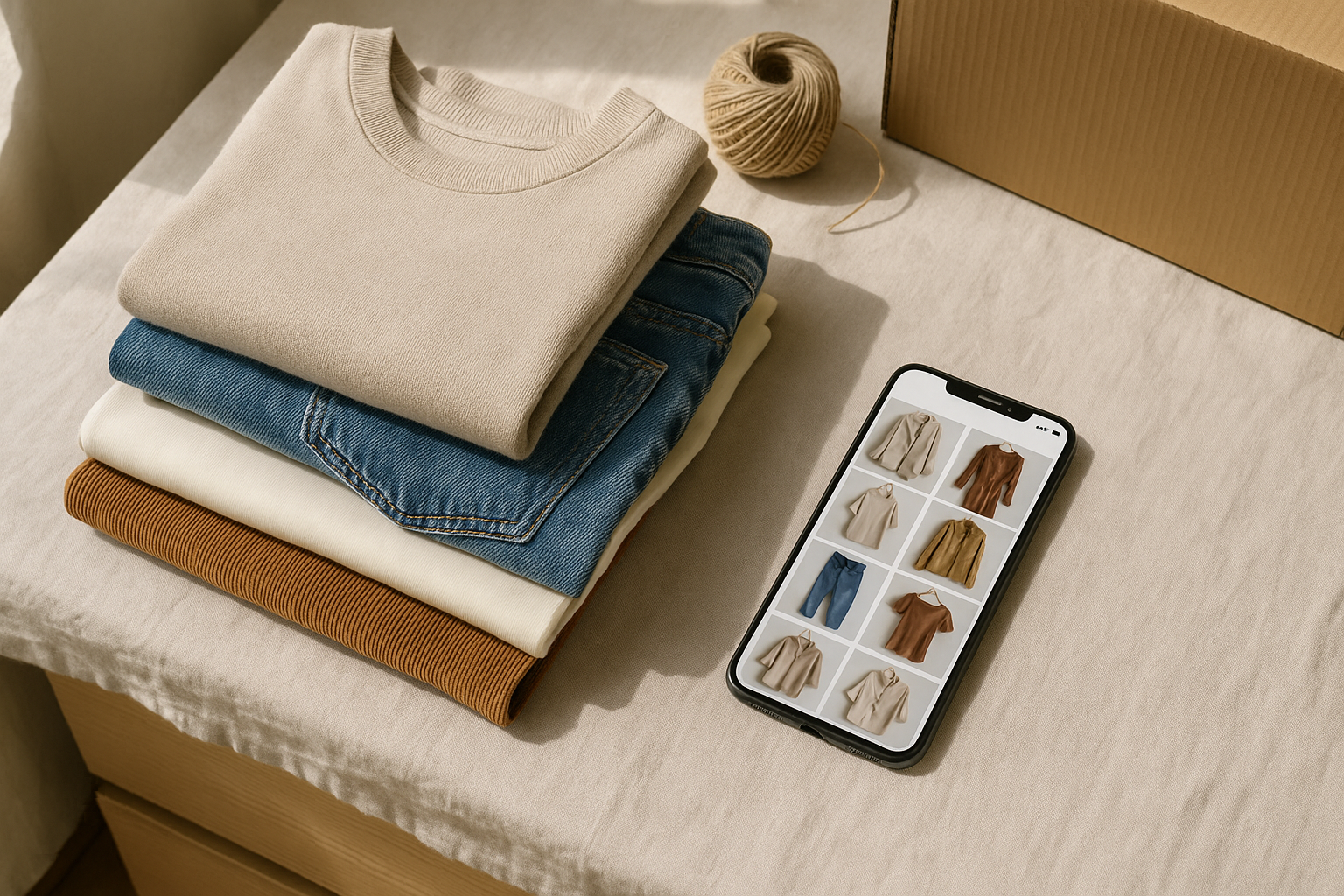
Neither format wins by default. A personal-style closet and a curated shop-style closet sell at roughly the same rate once you control for the two variables that actually move Poshmark sales: how often you share, and how consistently you list new inventory. Closet style is a presentation choice. Volume and sharing discipline are what compound into revenue — and cross-listing is what makes that volume sustainable without burning 6 hours a day.
That's not the answer most \"closet makeover\" threads want to hear. Sellers assume a niche, boutique-looking closet automatically converts better than a personal one full of mixed brands and sizes. It doesn't — not on its own. We've watched personal closets with 900 mismatched items outsell curated 60-item shop-style closets, and the reverse, depending entirely on whether the seller actually worked the platform's mechanics every day.
What \"personal closet\" and \"shop-style closet\" actually mean
Before comparing performance, define the terms, because sellers use them loosely.
- Personal closet: A mix of your own worn clothing plus thrifted or bought-to-resell pieces, spanning multiple sizes, brands, and categories. Photos vary in background and lighting. This is how most sellers start.
- Shop-style closet: A curated inventory in one or two niches — say, women's size 6-10 premium denim, or men's vintage tees — with a consistent photo backdrop, uniform cover-shot cropping, and a repeatable title/description formula. Bundle discounts and shipping discounts are usually set once and left alone.
Poshmark doesn't algorithmically favor one structure over the other. Its search and \"Just Shared\" feed reward recency, keyword match, and engagement — not aesthetic curation.
Poshmark closet vs shop: side-by-side comparison
| Factor | Personal Closet | Shop-Style Closet |
|---|---|---|
| Buyer trust on first visit | Higher — feels like a real person, not a business | Higher — feels professional and consistent |
| Search click-through | Variable, depends on photo quality per item | Higher, consistent formatting improves scan-ability |
| Follower growth rate | Faster early on — broader appeal, more categories to browse | Slower but higher-intent followers who buy repeatedly |
| Time to list per item | Lower — less styling, fewer props | Higher — backdrop, styling, consistent formatting take time |
| Pricing power | Lower — buyers compare against thrift-store expectations | Higher — perceived expertise supports firmer pricing |
| Return / dispute rate | Depends on description accuracy, not format | Depends on description accuracy, not format |
| Best fit for | Sellers still testing categories, high-volume generalists | Sellers who've found a profitable niche and want repeat buyers |
Notice that return rate and dispute rate don't appear as a format advantage either way. Buyers file \"not as described\" claims based on whether the item matched the description — not whether your closet looked like a boutique.
How sharing and followers compound differently by style
Poshmark's sharing mechanic rewards frequency more than closet type. Power sellers who move real volume typically share 150 to 300 times a day, join multiple Posh Parties per week, and share other sellers' listings to stay visible in their network. That behavior works identically whether your closet is a curated shop or a personal grab bag.
Where the two diverge is follower composition:
- Personal closets tend to attract broad, casual followers who browse but buy less predictably — they followed you for one dress, not your whole catalog.
- Shop-style closets attract narrower, higher-intent followers who return because they trust your sizing, your grading, and your niche. These followers convert at a higher rate per follower, even if the follower count grows more slowly.
Neither compounds faster in absolute sales unless you also control listing volume. A shop-style closet with 40 items and daily shares will get outsold by a personal closet with 400 items and the same daily sharing effort, simply because there's more inventory in front of more searches.
The volume math: why cross-listing changes the calculus
Run the numbers. Assume a modest 3% weekly sell-through rate — roughly typical for an actively shared Poshmark closet with reasonable pricing.
- Closet A: 60 items, shop-style, 3% weekly sell-through = 1.8 sales/week
- Closet B: 240 items, personal, 3% weekly sell-through = 7.2 sales/week
Closet B outsells Closet A four-to-one, not because personal closets convert better, but because there's simply more inventory exposed to the same sell-through rate. This is the part sellers miss when they spend a weekend rebuilding their closet's \"look\" instead of listing more items.
The fastest way to scale volume without doubling your workday is cross-listing. If you list an item on Poshmark and simultaneously push it to Mercari and eBay, you're not adding format polish — you're adding exposure surface. A single denim jacket listed only on Poshmark gets one shot at one search algorithm. The same jacket cross-listed to three platforms gets three shots, three algorithms, three buyer pools, for the same photography and grading work you already did once.
This is exactly where a lot of solo sellers hit a wall: manually re-listing the same item on three apps, adjusting titles and pricing for each, eats the time savings that a leaner closet format was supposed to buy you. Tools built for cross-listing (like FlipDesk's AutoLister) exist specifically to remove that duplication — one item record, one photo set, one grade, pushed to every platform without redoing the manual work per app.
A system to grow your closet, regardless of style
Format matters less than discipline. Here's the sequence we've seen actually move sales, in order:
- Pick one lane — personal or shop-style — and commit to it for at least 90 days. Switching formats every few weeks resets buyer recognition and wastes relisting time.
- Set a nightly sharing minimum, typically 150-300 shares, and hit it every day without exception. This is the single highest-leverage habit on the platform.
- Join 3-5 relevant Posh Parties per week to get temporary visibility boosts in categories where your inventory fits.
- List a minimum floor of new items weekly — 15 is a reasonable starting target for a solo seller — to keep your closet's search freshness signal active.
- Standardize your cover-photo style, title formula, and item specifics so repeat buyers recognize your listings scrolling through the feed, even in a personal closet.
- Cross-list every new item to at least one additional marketplace within 24 hours of listing on Poshmark, so the same sourcing and photography effort earns exposure on more than one platform.
- Review closet analytics monthly and pull items with no likes or shares in 60 days — reshoot, reprice, or re-describe them with a clearer condition grade before relisting.
Where condition grading fits into either format
Whether your closet looks like a curated shop or a personal wardrobe dump, buyers ask the same question before they buy: what condition is this, really? Vague adjectives — \"barely worn,\" \"like new\" — read the same in both closet styles and cause the same disputes when the item arrives.
Standardizing your condition language cuts that risk regardless of closet type. Use the tiers buyers already recognize across resale — NWT, NWOT, Excellent, Very Good, Good, Fair, Poor — and back each grade with the five factors that actually determine it: Fabric Condition, Structural Integrity, Cosmetic Appearance, Functional Elements, and Odor & Cleanliness. A shop-style closet built around one niche benefits from this because repeat buyers start trusting your grading consistency. A personal closet benefits because casual buyers, who don't know your sizing or sourcing habits, need a clear condition signal to buy with confidence.
This is a smaller lever than sharing frequency or listing volume, but it's a free one — accurate, consistent grading reduces the returns and \"not as described\" cases that eat into whichever format you've chosen.
The real answer
Poshmark closet vs shop isn't the fight that determines your sales. Sharing frequency, listing volume, and cross-listing reach are. Pick the format that matches how much time you actually want to spend on photography and styling, then put your real effort into the habits above — because a personal closet run with shop-style discipline will outsell a boutique-looking closet that only gets touched once a week.
If you're cross-listing manually right now, that's the fastest place to claw back hours: one item record, one photo set, one grade, pushed to Poshmark, Mercari, and eBay without redoing the work three times. Try running your next batch of listings through FlipDesk's AutoLister and see how much of your \"closet style\" debate becomes irrelevant once volume stops being the bottleneck.