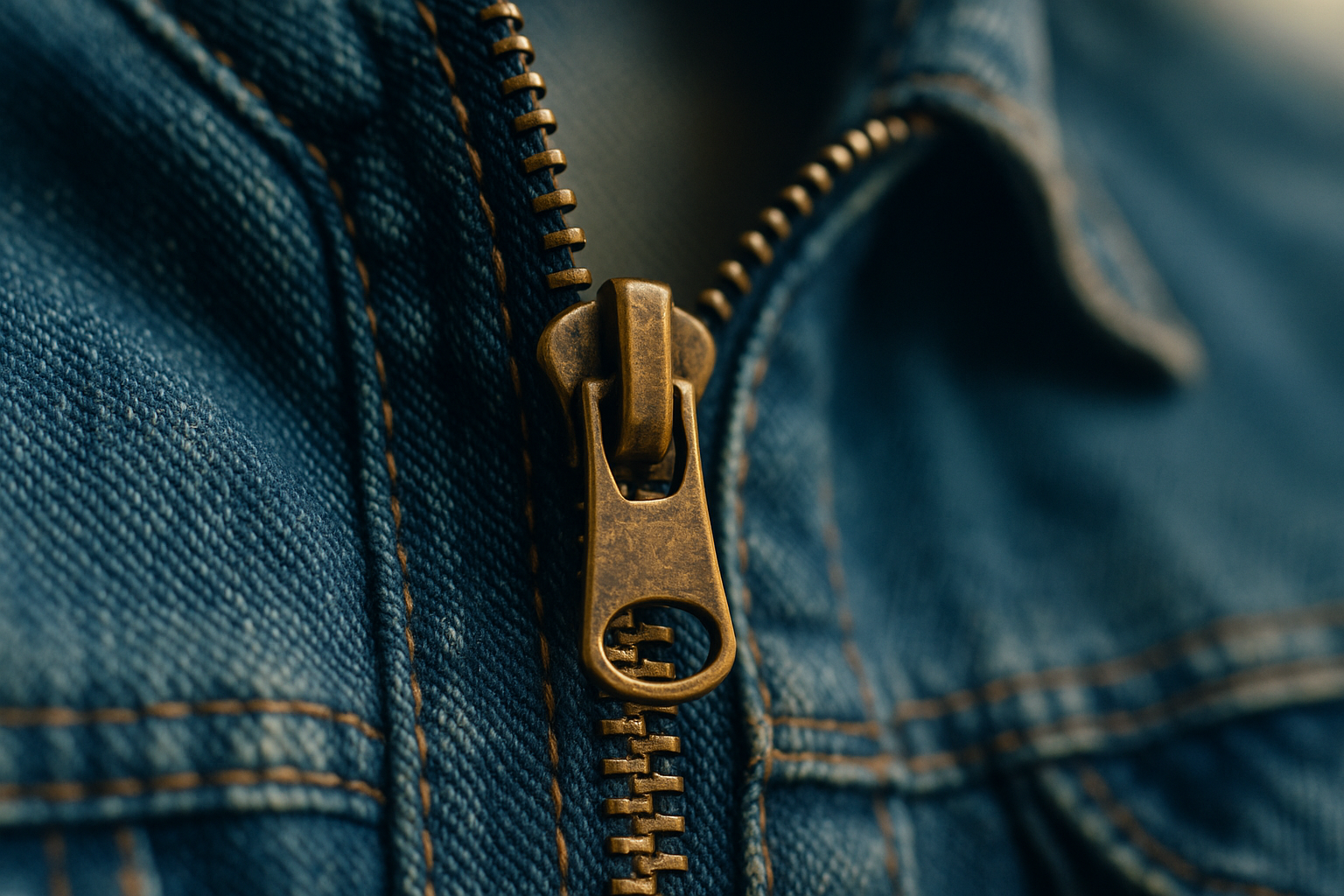
A zipper that sticks, skips teeth, or won't stay up is a Functional Elements defect and caps a garment at Good or lower, no matter how clean the fabric looks. A zipper that works perfectly but has a scratched or tarnished pull is a Cosmetic Appearance defect only, and the garment can still grade Excellent. Sellers who grade zippers by looks alone get this backward constantly. It is one of the most common causes of "not as described" claims on jackets, denim, and boots.
The pattern is familiar: a listing photo shows a shiny YKK pull, the buyer assumes it works, and it doesn't. Or the opposite. A seller sees a dull, scratched slider and knocks the grade down a full tier for something that has zero effect on how the garment functions. Both mistakes cost money. This is how to grade zipper condition on vintage clothing for resale without falling into either trap.
The Two-Bucket Rule: Function vs. Looks
Every zipper defect falls into one of two buckets, and each is graded under a different factor in the five-factor GradeThread system:
- Functional Elements: does the zipper do its job? Does it zip up, stay up, and glide without catching?
- Cosmetic Appearance: does it look worn, tarnished, mismatched, or scuffed, independent of whether it works?
A garment can score well on one and poorly on the other. That is the point of separating them. A vintage Carhartt jacket with a dulled brass pull that zips smoothly top to bottom can still land in Excellent, because the wear is purely cosmetic. The same jacket with a bright, shiny pull that skips three teeth and won't close past the chest is Good at best, because the defect is functional and affects use.
How to Test Zipper Function Before You Grade
Don't grade a zipper by sight. Grade it by running it. This is the test sequence to use on every zippered garment before assigning a grade:
- Zip the garment fully closed, from the base to the top stop, in one continuous motion.
- Zip it back down, checking for catching, skipping teeth, or the slider separating from the track.
- With the garment closed, tug gently at chest height and hem height to check for slippage. Does the slider hold position, or does it creep down on its own?
- Check the top stop and bottom stop (the metal or plastic tabs at each end) for looseness. A missing stop is what lets sliders run off the track entirely.
- Inspect the teeth or coil for missing segments, cracking (common on vintage plastic coil zippers), or misalignment where the two sides don't mesh evenly.
- Test the pull tab. Does it stay attached to the slider, or does it wobble and threaten to detach?
- On a separating zipper (jackets, vests), re-insert the pin into the box and confirm it seats and locks on the first try.
- Repeat the full cycle two or three times. A zipper that works once but sticks on the second or third pass still fails the functional test.
If it fails any step, you are grading a Functional Elements defect, not a Cosmetic Appearance one, even if the metal looks brand new.
Stuck Zipper Grading Standards
"Stuck" gets used loosely by sellers, and it shouldn't. We separate stuck zippers into three severities, because they carry different grade impacts:
- Occasional catch, self-corrects: the zipper catches on fabric once in a cycle but frees itself without tools. This is a minor Functional Elements deduction. On an otherwise clean garment, it typically caps the grade at Very Good.
- Consistent catch, needs manual help: the zipper catches at the same point every time and needs a hand to guide it past. This is a moderate defect. Grade at Good and disclose the exact location ("catches at the waist, clears with light pressure").
- Won't close, or requires pliers/tools: the zipper is functionally broken. This is a major Functional Elements failure regardless of how the rest of the garment presents. Cap at Fair, and decide whether to list it as parts/repair or hold it until fixed.
Buyers read "stuck zipper" in a listing and assume the worst version. Be specific about severity in your condition notes. It protects you from underselling a Very Good jacket and from the overselling that triggers returns. On eBay, a vague "zipper sticks" in the description and a working zipper in the photos is exactly the mismatch that opens a "not as described" case.
Slider Wear Assessment: What Actually Changes the Grade
Not every mark on a slider or pull tab is equal. Use this table to sort what you are looking at before you write the condition report.
| Zipper Condition | Factor Affected | Typical Grade Impact |
|---|---|---|
| Dulled or lightly tarnished metal pull, zipper functions perfectly | Cosmetic Appearance | None to minor; can still grade Excellent |
| Scratched slider body, no effect on glide | Cosmetic Appearance | Minor note only, no tier drop |
| Mismatched replacement pull (different finish/brand than original) | Cosmetic Appearance + disclosure | Caps at Very Good, must be disclosed |
| Occasional catch that self-clears | Functional Elements | Caps at Very Good |
| Consistent catch requiring manual help | Functional Elements | Caps at Good |
| Missing teeth or coil cracking | Functional Elements + Structural Integrity | Caps at Fair |
| Won't close at all / detached slider | Functional Elements | Poor, or list as-is/repair |
| Full replacement zipper, correctly installed, functions like new | Functional Elements (pass) + disclosure | Can grade Excellent if disclosed and installation is clean |
Cosmetic-only issues rarely move the needle. Functional issues almost always cap the grade, because a buyer can't wear a jacket they can't zip.
Vintage Zipper Quirks Worth Knowing
Vintage pieces add a few calls that modern garments rarely need:
- Brand and era of hardware: Talon, Conmar, Scovill, and early YKK stamps on the slider or pull can matter to collectors. Photograph the stamp and name it in the report. Original hardware is a selling point, and a swapped slider on a collectible piece should be disclosed.
- Plastic coil and early nylon: these crack and go brittle with age. Check the whole length, not just the pull zone.
- Metal teeth on denim and workwear: light green or brown oxidation on brass is Cosmetic Appearance. Teeth that are bent, worn flat, or no longer meshing are Functional Elements.
- Slider that grips only when pinched: a worn slider that has lost tension will creep down. Some sellers squeeze the slider with pliers as a quick fix. If it holds, it passes, but say so in the notes.
- Rust and odor transfer: rust staining on the surrounding fabric is a Fabric Condition issue, and a musty smell from a stored garment goes under Odor & Cleanliness, not the zipper.
Replacement Zipper Disclosure
A replaced zipper is not automatically a defect. It is a repair, and repairs get graded on execution, not existence.
- Professional replacement, correct gauge and color match: if the new zipper functions smoothly, matches the original hardware finish reasonably well, and shows clean stitching at the tape, it does not need to cap the grade below Excellent. It does need to be disclosed in the condition report as a replacement, not passed off as original.
- Visible mismatch (wrong color, wrong pull style, wrong tape width): this is a Cosmetic Appearance deduction even if function is perfect. Cap at Very Good and note it explicitly. Buyers researching vintage outerwear often care whether hardware is original, especially on collectible brands.
- Home repair with loose stitching, puckered tape, or exposed thread: this affects Cosmetic Appearance and potentially Structural Integrity if the tape isn't secured to the garment properly. Cap at Good, same as any amateur repair.
Disclosed and well executed beats undisclosed and invisible. A buyer who finds an undisclosed replacement zipper after the sale can file a not-as-described claim even if the zipper works great, because the issue isn't the repair, it's the surprise.
Photographing the Zipper So the Grade Holds Up
Three shots cover most disputes: the closed zipper at full length, a close-up of the slider and pull with the brand stamp readable, and the bottom stop with the pin and box on separating zippers. If there is a catch point or cosmetic wear, add a close-up of that spot. A photo set that matches the written report is your best defense in a return window.
Where Zipper Grades Interact With the Rest of the Garment
A zipper defect doesn't grade in isolation. On a denim jacket, a stuck zipper combined with collar fraying and light pilling compounds. You are not averaging one bad factor against four good ones. The functional defect sets the ceiling, and cosmetic notes layer on top. That is why two jackets that look nearly identical in photos can carry different grades: one has a smooth zipper with a dull pull (Excellent), the other has a shiny pull that skips at the collar (Good).
When you write the condition report, separate the two calls explicitly. For example: "Zipper: original YKK, functions smoothly through full range, pull shows light surface tarnish (cosmetic only, no impact on use)." That one sentence tells a buyer what they are getting, what is original, and why the grade landed where it did. It also prevents the return, because there is nothing left to discover.
Try It on One Garment
Pull a zippered jacket, hoodie, or pair of boots from your current inventory and run it through the test above. Then upload it to GradeThread for a full condition report that separates Functional Elements from Cosmetic Appearance, including the zipper call, plus a shareable certificate your buyer can verify. One garment, five minutes, and you will see where your own eye has been over- or under-calling zipper condition.