How to Grade Suit Pants Crotch Seam Wear: Tension, Stress, and Wearability Standards
To grade suit pants crotch seam wear, check three things in order: thread tension along the seam line, fabric integrity within a half-inch of the stitch, and any existing repair or reinforcement — a seam that's tight but shows thread pull or fabric thinning at the stress point grades no higher than Very Good, and one with visible separation or a home patch caps at Fair regardless of how clean the rest of the garment looks.
We've graded enough tailored trousers to know this is the defect sellers miss most. Denim crotch blowouts get attention because they're common and buyers expect them. Suit pants don't get the same scrutiny — the fabric is thinner, the construction is tighter, and the wearer usually sat down more than they squatted. That's exactly why the seam fails differently, and why a quick glance at a pressed inseam tells you almost nothing.
Why Suit Pants Crotch Seams Fail Differently Than Denim
Dress and suit trousers are cut from wool, wool-blend, or lightweight synthetic suiting fabric — not the 12-14oz cotton twill you find in denim. That fabric has less abrasion resistance and less give. The crotch seam on a suit pant also carries a different construction: often a single-needle seam with a shorter stitch length for a cleaner finish, sometimes without the bar tack or double row of stitching denim relies on at the stress point.
The result is a seam that looks fine under normal inspection but has almost no reserve capacity left. Denim tends to fray visibly before it fails structurally — you get a fuzzy stress point for a while before the seam actually opens. Suiting fabric skips that warning stage more often. The yarns shear or the stitch line pulls through the fabric cleanly, and you go from "looks fine" to "seam open" in one sitting-down motion.
This is the core reason a visual-only grading pass under-calls suit pants constantly. You need to put the fabric under load the same way a wearer will.
The Stress-Point Test: How to Check Crotch Seam Integrity
This is the same test we use before assigning a Structural Integrity score on any tailored trouser. It takes under a minute per garment and it's the single best predictor of whether a seam survives shipping and a first wear.
- Turn the pants inside out and lay the crotch seam flat under strong, raking light so the stitch line and surrounding fabric are visible.
- Inspect the stitch line first for skipped stitches, loose thread, or any point where the thread has visibly pulled through the fabric rather than sitting flush.
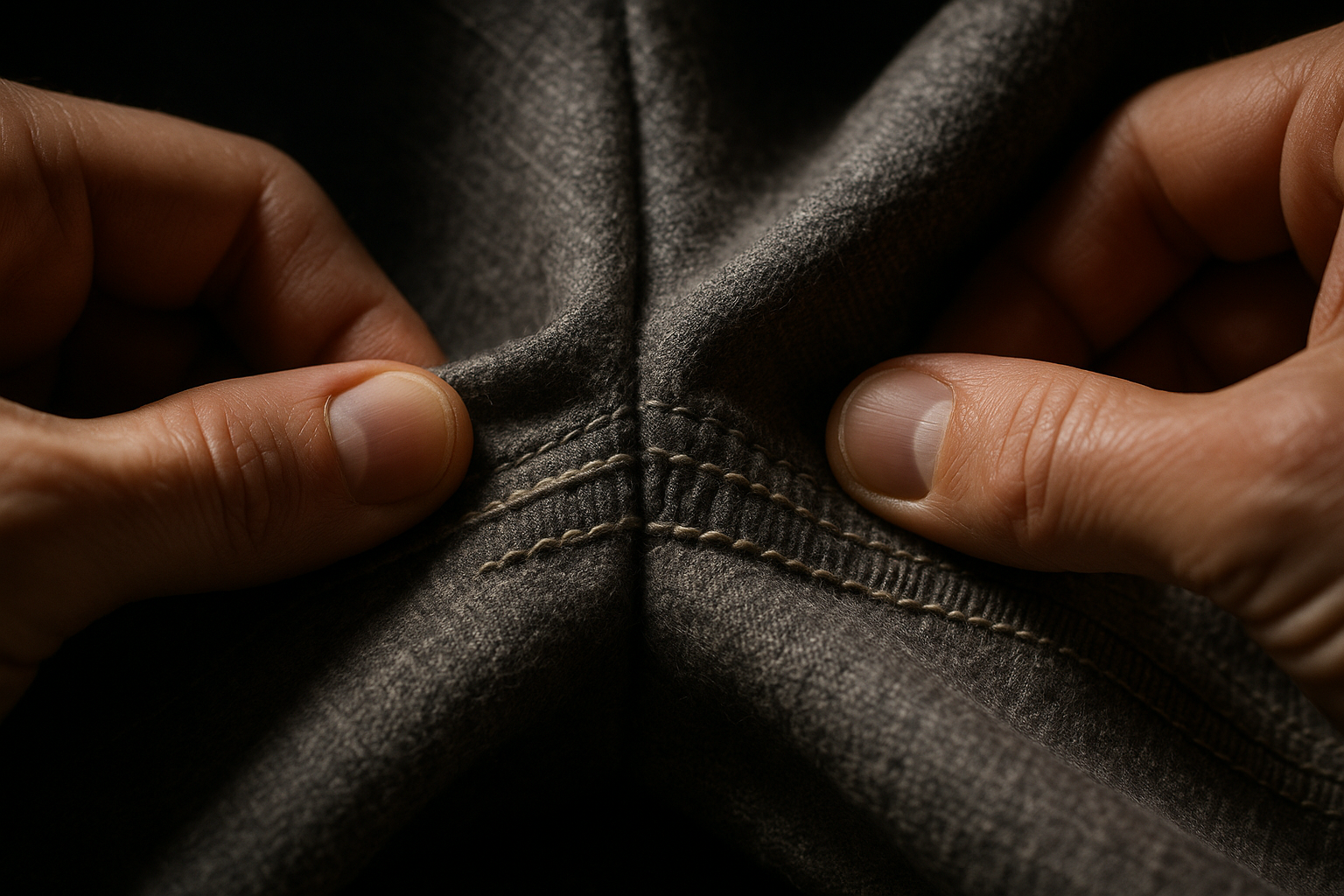
- Pinch the fabric a half-inch on either side of the seam and gently pull it apart, mimicking the tension a wide stride or sitting position puts on the seam.
- Watch for three specific signs during the pull: thread strain (the stitch visibly tightens or puckers), fabric give (the weave separates or thins under the pull), or full separation (the seam opens).
- Check the fabric within a half-inch radius of the seam for shine, thinning, or a change in weave density — this is the pre-failure zone that predicts a future blowout even if the seam holds today.
- If the garment has any existing repair — a bar tack, a patch, or reinforcement stitching — determine whether it was done by a tailor (clean, matched thread, flat-felled or French seam reinforcement) or as a home fix (visible mismatched thread, puckering, or an iron-on patch).
- Record the result against the grading thresholds below and assign the Structural Integrity component score accordingly, then factor that into the overall 1.0–10.0 grade alongside Fabric Condition, Cosmetic Appearance, Functional Elements, and Odor & Cleanliness.
Grading Thresholds: Tension, Fraying, and Separation
Once you've run the pull test, match what you found to the correct tier. These thresholds are specific to suit and dress pants — they run tighter than denim because the fabric has less structural reserve to begin with.
| Condition Found | Grade Tier | Grade Range | Disclosure Requirement |
|---|---|---|---|
| Seam intact, no thread strain or fabric give under the pull test | Excellent / Very Good | 7.0–8.5 | None required beyond standard listing |
| Slight thread strain or minor puckering at the stress point, fabric still fully intact | Very Good | 6.5–7.5 | Note stress point in condition report |
| Visible fabric thinning or shine within a half-inch of the seam, thread intact | Good | 5.5–6.5 | Disclose thinning location and extent |
| Fabric give under the pull test, seam holding but weave visibly separating | Fair | 4.5–5.5 | Disclose as pre-failure stress point; recommend limited wear |
| Full seam separation or hole present | Poor | 3.0–4.0 | Disclose as damaged; sell as-is or for repair/reuse |
| Professionally repaired stress point (tailor-grade reinforcement) | Very Good (capped) | 6.0–7.0 | Disclose repair location and method |
| Home-repaired stress point (visible mismatched stitching or patch) | Good (capped) | 5.0–6.0 | Disclose repair as non-professional |
Notice the cap on repairs. A tailor-grade reinforcement — matched thread, flat construction, no puckering — still limits the top grade to Very Good even if it's structurally sound, because a repaired stress point is not the same wearability profile as an original, untouched seam. A home repair caps lower, at Good, because the repair itself introduces new failure risk at its edges.
Where This Fits in the Five-Factor Standard
Crotch seam condition on suit pants touches more than one grading factor, and separating them matters for an accurate final grade.
- Structural Integrity — this is the primary factor. Thread strain, fabric give, and separation are scored here directly using the pull-test thresholds above.
- Fabric Condition — thinning or shine within the stress zone is a fabric-level finding even before the seam itself shows strain. Score it here if the seam is intact but the surrounding weave shows wear.
- Cosmetic Appearance — visible puckering, mismatched repair thread, or a patch that shows from the outside affects this factor independently of whether the repair holds structurally.
- Functional Elements — if the pants have adjustable waist tabs, suspender buttons, or other functional hardware near the seam area, check those separately. A seam issue doesn't automatically imply hardware failure, and vice versa.
- Odor & Cleanliness — stress points at the crotch seam often correlate with heavier wear overall, so check this area for staining or odor concentration as a secondary indicator, not a substitute for the pull test.
Weighting all five factors correctly is what separates a grade you can defend from one a buyer disputes after the fact. A garment can be Excellent on Fabric Condition and Cosmetic Appearance and still land at Fair overall if the crotch seam fails the stress test — the lowest-scoring factor doesn't average out, it flags the garment for closer review.
Common Grading Mistakes on Formal Wear
We see the same three errors repeatedly when resellers grade suit and dress pants without running the pull test.
- Grading from the pressed appearance alone. A crotch seam looks identical whether it has full structural reserve or none left, until you put it under tension. Steam-pressed trousers photograph clean regardless of seam condition.
- Treating suit pants like denim. Denim's heavier fabric and reinforced stitching mean a stress point often survives longer than the fabric around it frays. Suiting fabric doesn't give you that same warning window — apply the tighter thresholds above, not denim's.
- Overlooking size-driven stress. Pants that have been let out at the waist or worn at the upper end of their size range put more tension on the crotch seam than a properly fitted pair. If you know the item ran tight on a previous owner, weight your stress-point inspection accordingly, even if the fabric shows no visible strain yet.
Any one of these mistakes leads to the same outcome: a grade that reads Excellent in the listing and reads Poor to the buyer the first time they sit down in the pants. That's the exact gap standardized grading exists to close.
Grade the Garment, Not the Press Job
A crotch seam pull test takes under a minute, and it's the difference between a defensible Very Good grade and a return dispute three weeks after the sale. If you're listing tailored trousers or full suits regularly, run this check before you write the condition description — not after a buyer flags it.
Upload a photo of the garment to GradeThread and we'll generate a full condition report across all five factors — Fabric Condition, Structural Integrity, Cosmetic Appearance, Functional Elements, and Odor & Cleanliness — with a numerical grade and a certificate your buyer can verify. Try it on one pair of suit pants and see what the report catches that a quick look wouldn't.