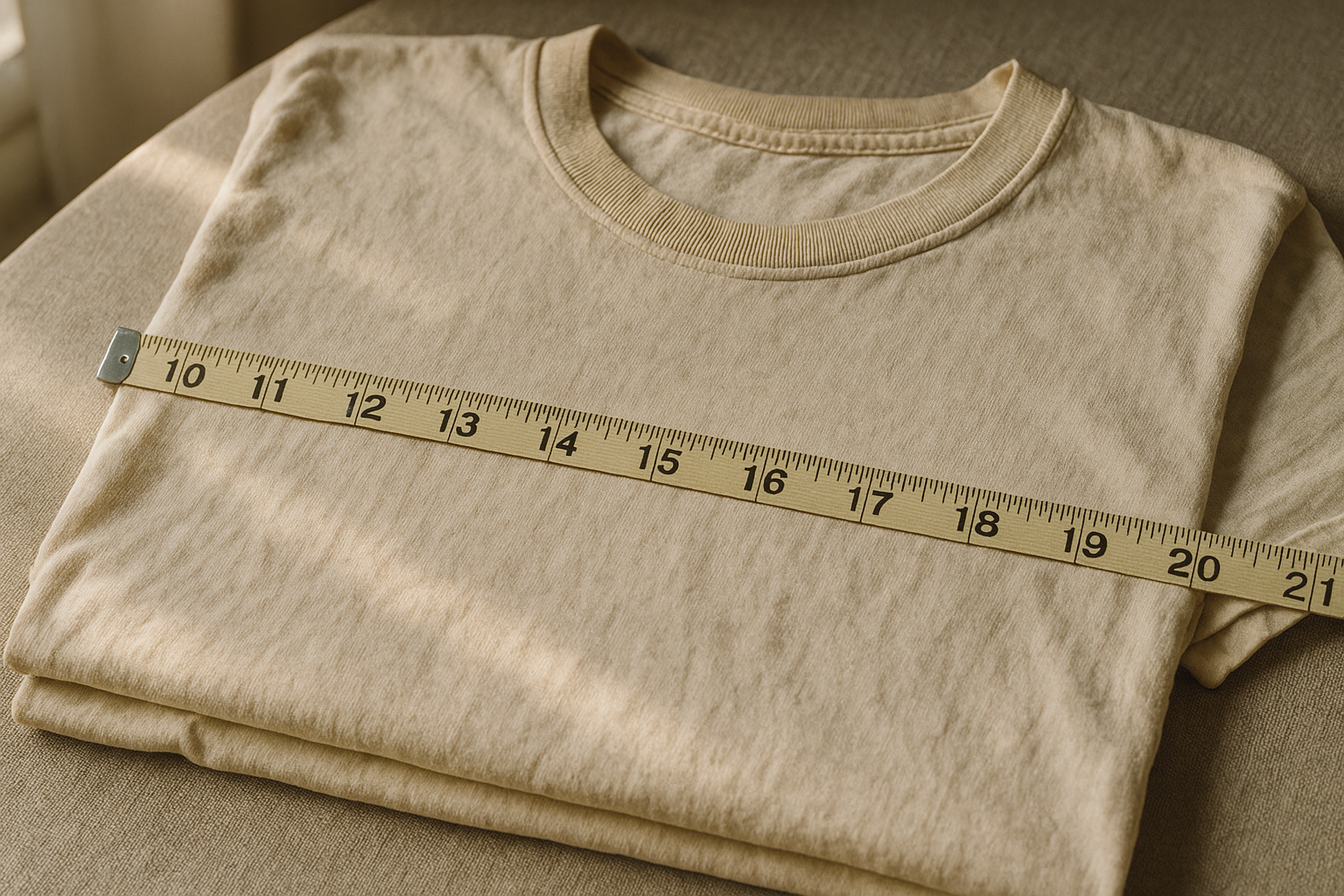
Shrinkage is a fit problem disguised as a condition problem, and most resellers grade it like neither. If a garment measures smaller than its tag size because of laundering, the fix isn't a lower adjective — it's a corrected measurement and, in most cases, a one-tier drop for Structural Integrity and Fabric Condition. A tag-size Large that now fits like a Medium is not "Excellent, runs small." It's a different-sized garment with a documented defect.
We've watched this exact scenario generate returns: a 100% cotton band tee, washed hot by a previous owner, graded Excellent because it had no stains and no holes. The buyer ordered based on the tag size, received something two inches narrower across the chest, and filed "not as described." Nothing was dirty. Nothing was torn. The garment still failed, because shrinkage changes fit, and fit is what buyers are actually paying for.
Why Shrinkage Is a Grading Blind Spot
Most condition checklists focus on stains, holes, and pilling — visible, obvious damage. Shrinkage is invisible unless you measure. A shrunk sweater doesn't look different on a hanger. It looks identical to an unshrunk one until you lay a tape measure across the chest, and by then most sellers have already photographed it, tagged it "Medium," and moved on.
This matters more in vintage than in new-with-tags inventory for one simple reason: you rarely know the garment's laundering history. A 1990s Hanes Beefy-T could have been washed cold and air-dried its whole life, or washed hot and tumble-dried a hundred times. Both look fine at first glance. Only one still measures true to size.
Pre-Shrunk vs. Shrunk: The Distinction That Matters
"Pre-shrunk" is a manufacturing claim, not a guarantee. Pre-shrunk cotton has already gone through a compressive shrinking process (sanforization) before the first cut, which reduces — but doesn't eliminate — further shrinkage from washing. Confusing pre-shrunk fabric with a garment that has already shrunk from use is where most grading errors start.
| Signal | Pre-Shrunk (Fabric Treatment) | Shrunk (Post-Manufacture) |
|---|---|---|
| Tag claim | "Pre-shrunk" or "Sanforized" printed on care label | No claim relevant — this is a wear-history condition, not a fabric spec |
| Measurement vs. size chart | Matches brand's stated size chart for that era | Runs consistently smaller than brand's size chart by 1+ inch on at least two axes |
| Proportions | Even, expected proportions for the cut | Uneven shrink — body shorter than sleeves, or torso narrower than expected for the length |
| Fabric hand | Normal drape and hand-feel | Tighter weave, stiffer hand, sometimes slightly puckered surface |
| Grading impact | None — grade to measurements as manufactured | Structural Integrity and Fabric Condition modifiers apply; measurements must be relisted |
The test that separates the two is comparative: pull the brand's original size chart for that garment and era (Levi's, Hanes, and most college-bookstore tees have documented historical size charts) and compare your actual tape measurements. A half-inch of variance is normal manufacturing tolerance. An inch or more, especially paired with uneven shrink between body and sleeve length, is shrinkage — not spec.
How to Grade Shrunken Vintage Clothing: The Procedure
- Identify the fiber content from the care label. Cotton, wool, rayon, and linen shrink differently and at different rates — cotton typically 3–7% on first hot wash, wool and wool blends 10–20% or more if agitated or heat-dried (felting), rayon up to 10% depending on weave.
- Pull the original manufacturer size chart for the brand, decade, and garment type if available. For unlisted or defunct brands, use a comparable same-era reference garment you've measured before.
- Take flat measurements: chest/bust (pit-to-pit x2), body length (shoulder seam to hem), sleeve length, and waist if applicable. Lay the garment flat, unstretched, and measure to the nearest quarter inch.
- Compare your measurements against the size chart or reference. Flag any axis that reads more than one inch smaller than expected.
- Check for uneven shrink across the garment — sleeves that shrank more than the body, or a hem that's pulled up unevenly. Uneven shrink usually means the piece was tumble-dried on high heat rather than shrunk during a single even wash cycle, and it often comes with a stiffer, slightly puckered hand at the seams.
- Assign the true measured size, not the tag size, in your listing title and item specifics. If the tag reads Large but measures like a Medium, list it as "Tagged Large, Fits Medium" and lead with the measurements.
- Apply the grading modifier: if fabric hand, drape, or seam tension changed as a result of the shrink, note it under Fabric Condition and Structural Integrity in the condition report rather than treating it as a cosmetic issue.
Detecting Shrinkage Without an Original Size Chart
Not every vintage brand has a documented historical size chart, and this is where a lot of sellers give up and just grade by feel. Don't. There are two reliable workarounds:
- Cross-reference a same-era garment. If you've measured three or four unworn or lightly-worn pieces from the same brand and decade, you build your own reference chart over time. Keep a simple spreadsheet — brand, era, tag size, flat measurements — and it becomes more accurate than a scanned catalog page anyway, because it reflects real cut variance.
- Read the fabric itself. Sanforized, unshrunk cotton has an even, slightly looser weave and a soft, uniform hand across the whole garment. Shrunk cotton reads denser and sometimes shows faint puckering at the seams where the fabric pulled against the stitching — the stitching doesn't shrink, the fabric around it does, so tension shows up first at seam lines. On wool, run a finger across the surface: felted wool loses the individual yarn definition you can still see and feel on an unshrunk knit.
- Check hem and cuff ratios. On tees and sweatshirts, the ribbed hem and cuffs are usually a different, more shrink-resistant knit than the body. If the ribbing looks proportionally larger or looser than the body around it, the body panel shrank more than the trim — a strong tell even without a size chart to compare against.
How Shrinkage Hits the Five Grading Factors
Shrinkage rarely stays contained to one factor. Here's where it actually shows up in a GradeThread-style condition report:
- Fabric Condition: shrunk fabric often reads stiffer and denser than its original hand. Wool that's felted from heat-drying loses drape entirely and can no longer be graded on its original fabric weight.
- Structural Integrity: seams and hems that were sewn to a larger pattern can pucker or strain when the fabric around them shrinks unevenly, particularly at set-in sleeves and waistbands.
- Cosmetic Appearance: usually unaffected on its own, unless puckering or a felted surface is visible.
- Functional Elements: zippers, buttons, and closures can misalign if the panel around them shrank at a different rate than the hardware — a button that once sat flush can now gap or strain.
- Odor & Cleanliness: not directly affected, though heavy tumble-drying that causes shrinkage sometimes also sets in odors if the wash cycle before it didn't fully remove them.
A garment with no stains, no holes, and no odor can still land at Very Good or Good instead of Excellent purely because Fabric Condition and Structural Integrity took a hit from an uneven, aggressive shrink. That's the case resellers miss most often — they check the surface, see nothing wrong, and grade high.
Fit Grade Changes: List by Measurements, Not Tag Size
The single highest-leverage fix here isn't grading vocabulary — it's the listing title and item specifics. eBay's size field and eBay's item specifics for "chest measurement" exist precisely because tag sizes lie, especially on vintage. When you know a garment has shrunk:
- Title the true fit first: "Vintage Hanes Tee — Tagged L, Measures M" beats "Vintage Hanes Tee Size L" for both accuracy and search — buyers increasingly search by measurement ranges.
- Put the flat measurements in the first two lines of the description, not buried at the bottom.
- Use the platform's measurement fields (eBay item specifics, Poshmark's size conversion note) in addition to prose — duplicate the data so it survives regardless of how the buyer is browsing.
- Note the shrink explicitly in the condition report: "Fabric shows evidence of shrinkage from laundering; garment measures smaller than tag size. Structural Integrity and Fabric Condition graded accordingly."
This single change — leading with real measurements instead of tag size — is the difference between a buyer who orders confidently and one who orders the tag size, gets a surprise, and opens a return with the reason code "doesn't fit as described." That return reason code is one of the most common on eBay for pre-owned apparel, and shrinkage is a quiet contributor to it that rarely gets named correctly.
Grading Examples: Same Defect, Different Outcomes
| Scenario | Correct Tier | Why |
|---|---|---|
| Cotton tee, half-inch smaller than size chart, even shrink, soft hand retained | Excellent | Within normal manufacturing/wash tolerance — not a defect |
| Cotton tee, 1.5 inches smaller across chest, sleeves shrank more than body, hand slightly stiffer | Very Good | Measurable, uneven shrink affecting Fabric Condition; still fully wearable and sellable at true size |
| Wool sweater, felted texture, 3+ inches smaller, drape gone, seams puckered | Fair | Felting is generally irreversible; Fabric Condition and Structural Integrity both fail |
| Rayon blouse, shrunk unevenly with hem pulling, buttons now gap under strain | Good | Functional Elements affected in addition to fabric change |
The Bottom Line on Shrinkage Grading
Shrinkage is a measurement problem before it's an adjective problem. Grade the fabric and structure honestly, then fix the size in the title and specifics — that combination is what actually prevents the return, not a more generous condition word. If you're not sure whether a garment you're about to list has drifted out of its original size range, that's exactly the kind of call GradeThread's report is built to make consistently, factor by factor, instead of by feel.
Grade one questionable vintage piece through GradeThread and see how the report handles the fit-versus-fabric distinction — it's a fast way to catch a shrinkage issue before a buyer does.