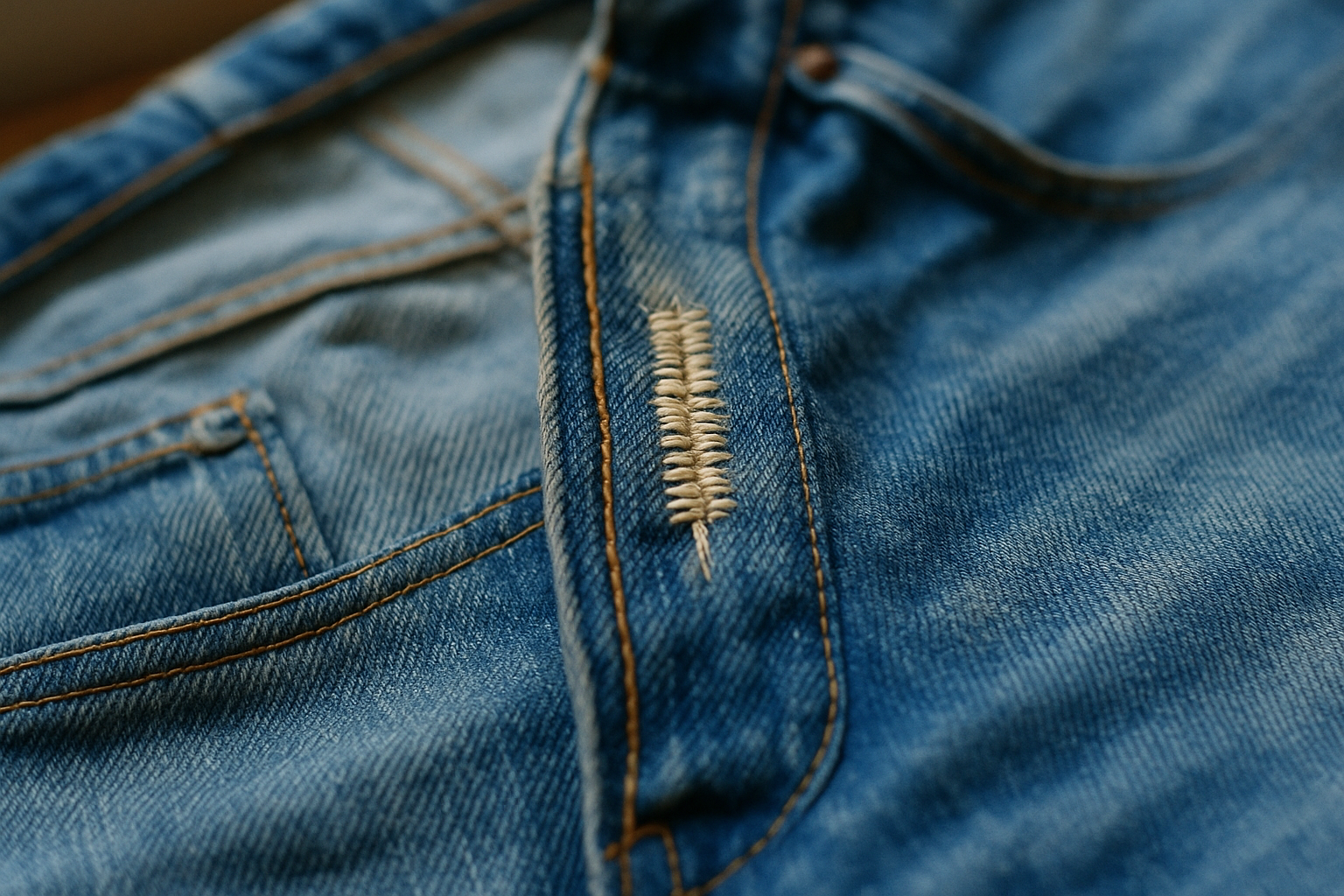
A repaired seam does not automatically drop a pair of jeans to Fair. A professional, reinforced repair on a structural seam (inseam, outseam, or back rise) can still grade Very Good if the stitch work is durable and clean. Visible, uneven home-repair stitching on a blown-out crotch caps the grade at Good or below, no matter how clean the rest of the denim looks. The repair itself isn't the variable. The quality of the repair is.
We've seen it go wrong in both directions on vintage Levi's, Wranglers, and Lees. Some sellers slap a Poor grade on a bar-tacked reinforcement that will outlast the rest of the jeans. Others bury a lumpy, thread-mismatched patch under "minor repair" and eat an "item not as described" return three weeks later. Here's the standard we use to grade repaired denim seams for resale value.
Why Seam Repairs Touch Two Grading Factors at Once
Every GradeThread condition report scores a garment across five weighted factors: Fabric Condition, Structural Integrity, Cosmetic Appearance, Functional Elements, and Odor & Cleanliness. A repaired seam almost always touches two of them.
Structural Integrity asks whether the seam will hold under normal wear going forward, not whether it looks pretty. This factor decides whether a repair passes or fails. A repair that re-tears under light stress is a Structural Integrity failure however invisible the stitching looks in photos.
Cosmetic Appearance asks how visible the repair is at normal viewing distance, and whether thread color, stitch pattern, and fabric match draw the eye. A repair can pass Structural Integrity and still cost you a full tier on Cosmetic Appearance if it's done in the wrong thread color down the outseam of raw selvedge.
Occasionally a repair also touches Functional Elements. If a repaired inseam changes the taper, or a patched crotch restricts movement, that's a separate deduction. Fabric Condition matters too: a repair set into thin, worn denim will fail again next to the patch, so the surrounding fabric has to be sound. Grade each factor independently, then let the lowest qualifying tier set the ceiling for the garment.
The Repair Quality Spectrum: What Grades Where
Lumping every fix into one "repaired = damaged" bucket costs you money on the good repairs and burns your feedback on the bad ones. Here is how we sort them. These are ceilings, not guarantees: the rest of the garment still has to earn the tier.
| Repair type | Description | Typical grade ceiling |
|---|---|---|
| Preventive reinforcement (bar tack, box stitch) | Added stitching at a stress point (back pocket corners, belt loop bases, crotch) before any tear occurred. No original material removed. | Excellent (does not lower grade if factory-style and clean) |
| Professional invisible mend | Machine-stitched, thread-matched, patched from the inside so the repair is not visible from the outside at normal distance. | Very Good |
| Professional visible repair | Clean, even machine stitching in contrast thread or with a visible patch. A deliberate style choice or practical fix that reads clearly as a repair. | Good |
| Home repair, structurally sound | Hand-stitched or home-machine repair that holds under stress but shows puckering, uneven stitch length, or visible thread bulk. | Good to Fair |
| Home repair, structurally weak | Repair looks acceptable but fails the pull test: loose stitches, thread already fraying, patch lifting at the edge. | Fair |
| Iron-on patch or fabric tape | Adhesive-based fix with no stitching, or stitching over adhesive backing that will delaminate with washing. | Poor |
| Failed or re-torn repair | A repair that has already given way, with the original tear now larger than before. | Poor |
Professional preventive reinforcement is not a defect in our system. It's a durability feature, and we treat it like factory bar tacks. The defect starts once a repair is reactive, visible, and lower quality than the original construction.
How to Grade a Repaired Seam: The Inspection Procedure
Use this sequence every time you find a repair on a pair you're about to list. It takes under five minutes and mirrors what our AI grading model looks at in repair photos.
- Locate every repair on the garment: inseam, outseam, back rise, belt loops, hem, and pocket bags. Previous sellers rarely disclose repairs, and they hide in low-visibility spots.
- Turn the jeans inside out and look at the repair from the back. Note any patch fabric, backing, adhesive residue, or thread tails.
- Run a gentle pull test along the repaired seam in both directions. A sound repair does not gap, pucker further, or show thread give under moderate hand tension.
- Examine stitch quality up close for consistent stitch length, tension that matches the surrounding stitching, and thread that isn't fraying at the ends.
- Check the surrounding denim for thinning within an inch or two of the repair. Weak fabric next to a good repair is a Fabric Condition problem and the likely site of the next tear.
- Check whether the repair uses matched denim or a patch with a different weight or wash than the surrounding panel.
- Step back about three feet, a normal handling distance, and note whether the repair is visible. This sets the Cosmetic Appearance hit, separate from Structural Integrity.
- Assign a provisional tier for each affected factor, then set the final grade at the lowest of them.
- Photograph the repair outside and inside, with a close-up and a full-leg shot for scale, and write its location, method, and size into your listing.
Repair Location Changes the Grade Math
The same repair reads differently depending on where it sits. A bar-tacked reinforcement at a belt loop base is nearly invisible, and buyers rarely care. The same stitch work on the outseam of a slim-cut jean, directly in the sightline, scores more conservatively on Cosmetic Appearance even when the stitching is identical.
Grade these high-stress, high-visibility zones more conservatively:
- Inseam repairs between the legs: high friction, and the first place a repair fails on rewear
- Back rise and crotch seam: the most common denim blowout point and the hardest to repair invisibly
- Front pocket corners: visible and under constant hand pressure
- Hems on cropped or cuffed styles: directly in the sightline of most product photos
A comparable repair costs less in lower-visibility zones:
- Belt loop bases
- Inner pocket bag seams
- Back yoke seam under a belt line
- Waistband interior stitching
Disclosure Language That Protects You From Returns
Vague wording is the biggest cause of not-as-described disputes on repaired vintage denim. "Some repair work" tells a buyer nothing, so they imagine the best or the worst, and either way you're exposed. On eBay, a buyer who opens a not-as-described case can send the item back at your expense, and a repair you left out of the listing is exactly what that claim is built on. Say what was done, where, and how it holds.
Compare two listing lines for the same pair:
- Weak: "Minor repair to seam, still wearable."
- Strong: "Professional machine-repaired outseam, right leg, approximately 3 inches, thread-matched and structurally sound. Visible on close inspection, not visible while worn. See photo 6."
The strong version names the method, states location and size, and tells the buyer what they'll see. It also points to a photo. Put the repair in the description and in the item specifics or condition notes where the marketplace allows, so the disclosure is on the record before checkout. That is the difference between a repair that reads as craftsmanship and a flaw discovered after delivery.
When a Repair Actually Adds Value
A well-documented professional repair on a hard-to-find pair, such as early Levi's 501XX or a selvedge run from a discontinued mill, can hold price rather than lower it. Vintage denim buyers know raw denim wears at predictable stress points, and a clean, honest repair signals the jeans were kept in use and cared for. Compare the tiers: a Fair pair with a rough repair sells at a steep discount, while a Very Good pair with a documented professional mend can sell close to unrepaired comps, because the buyer is paying for fabric weight, wash, and rarity. We won't promise a number, so check sold comps for your specific pair.
The rule holds beyond denim: transparency about a repair, paired with an honest grade, outperforms silence paired with an optimistic one. NWT and NWOT items carry no repair tolerance by definition. Everything from Excellent down through Fair can carry a disclosed repair. The tier just has to reflect what the repair is, not what you hope the buyer won't notice.
Try It on One Pair Before Your Next Denim Drop
If you have vintage denim with repair work you've been eyeballing instead of grading, run one pair through GradeThread. You get a numerical grade, a condition report across all five factors, and a certificate you can attach to your listing, so the buyer sees what you saw before they open the package.