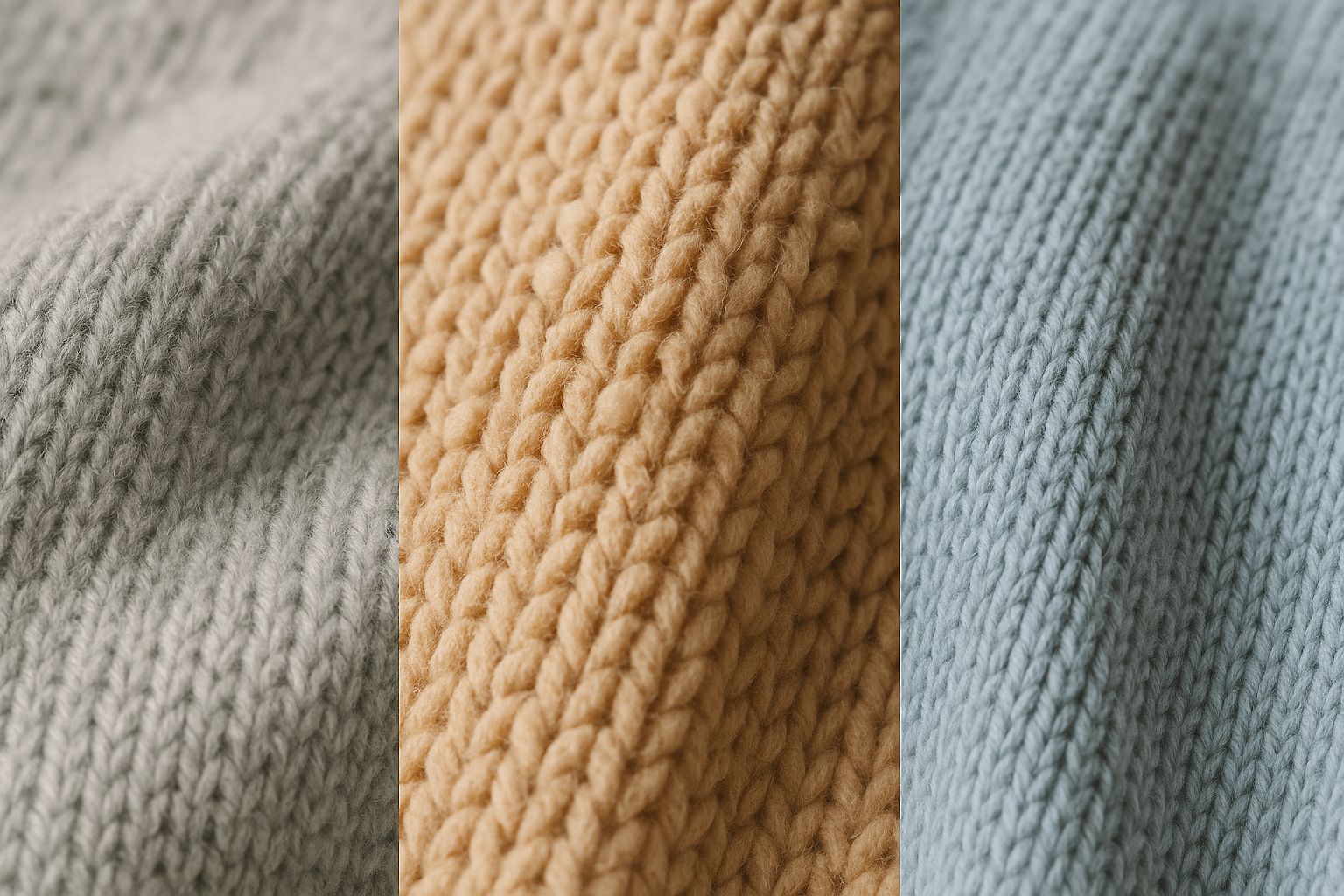
A merino sweater with a dozen small pills under the arms is often still Excellent. An acrylic sweater with the same dozen pills is usually Good at best, sometimes Fair. Same defect, same pill count, different grade — because fiber type determines whether pilling is normal wear or a structural warning sign. Grade pilling by counting pills and you'll misgrade half your knitwear. Grade it by fiber behavior and you'll get it right almost every time.
We've regraded returns where the seller's complaint was identical — "it's pilled, not as described" — on garments that, fiber-for-fiber, should never have been priced the same in the first place. The fix isn't a stricter pilling threshold. It's a different threshold per material.
Why fiber type changes the pilling grade, not just the severity
Pilling happens when short, broken fibers migrate to the fabric surface and tangle into little balls, usually from friction — underarms rubbing, a bag strap crossing the chest, a car seat against a hip. What happens next depends entirely on the fiber:
- Long, strong fibers (like merino wool) form pills that eventually break off and fall away on their own. The fabric self-cleans over time and the surface underneath is usually undamaged.
- Short, weak, synthetic fibers (like acrylic) form pills that lock in and stay. They don't shed. They multiply. And because acrylic fibers are often blended at a shorter staple length specifically to hit a price point, the pilling tends to be denser and more visible from the start.
- Cotton and cotton-blend knits sit in between — pilling is usually surface-level and often removable, but heavy cotton pilling can signal thinning fabric underneath, which is a different problem entirely.
This is why a pilling call has to run through Fabric Condition and Cosmetic Appearance together, not Cosmetic Appearance alone. On a synthetic, pilling this dense at this stage tells you something about fiber integrity going forward. On wool, it usually doesn't.
Merino wool pill assessment: normal wear, not damage
Merino and other fine wools pill fast — often within the first few wears — because the fibers are short relative to synthetic fibers and the yarn is spun loosely for softness. Buyers new to wool sometimes see this early pilling and assume the garment is defective. It isn't. It's the fiber doing exactly what fine wool does.
What actually matters on a wool pilling assessment:
- Check whether pills are loose and easily removed by hand or a fabric comb — that's expected wool behavior and rarely drops the grade below Excellent.
- Check whether pills are dense enough to change the hand-feel of the fabric — a slightly rough patch under the arm is still Excellent-range; a stiff, matted patch is Very Good at best.
- Check the fabric underneath a pill cluster for thinning by gently stretching the knit — wool that's thinning under the pills has moved into structural wear, which is a Fabric Condition issue, not just a cosmetic one.
We treat light, removable wool pilling on high-wear zones (underarms, where a bag strap sits, inner elbows) as consistent with Excellent condition, the same tier as gently worn NWOT pieces. It only drops to Very Good or Good when pilling is dense across visible surfaces like the chest or back, or when it's paired with visible thinning.
Acrylic blend pilling grading: it doesn't shed, and it doesn't stay quiet
Acrylic pills and stays pilled. The fiber is smoother and more slippery than wool, so the little pill balls don't have the friction needed to break off on their own — they anchor into the knit and accumulate. A three-year-old acrylic cardigan with regular wear will almost always show more visible pilling than a three-year-old wool one, even with identical care.
This changes the grading math in two ways:
- Acrylic pilling at a given severity level should generally be graded a half to full tier lower than the same visual severity on wool, because it won't improve and often signals the fabric is already past its functional life.
- Acrylic-cotton and acrylic-poly blends pill in patches rather than evenly, often concentrated at seams and friction points, which reads as more damaged in photos even at a lower total pill count.
For acrylic and poly-blend knits, we grade pilling on visibility at arm's length under even light, not just close-up. If pilling is visible from three feet away on the front or back panel, that's a Good-tier call regardless of how it counts up close. If it's confined to underarms and inner surfaces and invisible at a normal viewing distance, Very Good is defensible. Acrylic rarely earns Excellent once any pilling is present, because unlike wool, there's no self-cleaning mechanism working in the seller's favor.
Cotton blends: the tier that confuses the most sellers
Cotton and cotton-poly knits (think fleece, French terry, jersey sweatshirts) pill differently again. The pilling is usually looser and more removable than acrylic, closer to wool in behavior, but the underlying risk is different: heavy pilling on cotton knits often coincides with fabric thinning, because the friction that causes pilling is also abrading the weave.
The test that matters here is a light-transmission check: hold the fabric up to a light source at the pilled area. If light passes through more easily than on an unpilled section of the same garment, the fabric has thinned and this is a Fabric Condition issue, not a cosmetic one — grade accordingly, typically Good or Fair depending on severity. If the fabric density looks even, the pilling is surface-only and the garment can still land in Very Good to Excellent depending on visibility and location.
Pilling severity by fiber type: a side-by-side comparison
Same visual pill density, three different outcomes. Use this as a starting framework, then apply the checks above.
| Fiber type | Light pilling (underarms, inner surfaces only) | Moderate pilling (visible at 3 ft on front/back) | Heavy pilling (dense, matted, changes hand-feel) |
|---|---|---|---|
| Merino / fine wool | Excellent | Very Good | Good |
| Acrylic / synthetic blend | Very Good | Good | Fair |
| Cotton / cotton-poly blend | Excellent to Very Good | Good | Fair (check for thinning first — may be Poor) |
These are starting points, not absolutes — a heavily pilled wool sweater with matting still checks structural integrity before it locks in a grade, and a lightly pilled acrylic piece with no visibility issue can still land Very Good. The point is the same pill pattern does not deserve the same grade across fiber types, and sellers who apply one pilling standard across their whole closet are misgrading a large share of their knitwear.
How to grade pilling on any fabric type: the procedure
- Identify the fiber content from the tag or, if missing, from fiber behavior — wool pills loosely and sheds over time, acrylic pills densely and stays, cotton pills loosely but can mask thinning.
- Inspect high-friction zones first: underarms, inner elbows, where straps sit, waistband contact points, and inner thighs on pants.
- Test pill removal by hand or with a fabric comb — pills that lift away easily indicate lower-impact pilling regardless of fiber; pills that resist removal indicate deeper fiber tangling.
- Check for underlying thinning using a light-transmission test or gentle stretch, especially on cotton and cotton-blend knits.
- View the garment at a three-foot distance under even lighting to judge visibility from a normal buyer's perspective, not a macro lens.
- Apply the fiber-specific tier from the comparison table above, then adjust up or down half a tier based on visibility and any structural findings.
- Document the pilling location and severity in the condition report, and photograph the worst-affected zone at both close range and normal viewing distance.
Where pilling fits in the five grading factors
Pilling primarily lives in Cosmetic Appearance, but it crosses into Fabric Condition the moment it's dense enough to change the fabric's hand-feel or coincides with thinning. It rarely touches Structural Integrity, Functional Elements, or Odor & Cleanliness unless the garment has other issues layered on top — a pilled cuff that's also fraying is a Structural Integrity call as well as a cosmetic one. Grading pilling in isolation, without checking whether it's a symptom of something happening underneath the surface, is how a garment gets priced as Very Good when it's functionally a Good or Fair.
The tier language stays the same across every fiber — NWT, NWOT, Excellent, Very Good, Good, Fair, Poor — but the pilling threshold that earns each tier shifts by material. That distinction is exactly the kind of nuance a seller eyeballing a sweater at 11pm tends to miss, and exactly the kind of nuance a buyer notices the second the package arrives.
Grade one pilled knit through GradeThread and see how the report separates cosmetic pilling from a real Fabric Condition concern — by fiber type, not by guesswork.