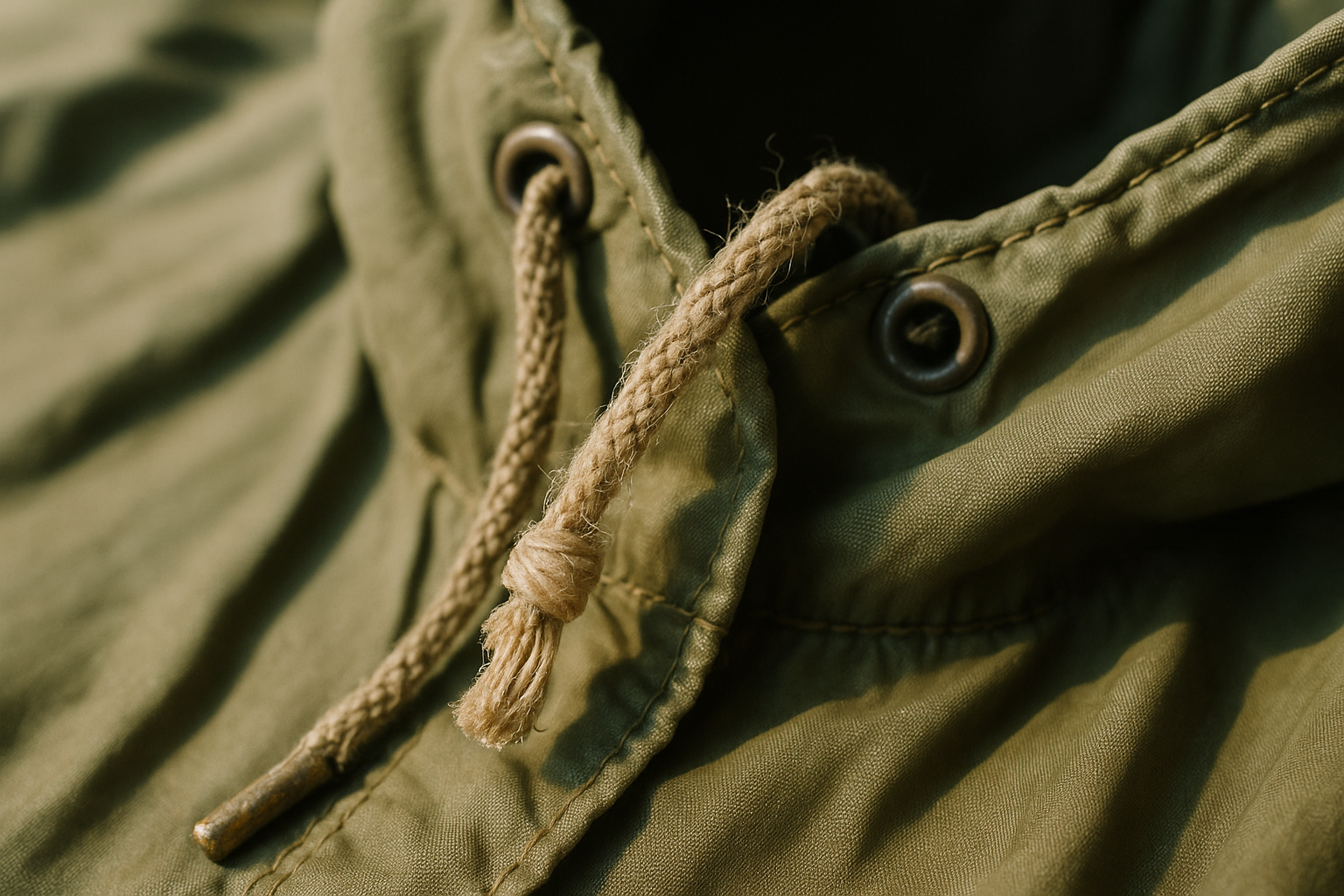
A missing or damaged drawstring is a Functional Elements defect, not a Cosmetic Appearance one. Grade it by whether the cord still does its job (cinching a hood, hem, or waist). A jacket with no drawstring at all should not grade above Good, however clean the shell looks. Resellers skip this rule most often, and it generates the angriest "item not as described" messages on nylon shells, parkas, and vintage windbreakers.
We've watched a mint-shell 90s Members Only jacket get returned because the buyer wanted to cinch the hood in the rain and found six inches of fraying cord and no aglet on either end. The shell was Excellent. The jacket, as a functioning garment, wasn't. That gap is where drawstring grading trips people up, and it is the core of how to grade missing or damaged drawstrings on jackets.
Why Drawstrings Are a Functional Elements Call, Not Cosmetic
GradeThread scores five weighted factors: Fabric Condition, Structural Integrity, Cosmetic Appearance, Functional Elements, and Odor & Cleanliness. A drawstring lives primarily in Functional Elements, the same bucket as zippers, snaps, cord locks, and elastic. The test is simple: does the component still perform its intended job?
A drawstring's job is mechanical, not decorative. It cinches. If it can't, because it's missing, snapped, pulled into the casing, or the lock is broken, that's a functional failure even if nobody can see it in a flat-lay photo. That is why a buyer can be furious about a defect that never showed up in your listing photos: you photographed the shell, not the function.
Two other factors can get pulled in. A frayed cord end poking out of a hood casing is a Cosmetic Appearance hit. A cord that ripped its grommet or eyelet out of the shell fabric is a Structural Integrity issue, because the housing failed, not just the cord.
The Four Failure Modes We See Most
Not all drawstring damage is equal. Here is the taxonomy we use, worst to least severe:
- Full cord loss. The channel is empty. Someone removed the cord, cut it out, or tossed it after it degraded. No cinching function exists.
- Snapped or non-functional cord. The cord is present but severed, or has been pulled fully into the casing, so one side can't be adjusted. Functionally the same as missing, and less obvious in photos.
- Missing or broken end hardware. Aglets, cord locks, spring toggles, or metal tips are gone or cracked. The garment still cinches, but the cord frays faster and looks unfinished.
- Frayed but functional cord. Fuzzing, thinning, or minor unraveling at the ends, but the cord still threads through the casing and holds tension.
Grade each differently. Lumping them into "drawstring is a little rough" is how sellers over- or undercall a jacket by a full tier.
Age and material quirks worth knowing
Vintage cord fails in predictable ways. Cotton and cotton-blend cords stiffen, shrink in the casing after a wash, and can rot where they sit exposed to sweat. Older nylon cord glazes and goes brittle with UV exposure, so the ends split first. Elastic-core cords lose snap and can feel fine in the hand while no longer holding tension. Pull the cord, don't just look at it.
Grading Table: Drawstring Condition by Tier
| Tier | Drawstring / Cord Condition | Typical Cause |
|---|---|---|
| NWT / NWOT | Cord fully intact, tips and toggles original and unmarked, cinches to full tension with no slack or fraying | Never used, factory-fresh hardware |
| Excellent | Cord intact and functional, minimal surface fuzzing visible only on close inspection, original hardware present | Light use, careful storage |
| Very Good | Cord functional with visible fraying at one or both ends, or a cord lock with a hairline crack that still operates | Regular use over several seasons |
| Good | Cord functional but significantly frayed, missing one aglet, or bunched in the casing and needing extra pull to cinch | Heavy wear, sun exposure on cord ends |
| Fair | Cord present but one side pulled into the casing and unreachable without re-threading, or cord lock broken and non-functional | Long-term neglect, hardware failure |
| Poor | Cord missing entirely, snapped beyond use, or channel torn or grommet pulled out | Removed cord, structural failure at the housing |
Read this table as the Functional Elements sub-score for the drawstring alone. A jacket doesn't need to be otherwise trashed to be held back here. Functional Elements is weighted, not optional, so a mint-shell parka with zero cord is still capped.
How to Grade a Damaged or Missing Drawstring
Use this sequence every time you assess hood, hem, or waist cords on outerwear: parkas, bombers, windbreakers, anoraks, track jackets.
- Locate every drawstring channel on the garment (hood, waist hem, and sometimes cuffs) and check each independently, since one can fail while another is fine.
- Pull each cord to full tension from both ends to confirm it threads freely and doesn't bind, bunch, or retreat into the casing.
- Inspect both cord ends for aglets, metal tips, or knots, and note whether they are original, missing, or replaced.
- Test any cord lock, toggle, or spring-loaded barrel by compressing and releasing it to confirm it grips and holds tension.
- Check the fabric around each eyelet or grommet for tearing, fraying, or a pulled-out grommet. This is a Structural Integrity call, not Functional Elements.
- Compare cord diameter, material, and color to the shell's era and brand. A replacement that is obviously a different weight or color is a disclosure item, not a hidden fix.
- Assign the Functional Elements sub-score from the tier table, then fold it into the overall weighted grade alongside Fabric Condition, Structural Integrity, Cosmetic Appearance, and Odor & Cleanliness.
- Photograph the cord pulled to full extension on both sides, plus a close-up of any end hardware, so the buyer sees exactly what you graded.
Step 8 matters as much as the grading. Drawstring wear assessment grading only protects you from returns if the photos back up the number. A cord coiled loosely inside a hood tells the buyer nothing about whether it cinches.
Replacement Cord: When It's a Fix and When It's a Disclosure
Replacing a missing drawstring is one of the lowest-risk repairs in resale. A couple of dollars of matched cord restores function in minutes. But cord replacement disclosure resale rules follow the same logic as any component swap: disclose the change, and don't let it silently inflate the grade. On eBay, an undisclosed swap is a textbook "not as described" case, and the buyer wins that return window.
The standard we hold sellers to:
- Matched replacement, clean install. New cord threaded correctly, matching or close to the original color and diameter, ends finished (melted, capped, or knotted). This can support Very Good on Functional Elements, since it works like original and you've disclosed it isn't.
- Mismatched or visible replacement. Different color, texture, or diameter, or a shoelace or paracord substitute with unfinished ends. This caps Functional Elements at Good even if it cinches fine, because a buyer expecting original hardware on a vintage piece will feel misled if it isn't called out.
- Undisclosed replacement. Any swapped cord not mentioned in the listing is a not-as-described risk however good the fix looks. In our experience this, not the damage itself, drives most drawstring returns.
One line in your listing solves it: "Original drawstring missing; replaced with matched black nylon cord, ends finished." It takes ninety seconds to write and removes the ambiguity that turns into a dispute. Put the same note in the item specifics or description, not only in a photo caption.
Grade Impact: Original vs. Replaced vs. Missing
Functional element replacement standards are easier to apply when you see the scenarios side by side. Here is how the same base jacket, a Very Good vintage nylon anorak, moves on Functional Elements alone:
| Scenario | Functional Elements Impact | Overall Grade Ceiling |
|---|---|---|
| Original cord, functional, light fraying | No penalty; matches base condition | Very Good (unchanged) |
| Original cord missing, replaced and disclosed cleanly | Minor penalty for non-original hardware | Very Good to Good, depending on match quality |
| Original cord missing, replaced but undisclosed | Trust penalty on discovery; misrepresentation risk | Effectively voids the stated grade on return or dispute |
| Cord missing entirely, no replacement | Functional Elements floor applies | Capped at Good regardless of shell condition |
The pattern holds across parka hoods, bomber hems, and track jacket waists. Outerwear cord integrity grading works because a gone or broken functional element puts a ceiling on the grade that no amount of shell condition can lift. A jacket is fabric plus the parts that make it work as designed.
Try It on One Jacket
Grab a jacket with a hood or hem drawstring, vintage or not, and run it through the eight steps above before your next listing. Then grade it in GradeThread and compare the Functional Elements score with what you found by hand. If a cord issue is quietly capping a grade you'd have called higher on shell condition alone, you'll know before a buyer does.