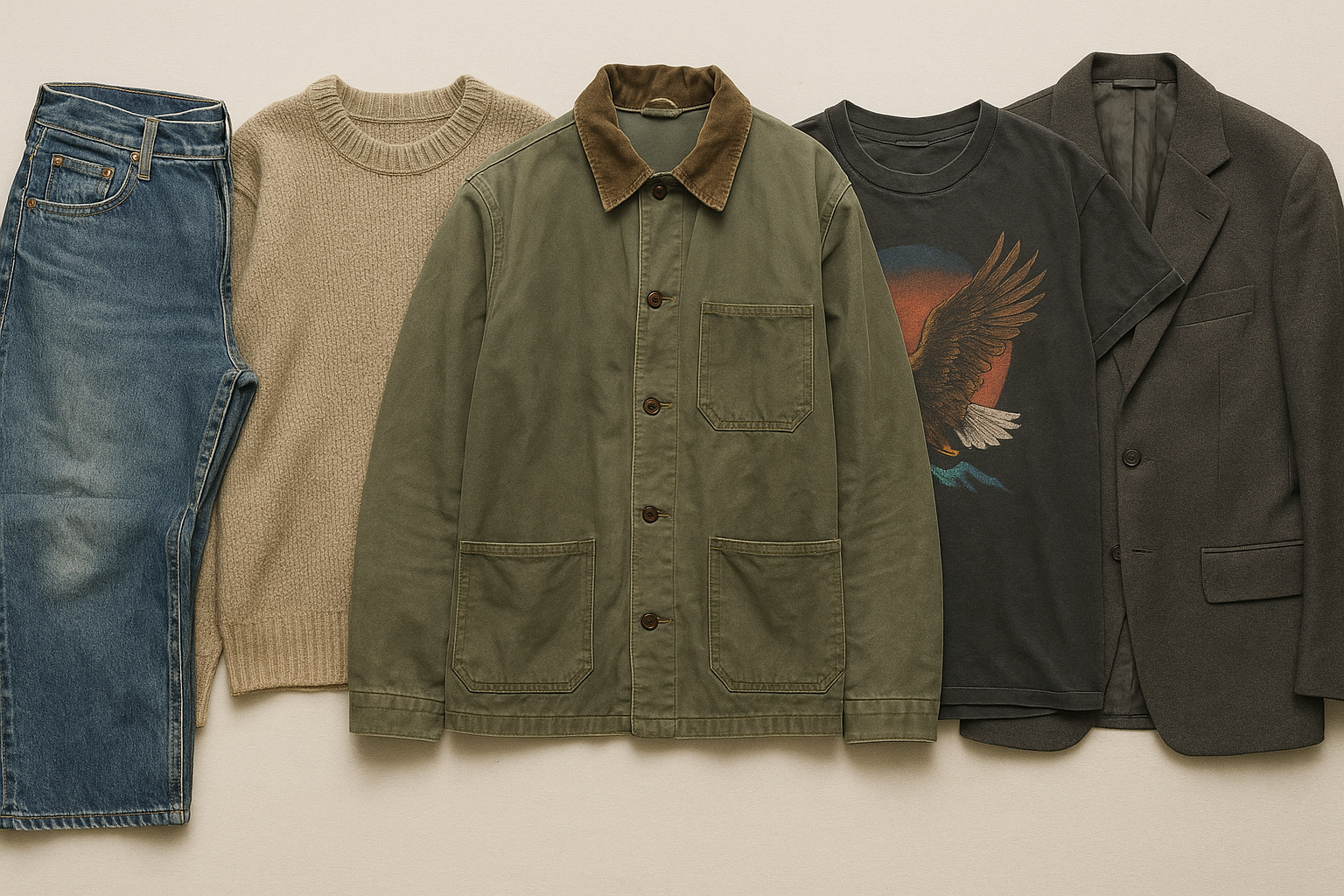
What Good Condition Really Means: The Grade-6 Standard Across Five Common Clothing Categories
Good condition means Grade 6 on the 1.0–10.0 scale: a garment that shows real, visible wear — fading, pilling, minor fraying, a repaired snag — but remains fully wearable and structurally sound. It sits below Very Good (7) and above Fair (5), and it is the tier where most secondhand disputes actually start, because "good" means something different on denim than it does on a cashmere sweater.
We have graded thousands of garments and returned just as many buyer messages that start with "this isn't what I expected." Almost none of those messages are about Poor items — buyers know what they're getting there. They're about Good items, because sellers use "good" as a catch-all adjective instead of a defined tier. That's the gap GradeThread's five-factor standard closes.
Where Grade 6 Sits on the Scale
Before you can grade something Good, you need the full ladder in front of you. Here's the canonical tier vocabulary:
| Grade | Tier | What it means |
|---|---|---|
| 10 | NWT | New with tags, unworn, unwashed |
| 9 | NWOT | New without tags — never worn, tags removed or missing |
| 8 | Excellent | Worn lightly, no visible flaws at normal viewing distance |
| 7 | Very Good | Minor, easy-to-miss wear; nothing structural |
| 6 | Good | Visible wear across one or more factors; fully wearable |
| 5 | Fair | Noticeable wear or a functional issue that affects usability |
| 3–4 | Poor | Significant damage; wearable only situationally or for parts/craft |
Good is the tier where wear stops being incidental and starts being the headline of the listing. That's not a bad thing — Good-condition garments still sell, often fast, because buyers shopping this tier are looking for a deal on something wearable, not a museum piece. The problem only shows up when a seller calls something Good that's actually Fair, or calls something Very Good that's actually Good.
The Five Factors That Define "Good"
GradeThread scores every garment across five weighted factors: Fabric Condition, Structural Integrity, Cosmetic Appearance, Functional Elements, and Odor & Cleanliness. At Grade 6, here's what each factor typically looks like:
- Fabric Condition: Visible pilling, thinning, or fading — but no worn-through holes and no fabric so degraded it's tearing under normal handling.
- Structural Integrity: Seams intact. Some stress-point wear (a loosening waistband seam, a slightly separated hem) is fine as long as it hasn't failed.
- Cosmetic Appearance: Noticeable staining, discoloration, or scuffing that a buyer will see in photos, not just in hand.
- Functional Elements: Zippers, buttons, snaps, and drawstrings work. A replaced button or a slightly sticky zipper is acceptable; a broken one is not.
- Odor & Cleanliness: Clean and odor-free after laundering. Persistent musty, smoke, or pet odor caps a garment at Fair regardless of how the fabric looks.
Notice what's absent: structural failure and odor problems. Those two factors are the fastest way to drop a garment out of Good and into Fair, even if the fabric and cosmetics look fine. We'll come back to that line in a minute.
Good Condition by Category
"Good" doesn't look the same on every garment, because the failure modes are different. A pair of jeans and a cashmere sweater degrade in completely different ways, so the Grade 6 threshold has to flex by category while the underlying five-factor logic stays fixed. Here's how we call it across five common categories.
| Category | Acceptable at Good (6) | Pushes it down to Fair (5) |
|---|---|---|
| Denim | Whisker fading, honeycomb fading behind knees, minor hem fraying, pocket bag thinning, stretched but intact waistband | Crotch blowout, thigh thin spots you can see light through, unrepaired seam separation at inseam |
| Knitwear | Light-to-moderate pilling across the body, minor elbow bagging, one small professionally repaired snag | Felting or pocketing (fiber consolidation), stretched neckline that won't recover, moth holes |
| Outerwear | Exterior surface scuffing, minor lining staining, a replaced non-original button or snap, light zipper slider wear | Non-functional zipper, missing drawstring with no disclosure, shattered or torn lining |
| Vintage tees | Soft overall fading, collar stretch, minor pinhole thinning at the hem | Underarm thin spots you can see light through, cracked or flaking screen print covering more than a small area |
| Suits | Seat and elbow shine, minor lining wear, a disclosed, cleanly executed alteration | Broken canvassing (structural collapse in the chest/lapel), unrepaired lining tears, mismatched replacement buttons |
The pattern across every row: cosmetic and fabric-surface wear stays inside Good. Anything that touches Structural Integrity, Functional Elements failure, or Odor & Cleanliness pulls the grade down — often by a full tier, sometimes two.
The Line Between Good and Fair
This is where most sellers over-grade. A garment can look fine in a flat-lay photo and still fail Good because of something a buyer won't see until it's in their hands — a sticky zipper that won't budge, a musty smell that survived the wash, a seam that's one wear away from separating.
Use this rule of thumb: if a defect is purely visual and doesn't affect how the garment functions or holds together, it can usually stay inside Good. If it affects wearability, durability, or requires the buyer to do something about it before use (rewash, re-stitch, replace a part), it's Fair or lower — even if it looks minor.
How to Grade a Garment to Good, Step by Step
- Inspect Fabric Condition first, under bright, even light — check for pilling, thinning, and fading across the entire garment, not just the front.
- Test Structural Integrity at every stress point: seams, cuffs, waistbands, crotch, underarms. Gently pull, don't force.
- Score Cosmetic Appearance — note every visible stain, scuff, or discoloration and where it sits on the garment.
- Check Functional Elements one at a time: zip the zipper fully, button every button, pull every drawstring.
- Run the Odor & Cleanliness check after laundering — smell the underarms, collar, and any lined interior separately.
- Identify the lowest-scoring factor. If any single factor lands at Fair or Poor level severity, the overall grade caps there regardless of how the other four score.
- Compare your findings against the category-specific benchmarks above — a whiskered jean and a pilled sweater both hit "visible wear," but the acceptable defect looks different on each.
- Document every defect by location and type in the condition report so the grade is defensible, not just asserted.
Why Getting Good Right Protects Your Price Realization
Grade 6 items priced and disclosed correctly sell fast — buyers shopping this tier already expect wear and are pricing accordingly. The damage happens when a Good-condition garment gets listed as Very Good or Excellent because the seller eyeballed it instead of running it through all five factors. That's the gap between a smooth sale and a not-as-described return, and it's also the gap between a fair price and a chargeback six weeks later.
A standardized grade does the disclosure work for you. Instead of writing three paragraphs trying to describe "pretty worn but still good," a Grade 6 certificate with a five-factor breakdown tells the buyer exactly what they're getting — and exactly what they're not.
Not sure whether your next listing is a Very Good or a Good? Run it through GradeThread and see the five-factor breakdown for yourself — one garment, one report, no guesswork.