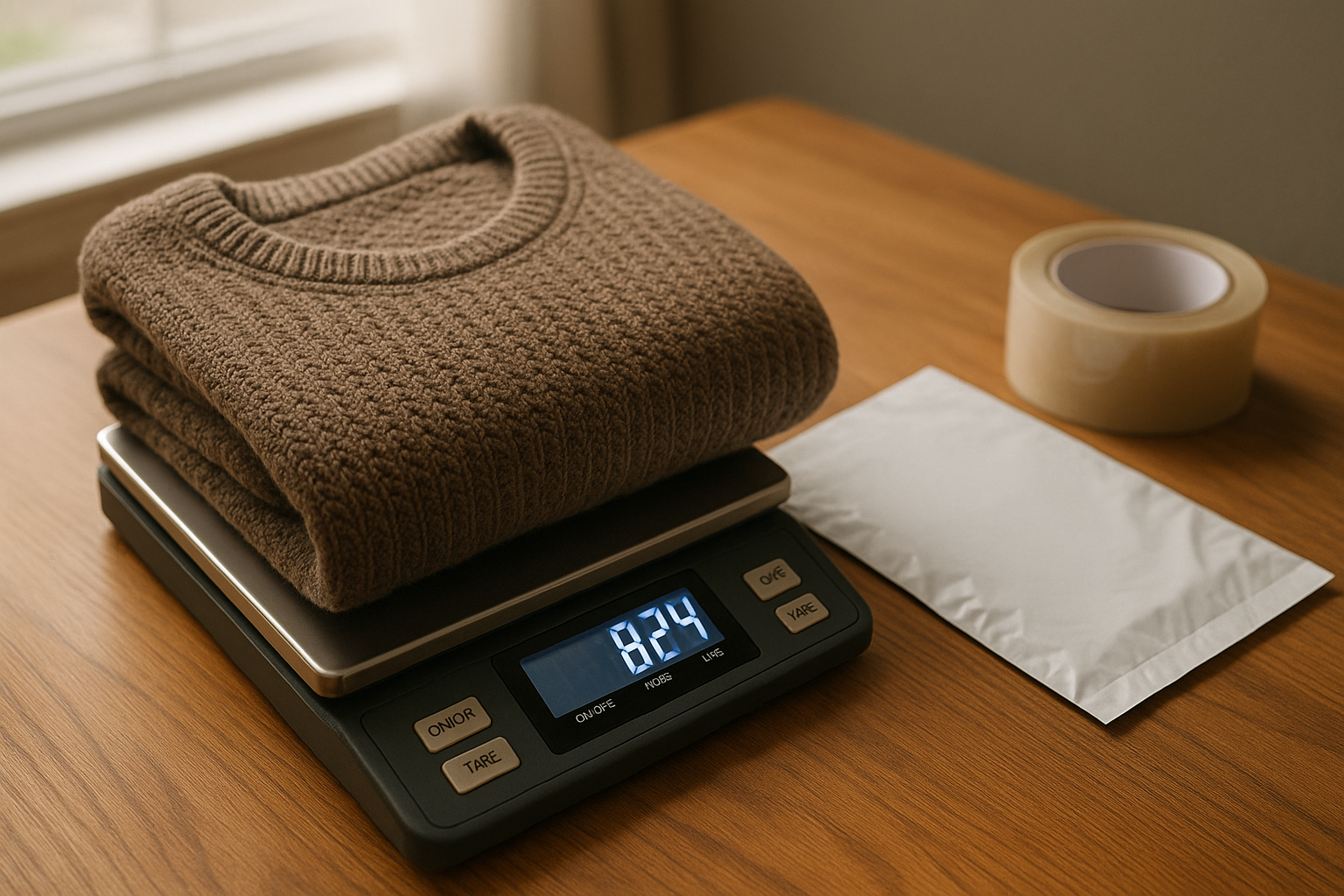
Mercari Shipping Weight Overages: How They Eat Profit and How to Weigh Like a Pro
A Mercari shipping weight overage happens when the weight tier you selected at listing turns out lighter than what the package actually weighs at the carrier's scale — and Mercari deducts the cost difference from your payout, often without much warning. Across a few hundred shipments a month, that quiet deduction can run into hundreds of dollars a year, and most resellers never trace it back to the real cause: an inaccurate scale.
What Counts as a Mercari Shipping Weight Overage
Mercari's prepaid shipping labels are priced by weight tier at the time you list the item. You select a size or weight bracket — say 1-2 lb — and Mercari generates a label priced for that bracket. The carrier (USPS or UPS, depending on the label) then weighs the package at a distribution center. If the actual weight lands in a higher bracket than the one you selected, the carrier bills the difference back to Mercari, and Mercari passes that charge to you as a deduction from your earnings. It typically shows up as a line item tied to the order, separate from the sale price and the standard selling fee.
This is different from a return or a buyer dispute. There's no claim to fight and no photos to submit. It's a shipping dispute triggered by an overweight item, resolved automatically by the carrier's own scale data, and it lands on your account days or weeks after the sale already closed.
The Real Cost: How a Few Ounces Compounds Across Volume
The dollar amount on any single overage looks small. The problem is frequency. If you're shipping 150-300 packages a month and even 1 in 8 comes in over its selected tier, that's 20-plus deductions a month chipping away at margin you already booked as profit.
Here's an illustrative example using rounded, representative weight-tier pricing to show how the math compounds:
| Selected Tier | Example Label Cost | Actual Weight | Correct Tier | Example Overage Charge |
|---|---|---|---|---|
| 0-1 lb | $4.50 | 1.3 lb | 1-2 lb | $1.75 |
| 1-2 lb | $6.00 | 2.4 lb | 2-3 lb | $2.25 |
| 2-3 lb | $8.00 | 3.6 lb | 3-4 lb | $2.50 |
Now scale that. At 220 shipments a month with a 12% overage rate and an average charge of $2.20, that's roughly $58 a month — about $700 a year — vanishing in deductions you didn't budget for when you priced the item. Push the overage rate to 20% (common for sellers who guess weight instead of measuring it) and the annual hit climbs past $1,100. None of that shows up in your listed price or your comps. It shows up three weeks later as a smaller payout than expected.
Why Resellers Misjudge Weight (and Get Burned)
The overage rate is almost never about the garment itself. It's about everything added between the closet and the mailbox. Common causes:
- Eyeballing weight instead of weighing the finished, packaged item
- Weighing the garment alone and forgetting the poly bag, box, tape, and any insert cards
- Using a kitchen scale that rounds to the nearest quarter-pound instead of the nearest tenth of an ounce
- Leaving hang tags, hangers, or extra packaging material on before the final weigh-in
- Selecting a lower tier on purpose to make the shipping cost look better in the listing, then hoping it clears
- Reweighing a single item's tier and applying it to a bundle without checking the combined weight
- Humid or worn scale surfaces that drift a few ounces between readings
Any one of these can push a 1.9 lb hoodie into the 2 lb-plus bracket. Mercari's system doesn't care about intent — it charges based on the carrier's actual reading versus your selected tier, full stop.
How to Weigh Like a Pro: A Step-by-Step Procedure
Weight accuracy is a workflow habit, not a one-time fix. Build it into intake and it stops being a monthly surprise.
- Place the empty shipping box or poly bag on the scale first and note its weight, or use a scale with a tare function to zero it out.
- Fold and package the item exactly as you will ship it — including any tissue paper, insert cards, or bubble wrap you actually use.
- Weigh the fully packaged item on a digital scale accurate to at least 0.1 oz, not a bathroom or kitchen scale that rounds to the nearest quarter-pound.
- Round the reading up, not down, to the next full ounce before selecting a weight tier — this builds in a small buffer against scale drift.
- Compare the rounded weight against Mercari's published weight brackets and select the tier that covers it, even if a lower tier looks cheaper.
- For bundles, always reweigh the combined package rather than adding individual item weights — packaging materials change the total more than sellers expect.
- Log the actual packaged weight in your inventory record at the same time you log the SKU, size, and condition grade, so you're not re-measuring from memory next time you relist a similar item.
Choosing a Digital Scale for Reseller Accuracy
Digital scale accuracy for resellers is the single highest-leverage fix here, and it's a one-time purchase, not a recurring cost. The differences between scale types explain most of the overage problem:
| Scale Type | Typical Precision | Capacity | Reseller Verdict |
|---|---|---|---|
| Bathroom scale | ±0.5-1 lb | 300+ lb | Not usable — rounding alone causes overages |
| Kitchen food scale | ±0.1-0.5 oz, low capacity | 5-11 lb | Fine for small envelopes, fails on packaged garments and boxes |
| Dedicated shipping/postal scale | ±0.1 oz | Up to 50-100+ lb | Best fit — built for tared, packaged weights at reseller volume |
| Luggage/handheld hanging scale | ±1-2 oz | Up to 100+ lb | Backup only — too imprecise for tier decisions near a boundary |
A dedicated shipping scale with a tare button costs less than one month of overage deductions at moderate volume, which makes it one of the fastest-payback purchases in a reselling operation. If you're weighing more than 50 packages a month, this is not optional gear — it's the tool that prevents the deduction in the first place.
Crosslisting Complication: Weight Rules Differ by Platform
If you crosslist the same inventory across eBay, Poshmark, and Mercari, weight matters differently on each one, and that inconsistency is where sellers get tripped up:
- Mercari locks in a prepaid label price to the weight tier you select at listing — get it wrong and you eat the difference after the sale.
- eBay calculated shipping pulls the actual weight and dimensions you enter into the listing to generate the buyer's shipping cost in real time, so an inaccurate weight there just produces a mispriced quote rather than a retroactive deduction — but it still misprices the sale.
- Poshmark uses a flat shipping rate regardless of actual weight (with a heavier-item option for bulkier pieces), so weight errors don't trigger a direct deduction, but they can still eat margin if you're absorbing an oversized shipment inside a flat fee.
The fix is the same across all three: capture the real, packaged weight once, at intake, and store it against the SKU. Then it's available whether the item lists on Mercari this week or gets crosslisted to eBay next month.
Weight Accuracy Is the Same Discipline as Condition Accuracy
Weighing a package precisely and grading its condition precisely solve the same underlying problem: guessing costs you money after the sale, when it's hardest to fix. A seller who eyeballs weight instead of measuring it is making the same mistake as a seller who calls everything Excellent instead of checking Fabric Condition, Structural Integrity, Cosmetic Appearance, Functional Elements, and Odor & Cleanliness before listing. Both shortcuts feel harmless at the time. Both show up later as a deduction — a shipping overage charge in one case, a not-as-described return in the other.
The resellers who keep the most margin treat measurement as part of intake, not an afterthought at the shipping table. Weigh the finished package once, record it, and move on. Grade the item once, record it, and move on. Precision at intake is cheaper than corrections after the sale, every time.
If your Mercari payouts have been running lighter than expected, start by weighing your last 20 shipped packages against the tier you selected — you'll likely find the pattern in one afternoon. And if inconsistent condition write-ups are costing you the same way through returns, run one item through GradeThread to see what a standardized grade and report look like before your next listing batch.