The fastest way to avoid scams when sourcing resale inventory is simple: never wire money to a supplier you haven't verified through a third-party source, and never buy a manifest you can't inspect or audit. Everything else — red flags, payment protection, counterfeit screening — is just detail underneath that one rule.
We've talked to resellers who lost $600 on a "designer overstock pallet" that turned out to be 40 units of unsellable factory seconds, and others who lost $4,000 wiring a deposit to a wholesaler who vanished the next day. Neither loss shows up on a P&L as a normal cost of doing business. It shows up as inventory that never should have been bought, and it's the single most preventable line item in a reselling operation.
The three scam patterns that cost resellers the most
Almost every sourcing scam we've seen falls into one of three buckets:
- The phantom supplier. You pay (usually by wire or crypto) for a pallet, lot, or bulk order that never ships, or ships empty boxes with tracking numbers that don't match the manifest.
- The manifest mismatch. The lot arrives, but the contents don't match what was advertised — wrong brands, wrong sizes, damaged goods listed as new, or a fraction of the promised unit count.
- The counterfeit lot. Real inventory arrives, but a meaningful share of it is fake designer product mixed in with legitimate items, betting you won't check closely before relisting.
Each pattern has different warning signs, and different defenses. We'll go through all three, then walk through the verification sequence you should run on every new supplier.
Red flags in bulk and wholesale clothing deals
Wholesale clothing scams tend to share a handful of tells. If you see two or more of these on a single deal, walk away or slow down hard.
- Wire transfer or crypto only, no exceptions. A legitimate wholesaler with repeat B2B customers can usually accommodate a business credit card, ACH through an invoicing platform, or at minimum a payment processor with dispute rights. "Zelle or Bitcoin only" is the single most common scam signal in this space.
- Prices 40–60% below the going rate for that grade of goods. If comparable pallets from known liquidators run $2–4 per unit for mixed apparel, a listing at $0.50 per unit isn't a bargain — it's bait.
- No manifest, or a manifest that's a stock photo. A real liquidation manifest lists SKU, brand, category, and condition tier per line item, generated from the retailer's own returns or overstock system. A JPEG of folded sweaters with no itemized list is not a manifest.
- Pressure to decide within the hour. "This lot won't last" is a real thing liquidators say — but paired with wire-only payment and no manifest, it's a countdown timer designed to stop you from checking anything.
- The seller has no verifiable business history. No business license, no Better Business Bureau listing, no reviews outside their own website, a domain registered in the last 90 days.
- Photos that reverse-image-search to other listings. Scammers reuse the same pallet photos across dozens of Facebook Marketplace and Craigslist posts. A five-second reverse image search catches most of them.
- Claims of "new with tags" at pallet-liquidation prices. Genuine NWT (new with tags) inventory rarely ends up in $3-a-unit liquidation lots — it's the exception, not the rule. If every unit in a 500-piece lot is advertised as NWT, be skeptical of the whole manifest, and expect the real mix to land closer to Good or Very Good once you sort it.
- The listing platform has no seller accountability. Facebook Marketplace and Craigslist DMs have no built-in dispute process. A supplier who only transacts off-platform, outside a marketplace like B-Stock or a vetted liquidation auction site, has picked the venue with the least recourse for you.
Fake liquidation pallets: what's actually in the box
"Liquidation pallet" is a real, legitimate sourcing channel — Amazon returns, department store overstock, and closed retail locations genuinely move through licensed liquidators like B-Stock, Direct Liquidation, Liquidation.com, and regional wholesale auction houses. The scam version copies the language without the supply chain behind it.
Fake liquidation pallets usually show up in one of these forms:
- A pallet sold as "customer returns from [big retailer]" with no retailer relationship, no manifest, and no way to trace the goods back to an actual store.
- A real pallet, photographed once, then "sold" to 30 different buyers who never receive anything.
- A genuine low-value pallet (dead stock, damaged goods, off-season closeouts) marketed as premium mixed apparel to justify a higher price.
- An auction listing on a real liquidator platform that's spoofed with a lookalike domain — check the URL character by character before logging in or entering payment details.
The fix is the same every time: buy from liquidators who provide a line-item manifest before purchase, who let you see condition grades or return reason codes per unit, and who have a track record you can verify independently — not just testimonials on their own site.
Counterfeit lots: how fakes get mixed into real inventory
Counterfeit product rarely arrives as an entire pallet of fakes — that's too obviously fraudulent and too easy to catch. It's more common, and more profitable for the scammer, to blend a small percentage of counterfeit designer items into an otherwise legitimate mixed lot. If 8 of 200 units are fake Coach bags or fake Ralph Lauren polos, most buyers list them without a second look, and the seller has moved counterfeit goods without ever advertising them as such.
Screen every designer or logo item in a new lot for:
- Stitching consistency, especially on logos, plackets, and hem finishes — sloppy or uneven stitching is the most common tell.
- Tag and label fonts, spacing, and material — compare against a verified authentic reference, not memory.
- Hardware weight and finish on zippers, buttons, and rivets — counterfeits often use lighter, cheaper metal.
- Serial numbers, holograms, or authentication cards where the brand uses them (common in handbags, less common in apparel).
- RN (registered identification number) and country-of-origin tags — inconsistent or missing RN numbers on a supposedly domestic brand are worth a second look.
When you grade the item afterward, document what you find under Cosmetic Appearance and Functional Elements regardless — a counterfeit that's structurally fine but visually inconsistent with authentic construction is exactly the kind of finding that belongs in a condition report, not just a mental note. If you're not confident authenticating a specific brand yourself, pull it from the lot and route it to a dedicated authentication service before it goes anywhere near a listing.
Payment methods: what actually protects you
The payment method is the single biggest lever you control before money moves. Here's how the common options actually compare for buyer protection in a sourcing deal.
| Payment method | Dispute rights if goods don't match | Typical scam risk |
|---|---|---|
| Wire transfer (bank-to-bank) | None once sent — banks generally cannot reverse it | Highest |
| Cryptocurrency | None — irreversible by design | Highest |
| Cash (in-person pickup) | None, but you can inspect goods before paying | Moderate (if inspected first) |
| Zelle / Venmo (friends & family) | None — explicitly excludes purchase protection | High |
| PayPal Goods & Services | Buyer protection, dispute process, possible refund | Low |
| Business credit card | Chargeback rights through card network | Low |
| Invoiced ACH through a B2B platform (e.g. established liquidator marketplace) | Platform-mediated dispute process | Low |
The pattern is straightforward: any payment method that's irreversible the moment you hit send has no protection built in, full stop. If a supplier insists on wire, crypto, or "friends and family" transfers only, they are choosing the payment method with the least accountability — that's a decision, not a coincidence.
How to verify a supplier before you send money
Use this sequence for any new wholesale or liquidation supplier, every time, regardless of how good the deal looks.
- Search the business name plus the word "scam" or "complaint" and check the results from the last 12 months, not just the supplier's own reviews page.
- Look up the business registration in your state's (or their state's) Secretary of State database to confirm it's a real, active entity.
- Ask for a line-item manifest before you commit — SKU, brand, category, unit count, and condition grade or return reason per line.
- Reverse-image-search at least three photos from the listing to check whether they appear on other sellers' pages.
- Request a video call or live photo with a timestamp and handwritten note, showing the actual pallet or lot you'd be buying — not stock imagery.
- Start with a small trial order before committing to a full pallet or bulk buy, even if the per-unit price is worse.
- Pay through a method with dispute rights — PayPal Goods & Services, a business credit card, or an invoiced platform transaction — never wire, crypto, or peer-to-peer "friends and family" transfers.
- Confirm shipping terms and tracking in writing before payment, including who's responsible for freight damage.
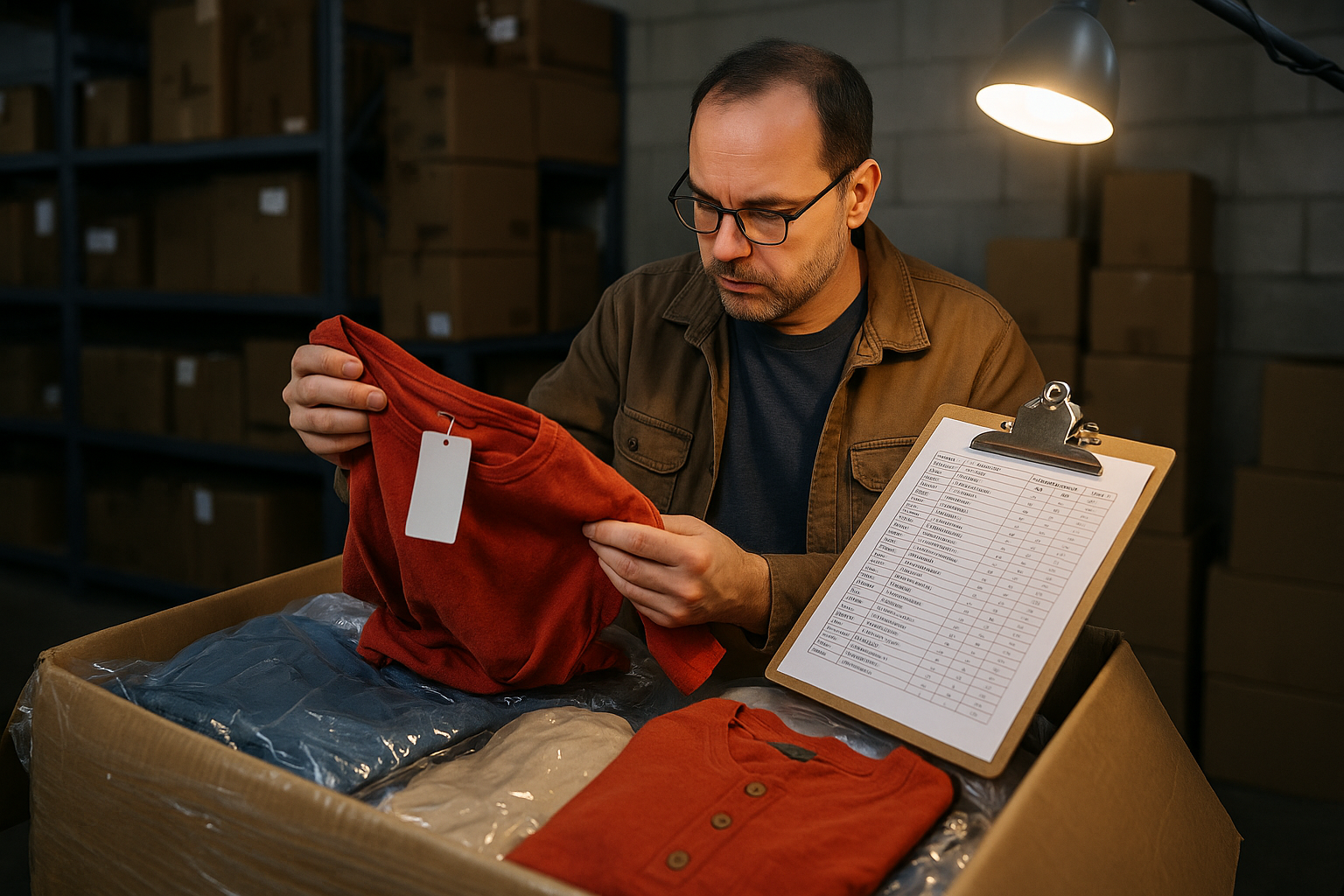
- On arrival, count and inspect against the manifest immediately, and photograph any discrepancy before you move or process a single item.
None of these steps take more than a few minutes each, and together they take less time than sourcing and listing a single item. Compare that to the hours lost disputing a wire transfer that already cleared.
What to do if you've already been scammed
If you paid by credit card, file a chargeback immediately and include your manifest, correspondence, and any proof the goods didn't arrive or didn't match. If you paid via PayPal Goods & Services, open a dispute inside the resolution center before the protection window closes — typically 180 days, but sooner is always better. If you paid by wire or crypto, report it to the FTC at reportfraud.ftc.gov and to the FBI's IC3 (ic3.gov); recovery is rare, but the report matters for pattern tracking and can support a bank fraud claim in limited cases. Document everything — screenshots, listings, payment confirmations — even if you think there's no path to recovery. It protects you if the same supplier resurfaces under a different name, which happens more often than you'd expect.
Where this connects to grading and resale
Every unit that clears your sourcing screen still needs an honest condition read before it goes up for sale. A shirt that's structurally sound but has a counterfeit-adjacent construction flaw, or a jacket with a hidden odor issue from sitting in a damp warehouse, needs to be graded on its actual condition — Fabric Condition, Structural Integrity, Cosmetic Appearance, Functional Elements, and Odor & Cleanliness — not the condition the manifest claimed. A lot that was sold as "Excellent" but arrives closer to Good or Fair isn't just a sourcing problem; it's a listing problem waiting to happen if you don't catch it before it's live.
Safe sourcing keeps bad inventory out of your bins. Accurate grading keeps bad listings out of your store. Both exist for the same reason: fewer disputes, cleaner margin, and buyers who trust what they're looking at.
If you're sourcing in bulk regularly, run your next lot through FlipDesk's intake workflow — log the manifest, grade each unit as it's processed, and flag discrepancies against what the supplier promised before you're three listings deep and can't remember what was claimed versus what arrived.