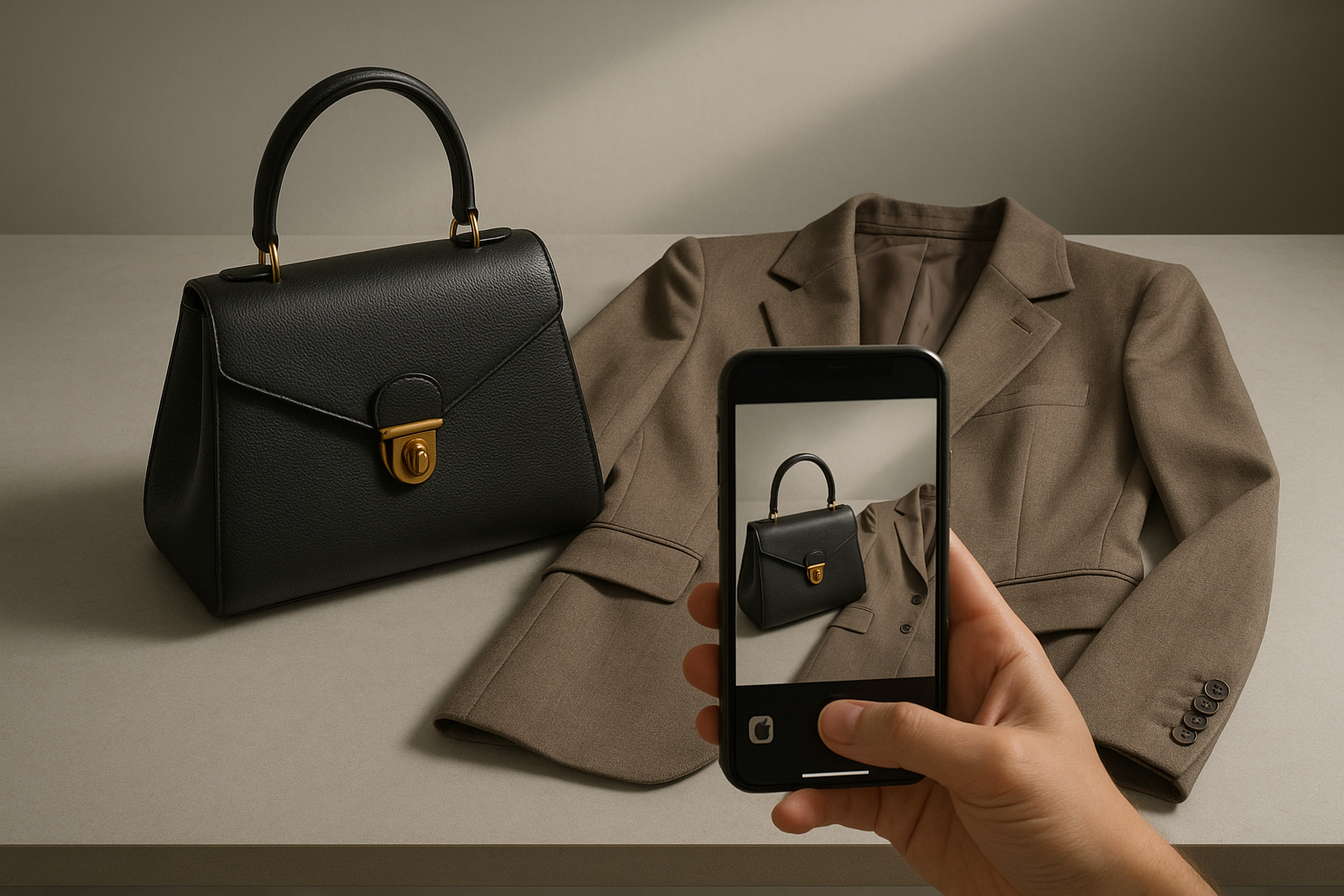
Where to sell designer clothes: the real trade-offs
Every platform claims to be the best place to sell high-end clothing. In practice, they split into two camps: authenticated consignment marketplaces that verify the item and hold your hand through the sale, and open marketplaces where you list, photograph, and describe everything yourself. Consignment platforms take a bigger cut but do the authentication and trust-building for you. Open marketplaces pay out more per sale but put the entire trust burden on your listing.
Here's how the major players actually compare.
| Platform | Best for | Authentication | Typical seller take | Payout speed |
|---|---|---|---|---|
| The RealReal | Handbags, jewelry, women's designer ready-to-wear | In-house experts, physical inspection | Roughly 20–70% depending on item value (they set price) | After sale, ~2–3 weeks |
| Vestiaire Collective | European luxury, contemporary designer, vintage | Physical authentication on items over set price thresholds, or seller-paid "Direct Ship" verification | Seller sets price; platform takes a sliding commission plus a buyer fee | After buyer confirms receipt |
| Fashionphile | Handbags and small leather goods specifically | In-house authentication, often buys outright | Instant cash offer or consignment split | Immediate if sold direct to them |
| Rebag | Handbags, instant liquidity over top dollar | In-house authentication | Lower payout, but instant | Immediate |
| eBay | Any category, buyers who want to search hard for a deal | eBay Authenticity Guarantee — handbags/jewelry over $500, sneakers over $150, watches over $2,000 | Seller sets price; final value fee generally 13–14% depending on category | 2 business days after delivery confirmation |
| Poshmark | Contemporary designer, closet-style selling with a following | Posh Authenticate on items over $500 | 20% commission over $15 sale price | After the 3-day inspection period ends |
| Grailed | Menswear, streetwear, designer collabs | None built-in; seller reputation and community feedback carry weight | 9% commission | Standard payout after delivery |
Notice the pattern: the platforms with the strongest built-in authentication (The RealReal, Fashionphile, Rebag) also take the biggest cut. The ones that let you keep more of the sale (eBay, Poshmark, Grailed) push the burden of proving authenticity and condition back onto you, the seller.
Authentication answers one question. Condition answers the one that actually loses sales.
Authentication tells a buyer the item is real. It does not tell them whether the leather is cracking at the fold, whether the zipper still glides, or whether there's a faint mildew smell from storage. Those are condition questions, and on luxury resale, condition is where deals fall apart post-sale.
We see this constantly in returns data across designer categories: the item was authenticated correctly and still came back, because the buyer's idea of a condition tier and the seller's idea didn't match. "Gently used" isn't a tier. NWT, NWOT, Excellent, Very Good, Good, Fair, and Poor are — and each has a specific meaning by category. On a $40 fast-fashion top, a mismatch between seller adjective and buyer expectation costs you a bad review. On a $1,800 handbag, it costs you a dispute, a return shipping bill, and a relist at a lower price because the item now shows as "returned."
Condition on a luxury item breaks down across five factors, and buyers at this price point read all five, whether or not you label them:
- Fabric Condition — pilling, thinning, weave integrity on tweed, silk, cashmere
- Structural Integrity — seam strength, lining attachment, shoulder pads, boning in structured pieces
- Cosmetic Appearance — surface marks, discoloration, hardware tarnish, sole scuffing
- Functional Elements — zippers, clasps, buttons, drawstrings, all working as designed
- Odor & Cleanliness — storage smell, smoke, perfume residue, especially in leather and wool
A garment can pass authentication with flying colors and still grade down to Very Good or Good on these five factors. Buyers paying four figures are not comparing you to the fast-fashion reseller down the street. They're comparing you to a boutique consignment shop with a return policy, and they expect the same clarity.
What happens when a buyer disputes condition, by platform
Return mechanics differ enough by platform that a vague condition description carries different risk depending on where you list. Knowing the actual window matters more than assuming "final sale" protects you.
- On eBay, buyers covered by the Authenticity Guarantee can return an item within the standard return window if it's not as described, and the seller typically eats return shipping on a not-as-described claim regardless of the listed return policy.
- On Poshmark, buyers have a 3-day acceptance window after delivery to report an issue; if they flag a mismatch on an item over $500, it can route to Posh Authenticate for a second look, and a confirmed mismatch usually favors the buyer.
- On Vestiaire Collective, buyer protection generally gives buyers a short window right after delivery to flag a problem before funds release to the seller, which is why sellers who use Direct Ship verification see fewer disputes.
- On The RealReal, many consigned items are sold as final sale, but items purchased directly from their site typically carry a limited return window for store credit — check the listing terms before assuming no returns.
- On Fashionphile, direct purchases usually carry a short return window (a few days), while consigned sales through them follow the consignor's disclosed condition.
- On Grailed, there's no built-in buyer protection beyond your payment processor's purchase protection, which means a not-as-described dispute becomes a payment dispute — and payment processors side with buyers more often than sellers expect.
The common thread: almost every platform gives a buyer some path to reverse the sale if the item doesn't match the description. A documented, factor-by-factor condition grade is what keeps that dispute from ever getting filed in the first place.
How to list a luxury item so condition trust does the selling
Whichever platform you choose, the listing process for a high-end piece should look different from how you'd list a $15 t-shirt. Here's the sequence that consistently gets the best price realization on designer and luxury items:
- Inspect the item under strong, even light and check all five condition factors — fabric, structure, cosmetics, function, odor — before you touch a camera.
- Photograph the brand label, authenticity card, serial number, or date code clearly and in focus; this is what unlocks eBay's Authenticity Guarantee, Poshmark's Posh Authenticate, and buyer confidence generally.
- Get a documented condition grade — either your own detailed notes or a third-party report — so you're not relying on a single adjective like "gently used."
- Shoot defect photos separately from hero photos: close-ups of any scuffing, hardware wear, interior lining marks, or sole wear, lit so the defect is visible, not hidden.
- Write the description leading with the condition tier and grade, then list flaws by exact location — "light hardware tarnish on the clasp, faint scuff on the base corner" beats "some wear."
- Price against comps in the same condition tier, not against pristine listings; a Very Good bag priced like an Excellent one will sit.
- Choose the platform based on the item's category and value: handbags and small leather goods to Fashionphile or Rebag for speed, structured designer ready-to-wear to The RealReal or Vestiaire, streetwear and menswear designer to Grailed, and anything you want full control over pricing to eBay or Poshmark.
Why a third-party condition read raises the price, not just the trust
Sellers assume disclosure protects them from returns. It does — but it also does something more useful: it lets buyers bid or buy with confidence instead of a discount baked in for uncertainty. When a buyer can't verify condition, they price in risk. That's the invisible tax on every vaguely described luxury listing. In practice, the gap between a listing that reads as Excellent with proof and one that reads as "barely worn" with no detail can run 10–20% of sale price on the same physical item — buyers aren't paying for the garment, they're paying for their confidence in what they're getting.
This is the gap GradeThread closes. Instead of asking a buyer to trust your adjective, GradeThread runs the garment through the same five weighted factors — Fabric Condition, Structural Integrity, Cosmetic Appearance, Functional Elements, Odor & Cleanliness — and returns a numerical grade on the 1.0–10.0 scale, a detailed condition report, and a shareable certificate the buyer can verify independently. On authenticated platforms, that certificate sits alongside the platform's own authentication as a second, independent layer of trust. On open marketplaces like eBay, Poshmark, and Grailed, where you're doing all the trust-building yourself, it's often the difference between a listing that reads as "seller's opinion" and one that reads as "verified condition."
We've seen this pattern hold across categories: a leather jacket graded and disclosed at Very Good with a clear condition report outsells the same jacket listed vaguely as "good condition, some wear" — even when the second seller's price is lower. Buyers at the luxury tier aren't looking for the cheapest option. They're looking for the least risky one.
Matching platform to item, not just chasing the biggest audience
There's no single best resale app for designer clothing across every category. A Cartier watch, a pair of raw denim, and a cashmere coat all move through different buyer pools with different expectations. Handbags and jewelry do best on platforms built specifically for authentication speed — Fashionphile, Rebag, The RealReal. Structured designer clothing and vintage do well on Vestiaire Collective, where the buyer base already expects detailed condition disclosure. Streetwear, sneakers, and designer menswear collabs move fastest on Grailed and StockX, where community reputation substitutes for formal authentication. And anything you want to price and control yourself — including items you've already graded — does well on eBay or Poshmark, provided your listing carries its own trust signals.
The mistake is picking a platform based on its authentication badge and stopping there. The badge tells a buyer the item is real. It's the condition report that tells them what they're actually paying for.
Try it on one piece before your next luxury listing
Before your next designer or luxury item goes live, run it through GradeThread. Upload photos, get a numerical grade across all five condition factors, and generate a certificate you can drop straight into your listing on any of these platforms. It won't replace authentication — but it will answer the question authentication never does: what condition is this thing actually in? Grade one garment and see the report for yourself.